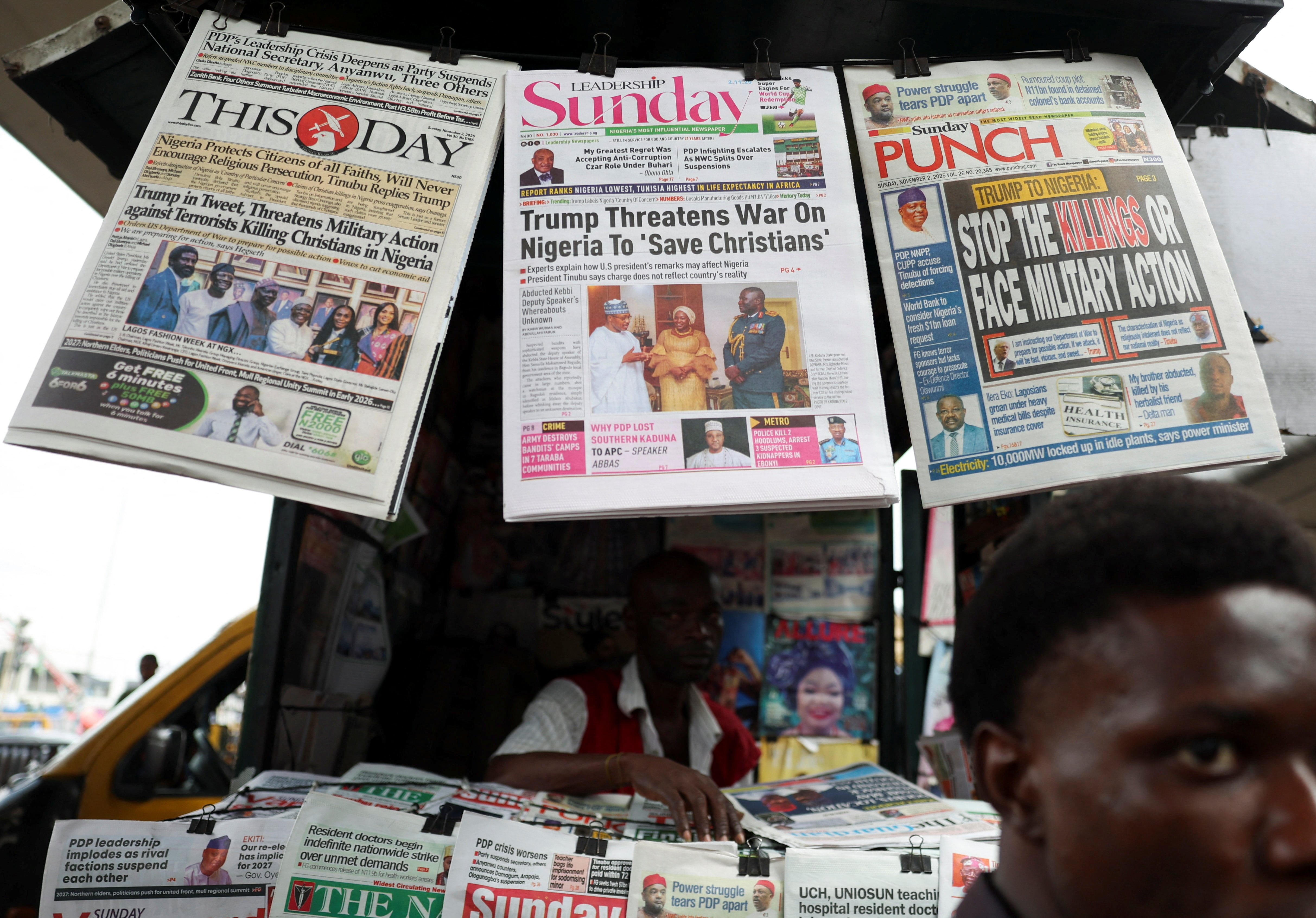
The President of the United States, Donald Trump, has called on his Department of Defense to prepare a possible “rapid” military action in Nigeria, to launch it if that African country does not take sufficient measures to prevent the “murders” of the Christian population. In a message on his social network, Truth, the Republican also warns that he will “immediately” stop humanitarian aid to Nigeria if the Government of that country does not comply with his demand.
Trump adopts belligerent language to ensure that, if the United States intervenes in the oil country, it will do so “with fully loaded weapons” to “completely eliminate the Islamic terrorists who are perpetrating these terrible atrocities.”
“I hereby direct our War Department (Defense) to prepare for possible action,” the message reads. “If we attack, it will be quick, vicious, and sweet, exactly the same way terrorist thugs attack our DEAR Christians. WARNING: THE NIGERIAN GOVERNMENT BETTER MOVE FAST,” adds the White House tenant.
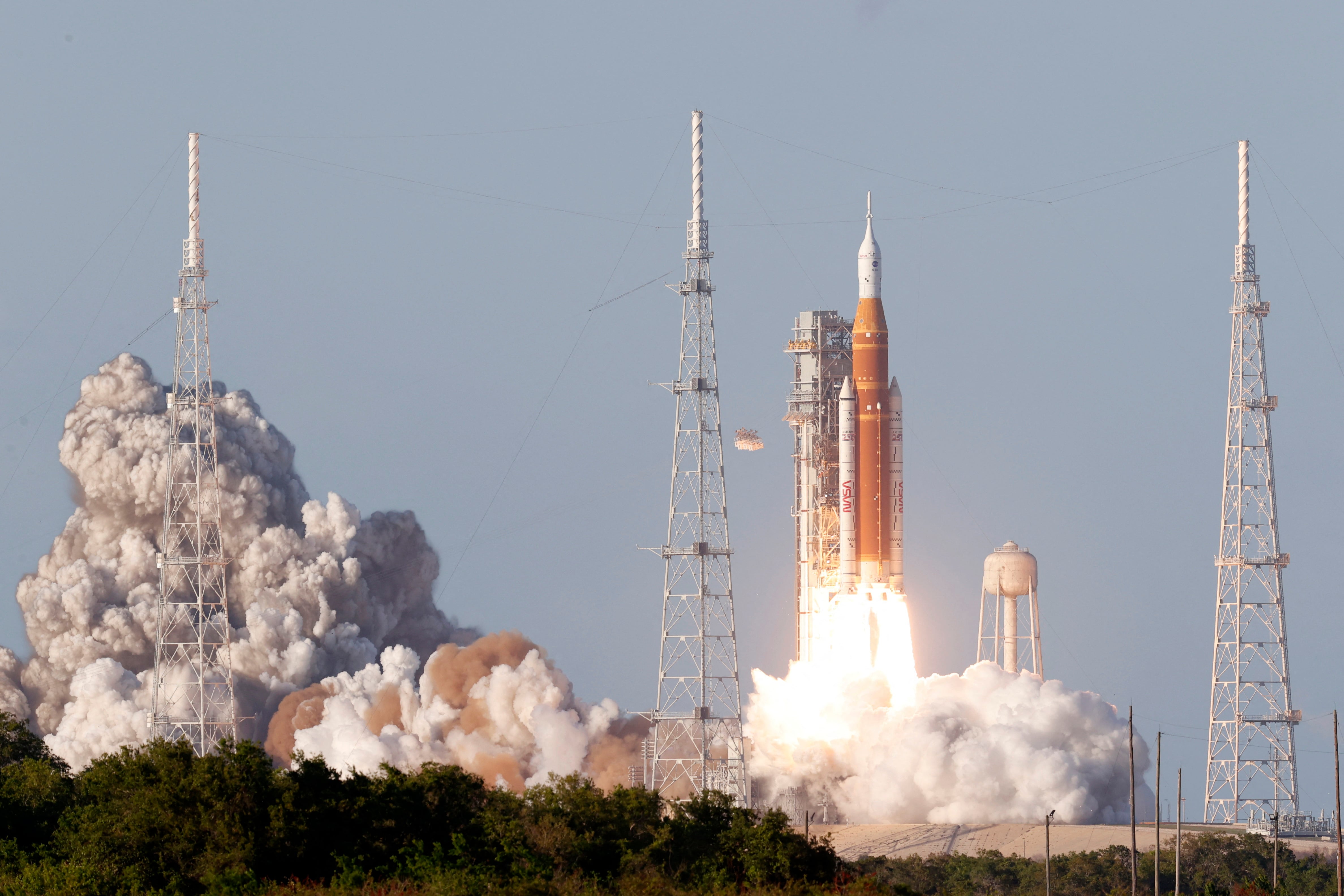
During his election campaign in 2024, Trump defended an anti-interventionist foreign policy in which American interests within its own territory would prevail, but after his return to the White House he has adopted increasingly warlike rhetoric. It has deployed a flotilla of eight warships and a submarine in Caribbean waters off the Venezuelan coast, to which it has ordered the largest aircraft carrier in the North American fleet to join, and threatens to launch attacks against land targets in Venezuela at any time to fight drug trafficking. In addition, he has killed at least 64 people, who had not been formally accused and much less tried, with projectiles thrown at his alleged drug boats.
This week he also ordered the Pentagon to resume, for the first time since 1992, nuclear weapons testing, although it is not clear if this refers to detonations of bombs in the subsoil or simply to testing of the delivery systems.
Trump’s threats against Nigeria come a day after his government included the West African state on a list of “countries of particular concern” for their violations of religious freedom. Nations such as China, North Korea, Myanmar, Pakistan and Russia are also included in this list. The American president claimed on Friday that radical Islamist groups are killing “thousands of Christians,” but did not give details about his complaint.
In response to this first US measure, the Nigerian president, Bola Ahmed Tinubo, had assured that his government is making efforts to combat religious intolerance. “The depiction of Nigeria as an intolerant country does not reflect our national reality, nor does it take into account the sincere and consistent efforts of the Government to protect the religious freedom and beliefs of all Nigerians,” Tinubo said.
This Sunday, the Nigerian Government announced that Bola Tinubu will hold an in-person meeting with Trump in the coming days, in which he will try to clarify that the terrorists operating in the African country “attack people of all religions or who profess none.” This was reported on the social network X by Daniel Bwala, special advisor to the Nigerian president, who did not clarify whether the meeting would take place in Washington or Abuja.
Bwala has highlighted that, since his arrival at the White House, Trump “has provided great help to Nigeria by authorizing the sale of weapons,” and that President Tinubu “has appropriately taken advantage of this opportunity in the fight against terrorism, which is reflected in the excellent results obtained.”
It is unclear exactly what type of military action the US president is considering in Nigeria or how he intends to carry it out. Last year, Washington withdrew nearly a thousand soldiers that it had deployed in Niger to fight Islamic terrorism in the Sahel, and currently its largest military base in Africa is located in Djibouti, in the east of the continent, where it has 5,000 troops.
Nigeria, a State where nearly 200 ethnic groups of Christian, Muslim or animist religion live, has a long tradition of peaceful coexistence, although it has also been the scene of serious violence between communities. For more than two decades, the country has been facing a jihadist insurgency that has its epicenter in the northeast of the country and that has been carried out by the group Boko Haram.
Tens of thousands of people have been kidnapped or killed in this conflict; especially Muslim civilians, who are the majority in the regions of Borno, Yobe and Adamaua. However, this is not the only form of violence that Nigeria faces. Since the middle of the last decade, armed organized crime groups have looted, kidnapped and murdered civilians in the northern states of the country, without distinction of religion.
Another source of violence in Nigeria in recent years has been the conflict between nomadic or semi-nomadic herders and sedentary farmers, which has worsened in the center of the country with massacres between them. Although the former tend to be Muslims and the latter Christians, experts assure that this conflict is linked to poverty, climate change, lack of resources and pressure for grazing areas, not to religious reasons.
For more updates, visit our homepage: NewsTimesWire