To last week’s riddle-joke (Are there four-leaf clovers?), Juan Carlos Prieto answers that, in any case, it would be a tetrabol (or quatrefoil), and Pernan Goñi adds that if we remove a leaf from a clover it becomes a bibol.
Jokes aside, and as Rafael Granero points out: “To say that a two- or four-lobed clover is not a clover but a bibol or a quatrefoil represents an essentialist error in language, confusing etymology with use. As Wittgenstein showed in his Philosophical investigationsthe meaning of a word does not reside in an essence, but in a practice (the pragmatics of language), in its use within the language game. That the name does not make the thing is something known since Aristotle. “Clover” designates a botanical species (Trifolium), not a fixed number of sheets. Therefore, we would incur a categorical error (according to Gilbert Ryle) by converting an accidental property into an essence.” The language game: Wittgenstein’s suggestive formula could serve as the title of a subsection of The game of science…
Regarding Leonardo da Vinci’s world map, Luis Ortiz says: “I find Leonardo’s representation of the world very interesting. I don’t think that dividing the Earth into octants and flattening them was an arbitrary choice, it wouldn’t be typical of him. I suppose that he sought above all a representation with the minimum possible deformations and, incidentally, as if he didn’t want the thing, of undoubted aesthetics. So, although the flattening of an octant of a sphere can give rise to other figures, surely the Reuleaux triangle is “a good result from the point of view of deformations.” But can the flattening of a sphere octant give rise to a figure that is not a Reuleaux triangle?
What is decidedly not possible is to make a cartographic projection that is both conformal and of equal area: if the angles are preserved, the relationship of surfaces is not maintained, and vice versa. And for similar reasons, the childhood surprise reported by Miguel Ferrón was not due to negligence on the part of the packers, but to a topological impossibility: “As a child, when a Kindergarten egg fell into my hands, I was always struck by how careless they were with its packaging. The thin aluminum foil that wrapped the egg was always wrinkled. Why didn’t they make it smooth, which would be prettier?”
However, currently, objects with a curved surface are sold in transparent, wrinkle-free packaging. How is it possible?
Verbal riddles
It is not enough to create a Wittgensteinian subsection entitled The language gamebut nothing prevents us from playing a little with words, as in the following riddles:
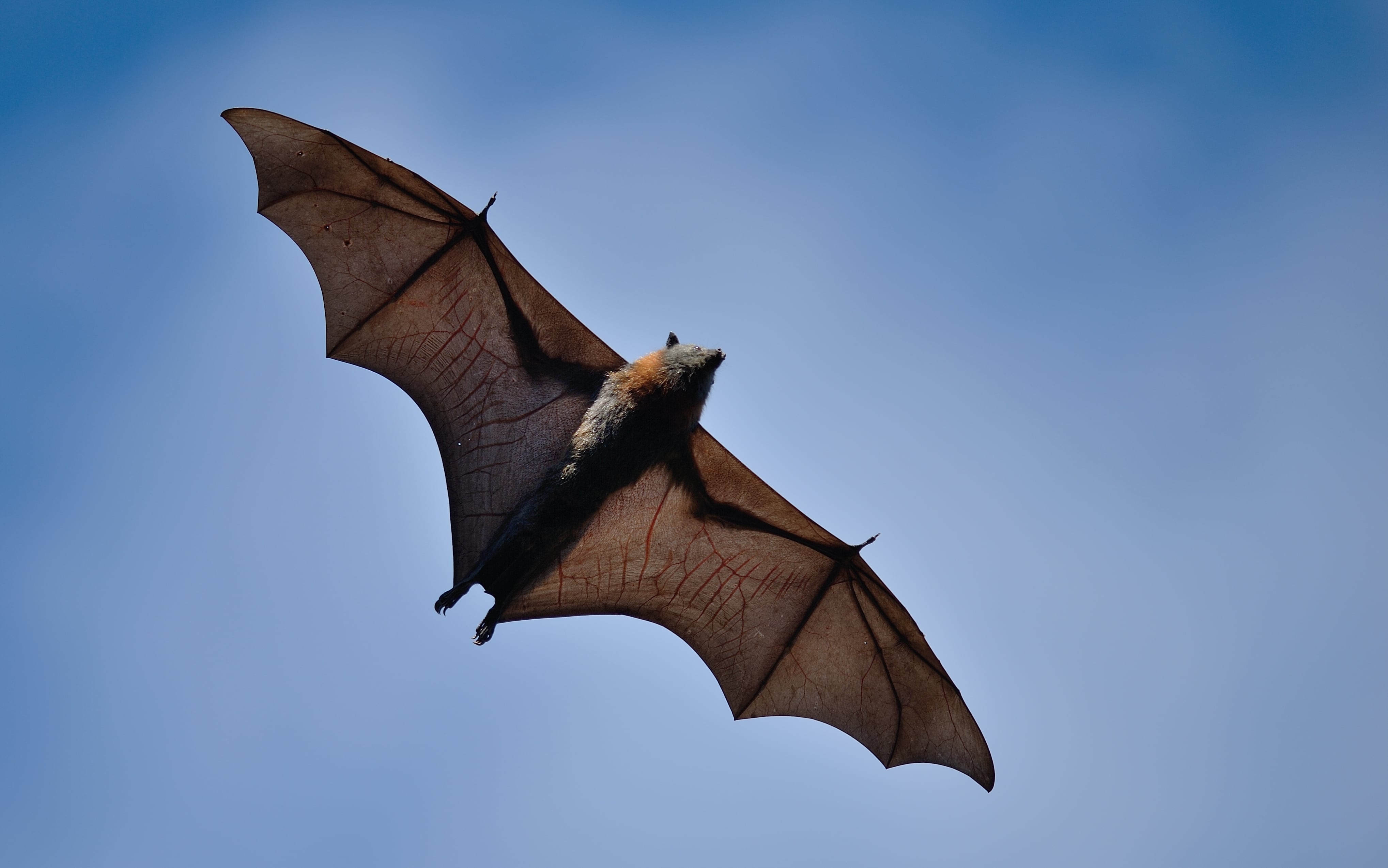
1. It is a myth that “bat” is the only word in the Spanish language that contains all five vowels only once. In fact, there are lots of them: pneumatic, rheumatic, authentic, grandpa… But is there another animal, besides the bat, whose name contains the five vowels? Is there a word that contains them all in alphabetical order? And in reverse order?
2. There are many numbers whose name contains the five vowels without repeating them, such as “three thousand four”; but which is the greatest?
3. In “This sentence does not have n letters”, replace n with a number (not a figure but the name of the number) so that the resulting sentence is false.
4. How many letters does the answer to this question have?
For more updates, visit our homepage: NewsTimesWire