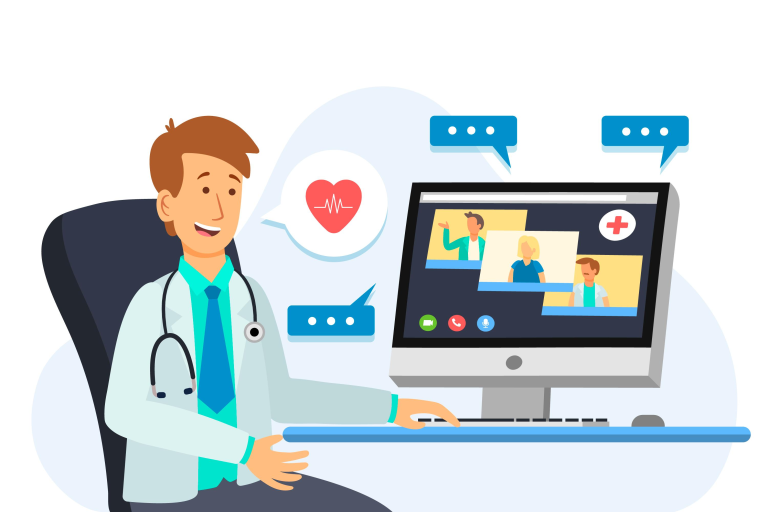
Virtual Medical Assistants
Artificial Intelligence (AI) continues to reshape the landscape of healthcare, particularly through the evolution of virtual medical assistants (VMAs). These AI-powered tools, including triage medical assistants and virtual medical scribes, are poised to transform healthcare delivery by enhancing efficiency, improving patient outcomes, and revolutionizing the patient-provider experience. This blog explores the future prospects of AI in VMAs, highlighting key advancements and potential impacts on medical services.
Advancements in AI-Powered Virtual Medical Assistants
Virtual Medical Assistant leverage AI algorithms to perform a wide range of tasks that traditionally require human intervention. As AI technology advances, VMAs are becoming increasingly capable of
- Natural Language Processing: Enhancing their ability to understand and interpret medical terminology, patient symptoms, and clinical documentation accurately.
- Machine Learning: Continuously improving their performance by learning from data patterns, patient interactions, and feedback from healthcare providers.
- Automation of Routine Tasks: Streamlining administrative processes such as appointment scheduling, patient registration, and billing, thereby reducing healthcare operational costs and improving workflow efficiency
Enhancing Patient Care and Accessibility
The integration of AI in VMAs holds significant promise for enhancing patient care and accessibility:
- Personalized Medicine: AI-driven VMAs can analyze large datasets to provide personalized treatment recommendations based on individual patient profiles, genetic information, and medical history.
- Telehealth Expansion: Facilitating remote consultations, virtual visits, and remote patient monitoring through advanced AI capabilities, thus improving access to healthcare services, particularly in underserved or remote areas.
Role-Specific Applications
Different types of AI-powered VMAs fulfill specific roles within healthcare settings:
- Triage Medical Assistants: AI-enabled triage assistants use algorithms to prioritize patient cases based on severity, symptoms, and medical history. This capability ensures timely interventions and optimizes resource allocation in emergency departments and urgent care settings.
- virtual medical scribe: AI-driven scribes assist healthcare providers by transcribing patient encounters, updating electronic health records (EHRs), and generating clinical notes in real-time. This enhances documentation accuracy, reduces administrative burden, and supports clinical decision-making.
Ethical and Regulatory Considerations
As AI continues to advance in healthcare, ethical and regulatory considerations become increasingly important:
- Data Privacy and Security: Ensuring compliance with healthcare regulations such as HIPAA to protect patient confidentiality and secure sensitive medical information handled by AI-powered VMAs.
- Algorithm Transparency: Maintaining transparency in AI algorithms used by VMAs to ensure accountability, mitigate bias, and enhance trust among healthcare providers and patients.
Collaboration and Integration
The future of AI in VMAs relies on collaborative efforts between technology developers, healthcare providers, and regulatory bodies:
- Interoperability: Ensuring seamless integration of AI-powered VMAs with existing healthcare IT systems, electronic health records (EHRs), and telehealth platforms to optimize workflow and enhance care coordination.
- User-Centered Design: Incorporating user feedback and healthcare provider input into the development and refinement of AI-powered VMAs to meet clinical needs, improve usability, and enhance patient satisfaction.
Conclusion: Embracing Innovation in Healthcare
In conclusion, triage medical assistant the future of AI in virtual medical assistants represents a transformative shift in healthcare delivery, driven by advancements in artificial intelligence, machine learning, and data analytics. As AI continues to evolve, VMAs will play an increasingly pivotal role in delivering personalized, efficient, and patient-centered care across diverse healthcare settings.
By harnessing the potential of AI-powered VMAs, triage medical assistant healthcare organizations can anticipate improved clinical outcomes, enhanced patient engagement, and greater operational efficiency. As technological capabilities expand and regulatory frameworks evolve, AI in VMAs will continue to shape the future of healthcare, paving the way for innovative solutions that prioritize quality of care and accessibility for patients worldwide.