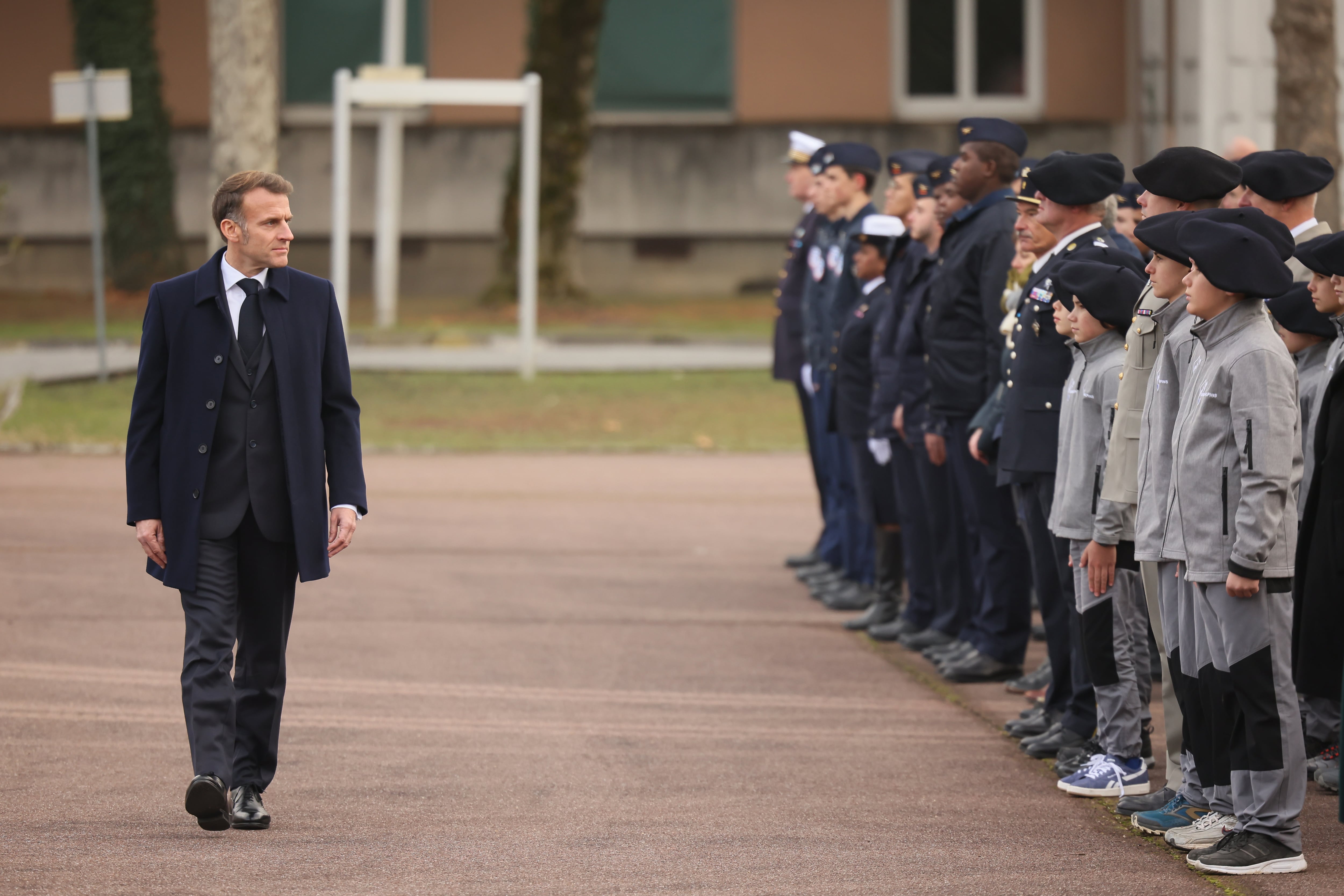
France is already openly preparing for a possible war with Russia in about five years. And beyond the collective mood, which has been shaped by the Elysée and the army for weeks, concrete measures are also beginning to be taken. Starting in the summer of 2026, France will implement a new Voluntary Military Service with the idea of hosting 10,000 young men and women for 10 months in a first phase, and up to 50,000 by 2035. A fishing ground for reservists to increase the number of troops in the event of a war and help deter the Russian threat. “Fear does not prevent danger. The only way to avoid it is to prepare for it,” the President of the Republic, Emmanuel Macron, warned this Thursday during the announcement of the new initiative from the Varces-Allières-et-Risset military base.
Military service in France was abolished by Jacques Chirac in 1996. “The end of the Cold War made it unnecessary,” Macron explained. Immediately, however, debates began regarding its necessary reinstatement. In 2007, socialist Ségolène Royal lamented that it had been a “mistake.” Marine Le Pen proposed reestablishing it, but for a duration of three months. And in 2019, Macron ended up launching a civilian Universal National Service (NUS) aimed at restoring some social cohesion. Due to lack of financing, it ended up failing.
The new military service – it will begin in the summer with 3,000 volunteers – has been brewing for months in the Elysee Palace because, according to Macron, France “needs mobilization.” “We offer our youth an ideal as well as the opportunity to serve our country.” The head of state pointed out that it is necessary to build a hybrid army model to face “new threats.” “There is a generation ready to rise up for the country. Our young people are thirsty for commitment,” he considered.
The measure does not bother the French. In fact, military service has broad support: 86% want its return, according to an Ipsos-CESI Engineering School survey published in March by Le Parisian. But only 53% are in favor if it is mandatory military service, and only 41% among those under 35 years of age, who are those directly affected.
The service would begin operating next year, would be open to French men and women aged 18, would last ten months and would be paid between 900 and 1,000 euros per month. A figure below the minimum interprofessional salary in France, something that has sparked strong criticism on the left. The head of the parliamentary group of La Francia Insumisa (LFI), Mathilde Panot, stressed that her party is not against the principle of military service in general, but “this way of doing it, exclusively military and paid between 900 and 1,000 euros per month, well below the minimum wage (1,426.30 euros).”
The new plan, designed for many young people in the middle of university studies or about to begin them, also proposes credits exchangeable for military service. Macron explained the role of young people after their national service: they will be able to continue their studies or join civilian professional life, while integrating the second-level operational reserve. “They will be accompanied by the Armed Forces if they are looking for a job. For those who wish, they will be able to join the active army by committing themselves, and the experience acquired will be valued.”
France has entered a pre-war climate for some months. The war between Russia and Ukraine, in which the President of the Republic, Emmanuel Macron, has tried to mediate without much success so far, has alerted the State to the possibility that the conflict could spread to Europe at some point. The last to refer to this was the new Chief of the General Staff, Fabien Mandon, who last week warned the French about the need to prepare “to lose their children” if they want to be credible in a war conflict.
Germany and Belgium have launched similar initiatives. In the case of the German country, the plan is expected to come into force at the beginning of 2026 and is part of Berlin’s plans to improve its defense capacity against Russia. Thus, for the first time in 15 years, all 18-year-old Germans will once again have to answer the question of whether they wish to serve in the military. And those who do so affirmatively, and are selected, will provide the service for a minimum period of six months.
For more updates, visit our homepage: NewsTimesWire