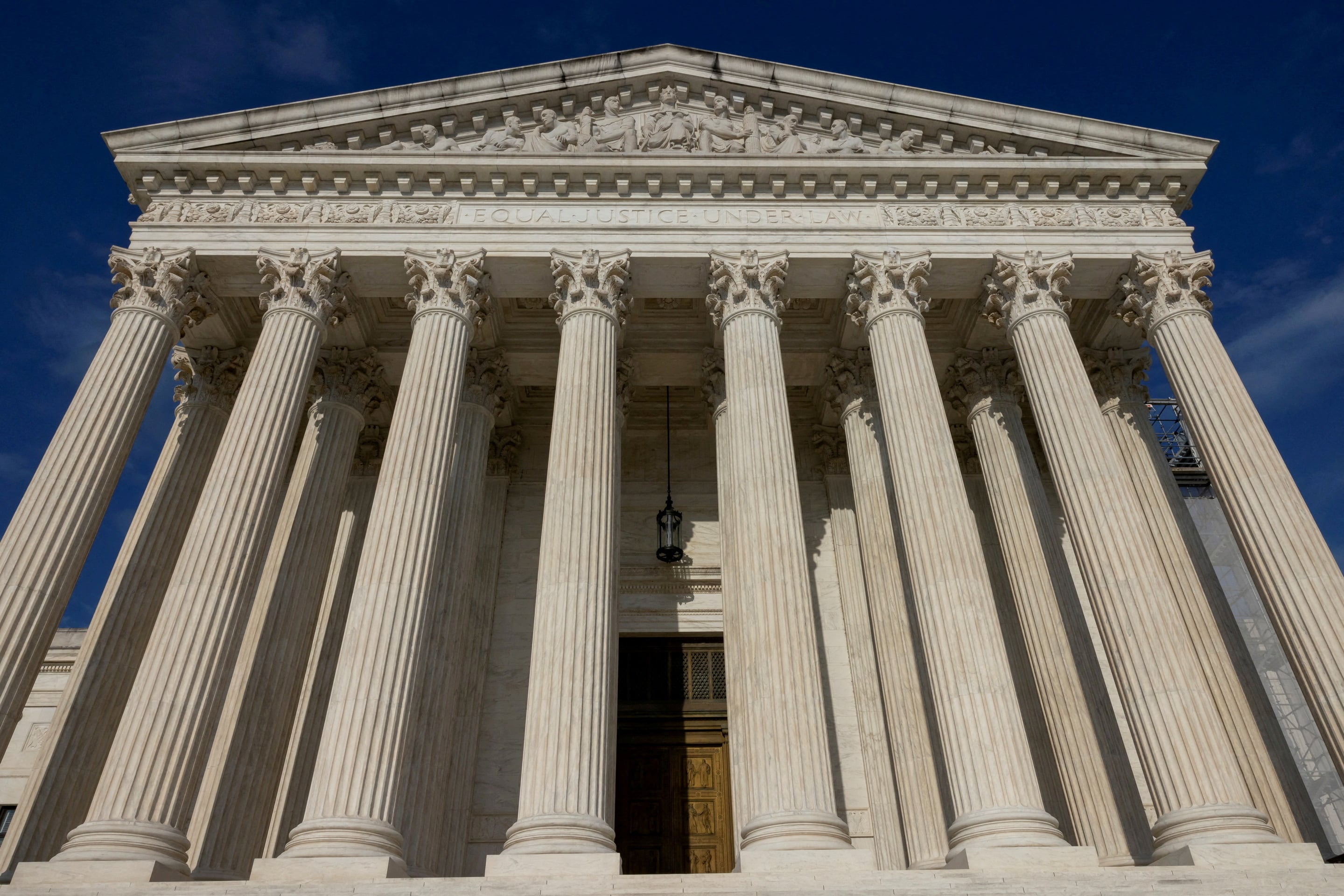
The Supreme Court announced this Friday that it will decide whether Donald Trump’s attempt to end birthright citizenship through an executive order is constitutional. The judges will hear the president’s appeal against a ruling by a lower court that annulled the decree by which he withdrew the right to acquire citizenship – guaranteed by the United States Constitution since the 19th century – to the children of immigrants who are in the country irregularly or temporarily. The High Court’s decision, expected in early summer, could redefine who is considered an American and who is not.
Trump signed the executive order in question on the first day of his second term. The decree ordered government agencies to stop issuing citizenship documents to children of parents who were in the country irregularly or who were visiting temporarily. This is despite the fact that the Fourteenth Amendment to the Constitution, ratified in 1868, states: “All persons born or naturalized in the United States, and subject to the jurisdiction thereof, are citizens of the United States and of the State in which they reside.” It was approved after the Civil War to guarantee the right to citizenship for former slaves and their descendants.
Trump’s decree never went into effect. The lawsuits did not take long and the measure was quickly blocked in the courts. The Republican government appealed to the Supreme Court and asked the justices to consider whether lower court judges had exceeded their powers by granting a nationwide suspension of an executive order such as the one that ended the right to birthright citizenship. The High Court omitted to comment on the constitutionality of the decree, but it did grant the president a very important victory by ruling that federal judges—of which there are hundreds throughout the country—were limited in their power to oppose the Republican’s agenda through these suspensions.
Shortly after the ruling last June, a group of people represented by the American Civil Liberties Union (ACLU) filed a class-action lawsuit in the State of New Hampshire against the decree that ended birthright citizenship. A federal judge again blocked the order, but before an appeals court could issue a verdict on that resolution, the Trump Administration asked the Supreme Court in September to examine the case, the same one that the judges now agree to hear.
“No president can change the fundamental promise of citizenship set forth in the 14th Amendment,” Cecillia Wang, national legal director of the ACLU, said in a statement Friday. “For more than 150 years, it has been the law and our national tradition that every person born in the United States is a citizen from birth. The federal courts have unanimously held that President Trump’s executive order is contrary to the Constitution, an 1898 Supreme Court decision, and a law enacted by Congress. We look forward to putting this matter to rest once and for all in the Supreme Court.”
The case reaches a Trump-friendly High Court, with a conservative majority and which has issued rulings in his favor on countless occasions during his first months back in office. In this particular dispute, however, a ruling in favor of the Republican would upset a fundamental principle of the US Constitution and the country’s immigration policy. If the decree goes into effect, millions of people could face new obstacles when documenting their newborns as US citizens.
The executive order establishes several restrictions for accessing birthright citizenship. Under the order, this right does not automatically extend to people born in the United States when that person’s mother was illegally in the United States and the father was not a U.S. citizen or legal permanent resident at the time of birth. Nor when the mother’s presence in the United States at the time of birth was legal but temporary because, for example, she had only a visa, and the father was not a US citizen or legal permanent resident at the time of birth.
Trump’s desire to end birthright citizenship is part of his broad crackdown on immigration. In his obsession with carrying out the “largest deportation” in the history of the United States, the president has experimented with the idea of denaturalizing citizens and has ended programs and protections that for years have allowed millions of migrants to live and work in the country legally, leaving them exposed to being seized by immigration agents and expelled, often without due process.
For more updates, visit our homepage: NewsTimesWire