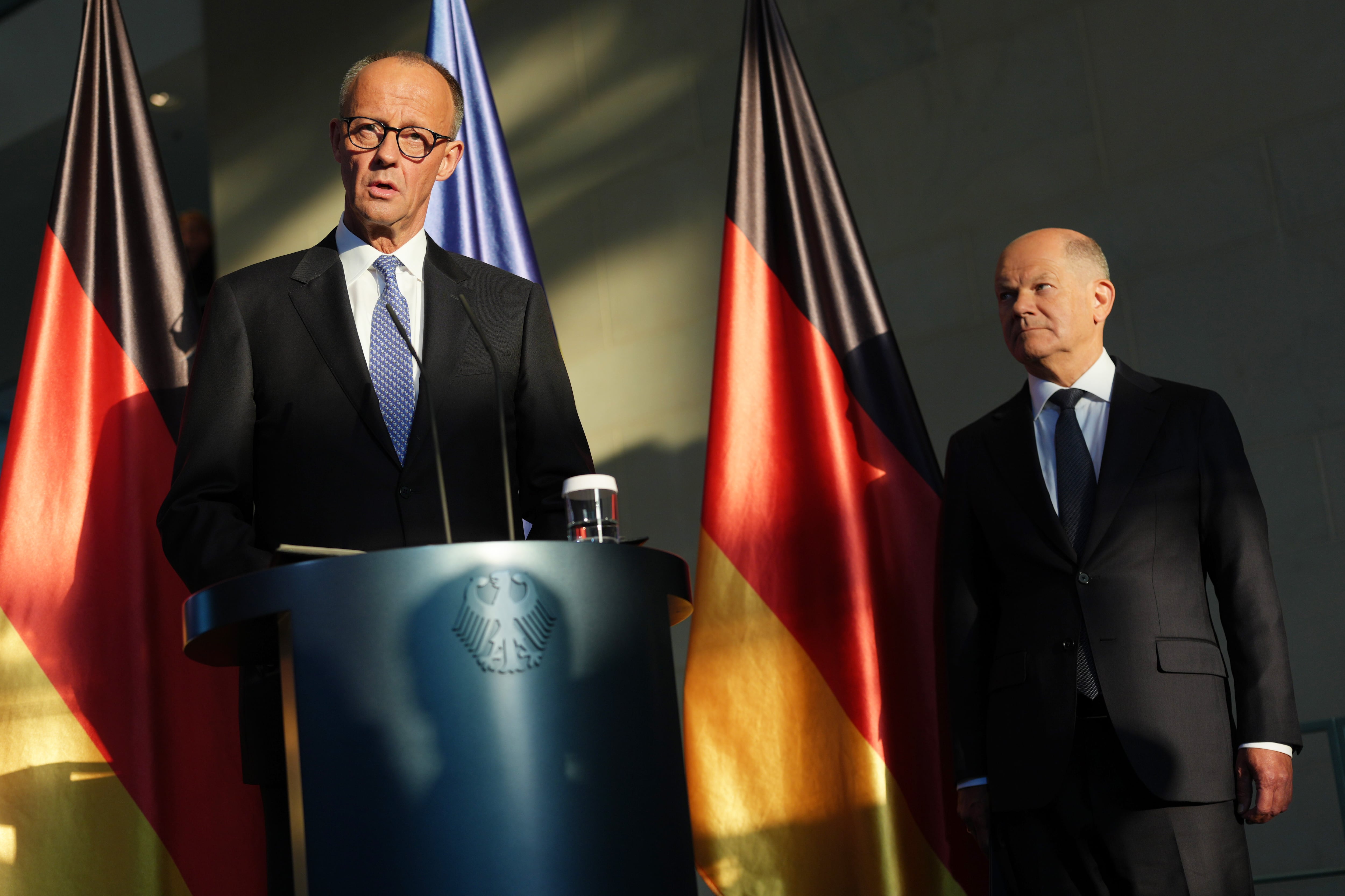
The German Government accuses Russia of a major cyber attack and a disinformation campaign during the electoral campaign of the last general elections at the end of February. For this reason, he has summoned the Russian ambassador, Sergei Netschajew, to the Foreign Ministry in Berlin, as reported this Friday by Martin Giese, spokesman for that department.
According to the German Foreign Ministry, there is evidence that Moscow influenced the elections. “Russia is concretely threatening our security,” declared the spokesperson, explaining that the objective of Russian activities is to divide German society and weaken trust in local institutions. Giese added that the German government, in coordination with its European partners, “will take a series of countermeasures so that Russia pays a price for its hybrid actions.” According to its own statements, the federal government has been observing an increase in these types of threats from Russia for some time.
On the one hand, Germany accuses Russia of carrying out a cyber attack against German air traffic control in August 2024 that, according to its data, can clearly be attributed to the Russian hacker group Fancy Bear. “Our intelligence shows that the Russian military secret service GRU is responsible for this attack,” the spokesperson said. An attack like this can have serious consequences, as controllers from the German air traffic control service monitor radar control centers and ensure that there is always a sufficient safe distance between aircraft.
Along with this cyberattack, the spokesperson also highlighted that it can now be stated with certainty that Russia has attempted, through the “Storm 1516” campaign, which has been carried out since 2024, “to influence and destabilize both the last elections to the Bundestag (German Parliament) and, on an ongoing basis, the internal affairs of the Federal Republic of Germany” and added that there is “reliable information” that behind this are organizations supported by the GRU intelligence service. Giese added that Germany condemns Russia’s actions and is taking measures to counter it.
The “Storm-1516” campaign is one of the worst sources of disinformation on the internet, even by Russian standards, according to the German spokesperson. During the last election campaign, he spread videos with serious lies through his numerous fake websites. These videos were mainly directed against the Conservatives and the Greens.
fake videos
Two days before the early elections on February 23, the German Government reported that the German security authorities had indications that the false videos that appeared about alleged manipulations in the electoral ballots were part of a Russian disinformation campaign. These videos claimed that the postal vote documents had been manipulated so that the far-right party Alternative for Germany (AfD) did not appear on the ballots.
According to the German publication Der Spiegelin one of the videos an alleged doctor also appeared who claimed that the then candidate of the Christian Democratic Union (CDU) and now chancellor, Friedrich Merz, had been treated years ago in a German clinic for serious psychological problems for which false medical records showed. On another page they invented a corruption scandal worth one hundred million euros in which Ukrainian politicians were also involved, attributed to the then candidate for the Chancellery for the Greens, Robert Habeck.
German intelligence services have long warned of the increase and aggressiveness of Russian activities against the West. Already in October, in a public hearing in the German Parliament, the president of the German Federal Intelligence Service (BND), Martin Jäger, declared that “in Europe there reigns at best a cold peace, which at any moment can give way to hot confrontations.”
In his opinion, Russia is testing “the limits” of European countries and seeks to expand its zone of influence towards the West and make Europe economically dependent on it. “If in doubt, Russia will not hesitate to enter into a direct military conflict with NATO,” he said. Likewise, he indicated that Russia “knows no limits” when it comes to imposing its own interests and cited as proof of this Moscow’s attempts to manipulate elections and public opinion, as well as the spread of disinformation.
The Russian hacker group Fancy Bear is an old acquaintance of German security authorities. Last May, the German government reported Russian cyber activities targeting Western logistics and technology companies in particular. They also indicated that the most affected were the companies involved in sending humanitarian aid to Ukraine.
According to the German Government, those responsible for the attacks are unit 26165 of the Russian military secret service GRU and the associated cyber group APT28, also known by that name Fancy Bear, Sofacy, Forest Blizzard and other names. “This unit, active in cyberspace since 2004, is especially known for its cyber attacks on political targets, such as the German Parliament (in 2015), the US Democratic Party (in 2016) or the German Social Democratic Party (in 2023),” they wrote in a statement.
The German authorities then explained that to obtain initial access, APT28 uses different methods. In 2023, German targets were attacked, in particular by exploiting a critical vulnerability in Microsoft Outlook and via emails from spear phishing (extremely personalized messages to make the victim believe that it is someone they trust). In 2024, attacks against Germany focused on brute force attacks, which is what is known as the attempt to guess legitimate access data by trying a large number of possible combinations.
Cyberattacks are used to spy on infrastructure nodes such as airports, seaports, railway lines and border crossings. To this end, GRU unit 26165 infiltrated, for example, IP cameras in specific locations in Ukraine and its neighboring countries to observe and track humanitarian aid shipments and thus facilitate alleged sabotage attacks.
For more updates, visit our homepage: NewsTimesWire