
The Call That No Business Owner Wants to Receive
The call came late in the afternoon, just as Omar was about to leave the office.
It was supposed to be an ordinary day. Meetings wrapped up. Emails cleared. The usual rhythm of running a growing business in the UAE. When his finance manager asked if he had a moment, Omar assumed it was about cash flow or an upcoming client payment.
Instead, it was about a penalty.
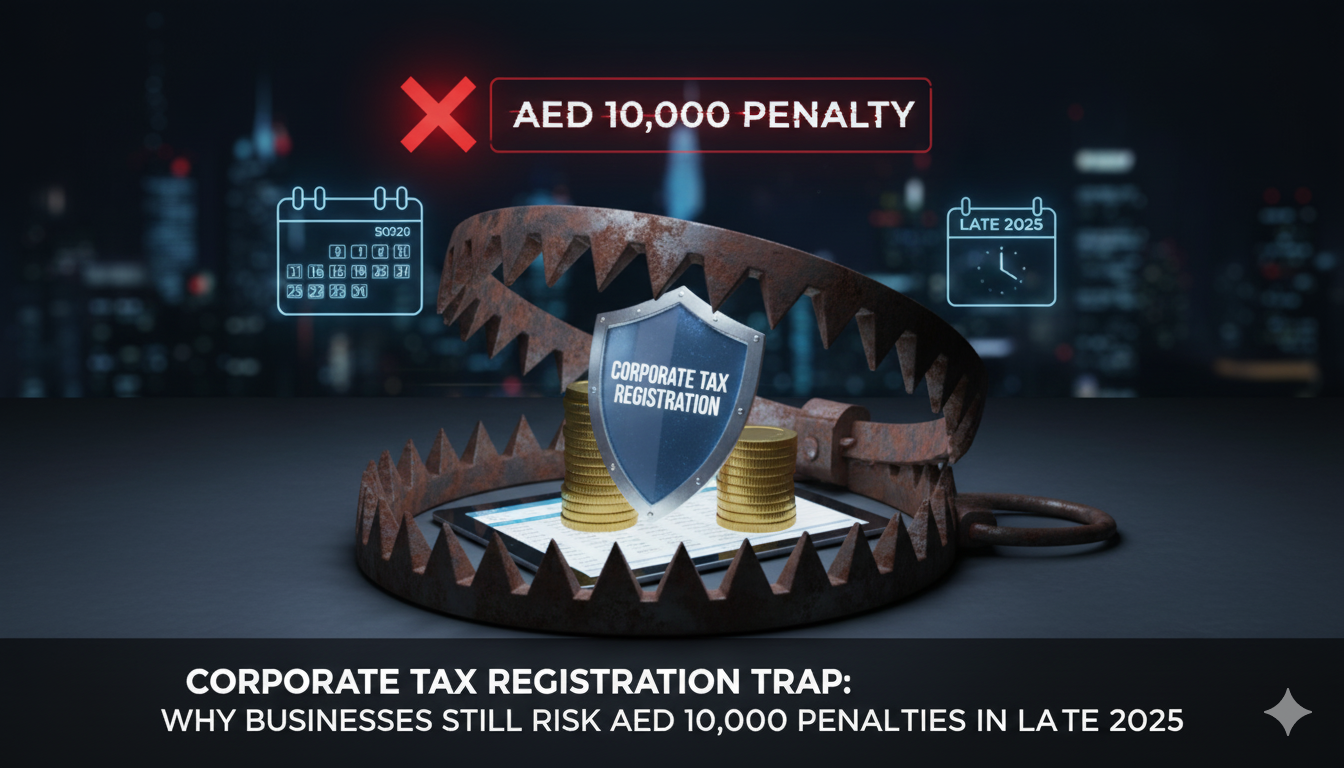
AED 10,000.
The reason was something Omar had heard about but never truly prioritized. Corporate Tax Registration.
His first reaction was disbelief. The company was compliant with VAT. The business was not even making significant profits yet. Corporate tax, he thought, was something to worry about later.
Later had arrived.
Why Corporate Tax Feels Abstract Until It Becomes Personal
For many business owners, corporate tax feels theoretical until it becomes tangible. It exists in articles, discussions, and social media posts, but not in day-to-day decision-making.
That is exactly why Corporate Tax Registration catches businesses off guard.
The UAE introduced corporate tax as part of a broader effort to align with international standards. It was not meant to punish businesses. It was meant to formalize structure and transparency.
But systems built on structure have no tolerance for delay.
Omar realized that corporate tax was not just about numbers. It was about process, deadlines, and formal recognition within the tax framework.
Understanding Corporate Tax Registration Beyond the Surface
Corporate Tax Registration is the formal declaration that your business exists within the UAE corporate tax system.
It is not a tax payment. It is not a declaration of profit. It is not optional.
Once registered, your company becomes accountable under corporate tax law. You are expected to file returns, even if the outcome is zero tax payable.
This is where confusion begins.
Many business owners believe that if their tax payable is zero, no action is required. In reality, zero tax does not mean zero obligation.
The Role of UAE Federal Tax Registration in Compliance
At the heart of the process lies UAE federal tax registration.
This registration connects your business to the federal tax authority and assigns it a corporate tax identity. Without this step, the system treats your business as unregistered and therefore non-compliant.
UAE federal tax registration is not limited to large corporations. It applies to:
- Small and medium enterprises
- Startups
- Free zone companies
- Professional firms
- Licensed individuals conducting business
Omar’s company fell squarely within this scope, yet the assumption that corporate tax was a future concern delayed action.
Corporate Tax Rates in the UAE and the False Sense of Security
One of the most misleading aspects of the system is how people interpret Corporate tax rates in the UAE.
When business owners hear that certain income levels are taxed at zero percent, they relax. They assume registration can wait.
This assumption is costly.
Corporate tax rates in the UAE determine how much tax is payable, not whether registration is required. The obligation to register exists regardless of rate.
The rate is a calculation. Registration is compliance.
Confusing the two is one of the most common reasons businesses face penalties.
Why Deadlines Are Missed So Easily
The challenge with Corporate Tax Registration is not complexity. It is timing.
Deadlines vary based on:
- License issuance date
- Type of entity
- Whether the business existed before corporate tax implementation
- Whether the business is newly incorporated
There is no universal date that applies to everyone.
Omar assumed there would be reminders. Emails. Notifications. Some kind of warning.
The system does not work that way.
The Silent Nature of the Tax System
The UAE tax system is automated and deadline-driven.
It does not chase businesses. It records actions and inactions.
If Corporate Tax Registration is not completed by the assigned date, the system flags non-compliance automatically.
The penalty follows without discussion.
This silence creates a dangerous illusion of safety. No message does mean no obligation.
The AED 10,000 Penalty and Why It Hurts More Than Expected
When Omar saw the AED 10,000 penalty, the amount was not what shocked him most.
What hurt was realizing that:
- The penalty was avoidable
- No tax was actually due
- The mistake was administrative
This penalty is not based on revenue, profit, or intent. It is a flat administrative fine.
Missing Corporate Tax Registration is treated as a failure to comply with a legal requirement, not a financial miscalculation.
The Psychological Cost of Non-Compliance
Beyond the financial hit, penalties create doubt.
Omar began questioning what else might have been missed. Were future filings at risk? Would audits follow? Would licensing be affected?
Compliance failures introduce uncertainty, and uncertainty is expensive in business.
Corporate Tax Registration as a Foundation, Not a Burden
Businesses that approach Corporate Tax Registration correctly view it as foundational.
Once registration is complete:
- Filing becomes predictable
- Deadlines are clear
- Reduce the Risk
- Planning improves
Those who delay operate reactively, constantly correcting mistakes instead of building systems.
Why Small Businesses Are the Most Vulnerable
Ironically, smaller businesses are hit hardest by penalties.
AED 10,000 is manageable for a large corporation. For a growing SME, it can disrupt cash flow.
Small business owners juggle operations, sales, staffing, and finance. Compliance often sits at the bottom of the priority list.
That is exactly why Corporate Tax Registration deadlines are missed.
Free Zones and the Registration Myth
Another common misconception involves free zones.
While certain free zone entities may benefit from preferential treatment, registration is still mandatory.
Corporate Tax Registration applies regardless of location. Free zone status does not remove the obligation to register.
Omar had assumed otherwise based on informal advice. The penalty corrected that belief instantly.
Corporate Tax Rates in the UAE and Strategic Planning
Understanding Corporate tax rates in the UAE is important for forecasting and planning, but it should never dictate whether registration happens.
Rates influence future tax strategy. Registration ensures current compliance.
Separating these two concepts is critical for long-term stability.
What Happens After You Miss Registration
Once the deadline is missed, the sequence is predictable.
First, the penalty is issued.
Then, registration must still be completed.
After that, returns must be filed according to the schedule.
Late registration often leads to late filing, which can trigger additional penalties.
What began as a single missed step becomes a compliance backlog.
The Emotional Reality of Fixing Mistakes
Omar spent weeks correcting the issue.
Emails. Forms. Clarifications. Internal reviews.
Time that could have been spent growing the business was redirected toward damage control.
The lesson was clear. Prevention is always cheaper than correction.
Corporate Tax Registration as a Business Discipline
Successful businesses treat compliance as a discipline, not an obligation.
They track deadlines. They assign responsibility. They review changes proactively.
Corporate Tax Registration becomes part of governance, not an afterthought.
Why Proactive Compliance Builds Confidence
There is confidence in knowing your business is aligned with regulations.
When UAE federal tax registration is complete and Corporate Tax Registration is properly handled, business owners make decisions without fear of surprise penalties.
Confidence drives growth.

A Pattern Repeating Across the UAE
Omar’s experience is not unique.
Across industries, sizes, and structures, the same story repeats.
A business assumes it has time.
The deadline passes quietly.
The penalty arrives loudly.
Explore more on: https://newstimeswire.com
Conclusion: The True Cost of Delay
The introduction of the UAE Corporate Tax reshaped how businesses operate. It introduced accountability, structure, and enforceable compliance.
At the center of this system stands Corporate Tax Registration.
It is not optional. It is not flexible.
It is the legal recognition of your business within the tax framework.
Understanding UAE federal tax registration and respecting deadlines ensures that corporate tax becomes a manageable process rather than a painful lesson.
Knowing Corporate tax rates in the UAE helps with planning, but only registration protects you from penalties.
At Dubai Business and Tax Advisors, this stratergy is comes to life every day. Businesses that act early stay compliant and confident. Businesses that delay often learn through fines.
Because in the UAE’s evolving regulatory environment, the most expensive tax mistake is rarely the tax you pay.
It is the Corporate Tax Registration that you failed to complete on time