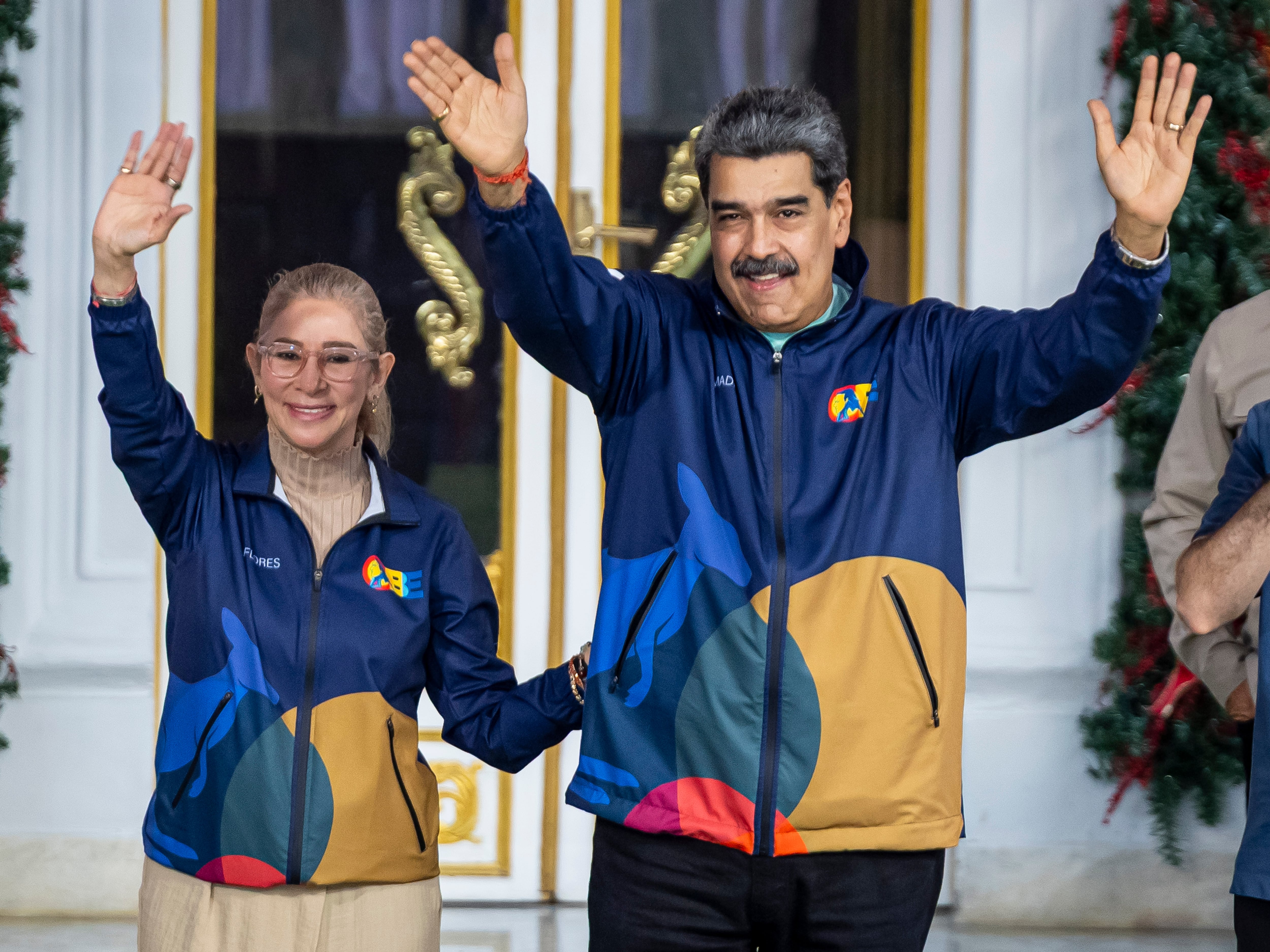
The United States Department of the Treasury announced this Friday new sanctions against people linked to Chavismo, including direct relatives of the first lady of Venezuela, Cilia Flores, and Panamanian businessman Ramón Carretero. The measure is part of Washington’s pressure strategy on the Government of Nicolás Maduro, which is advancing on different fronts.
The Office of Foreign Assets Control (OFAC) included in the sanctions list people related to Carlos Malpica Flores, nephew of Cilia Flores, who was reinstated to the sanctions regime last week. Eloísa Flores de Malpica, mother of Malpica Flores and sister of the first lady, now joins; Carlos Evelio Malpica Torrealba, his father; Iriamni Malpica Flores, his sister; Damaris del Carmen Hurtado Pérez, his wife; and Erica Patricia Malpica Hurtado, her adult daughter.
The Treasury Department affirms that the sanctions are based on the presumption that those indicated participated directly or indirectly in corrupt transactions with the Venezuelan State or in government projects and programs.
“Today, the Treasury sanctioned individuals who support Nicolás Maduro’s rogue narco-state. We will not allow Venezuela to continue flooding our nation with lethal drugs,” said Treasury Secretary Scott Bessent. He added that “Maduro and his criminal accomplices threaten the peace and stability of our hemisphere” and that the Trump Administration will continue to attack the networks that support what he described as an “illegitimate dictatorship.”
The sanctions also reach relatives of Panamanian businessman Ramón Carretero, accused by Washington of doing business with Chavismo and with the Maduro-Flores family. The list includes his brothers Roberto and Vicente Luis Carretero Napolitano, whose assets and accounts in the United States are blocked.
Malpica Flores had been removed from the sanctioned list in 2022, within the framework of negotiations between Caracas and the Joe Biden Administration. The first lady’s nephew was national treasurer and played a key role in the management of the state oil company PDVSA. That same year, the United States freed two other nephews of Cilia Flores – Efraín Antonio Campo Flores and Franqui Francisco Flores de Freitas – who were sentenced in 2017 in New York to 18 years in prison for drug trafficking, after being detained in Haiti during a DEA undercover operation. Both were released in an exchange for American prisoners, but last week they were sanctioned again along with their cousin.
Since 2008, more than 275 people linked to Chavismo – including civil and military officials, businessmen and commercial operators – have been sanctioned, mainly by the United States and the European Union, in addition to countries such as Canada, the United Kingdom, Panama and Switzerland. The new measures coincide with recent statements by the Secretary of State, Marco Rubio, who reiterated accusations about alleged links between the Maduro Government and criminal activities. “In the case of Venezuela it is very simple: it is an illegitimate regime that openly cooperates with Iran, with Hezbollah and with drug trafficking groups, including the ELN and FARC guerrillas, which operate within Venezuelan territory,” he stated.
Rubio maintained that these alliances turn the Venezuelan Government into a factor of regional destabilization and a facilitator of activities that threaten the security of the United States. “The most serious threat to the United States in the Western Hemisphere comes from transnational terrorist criminal groups, focused mainly on drug trafficking. There is one place that does not cooperate, and it is the illegitimate regime of Venezuela,” he declared this Friday at a press conference.
For more updates, visit our homepage: NewsTimesWire