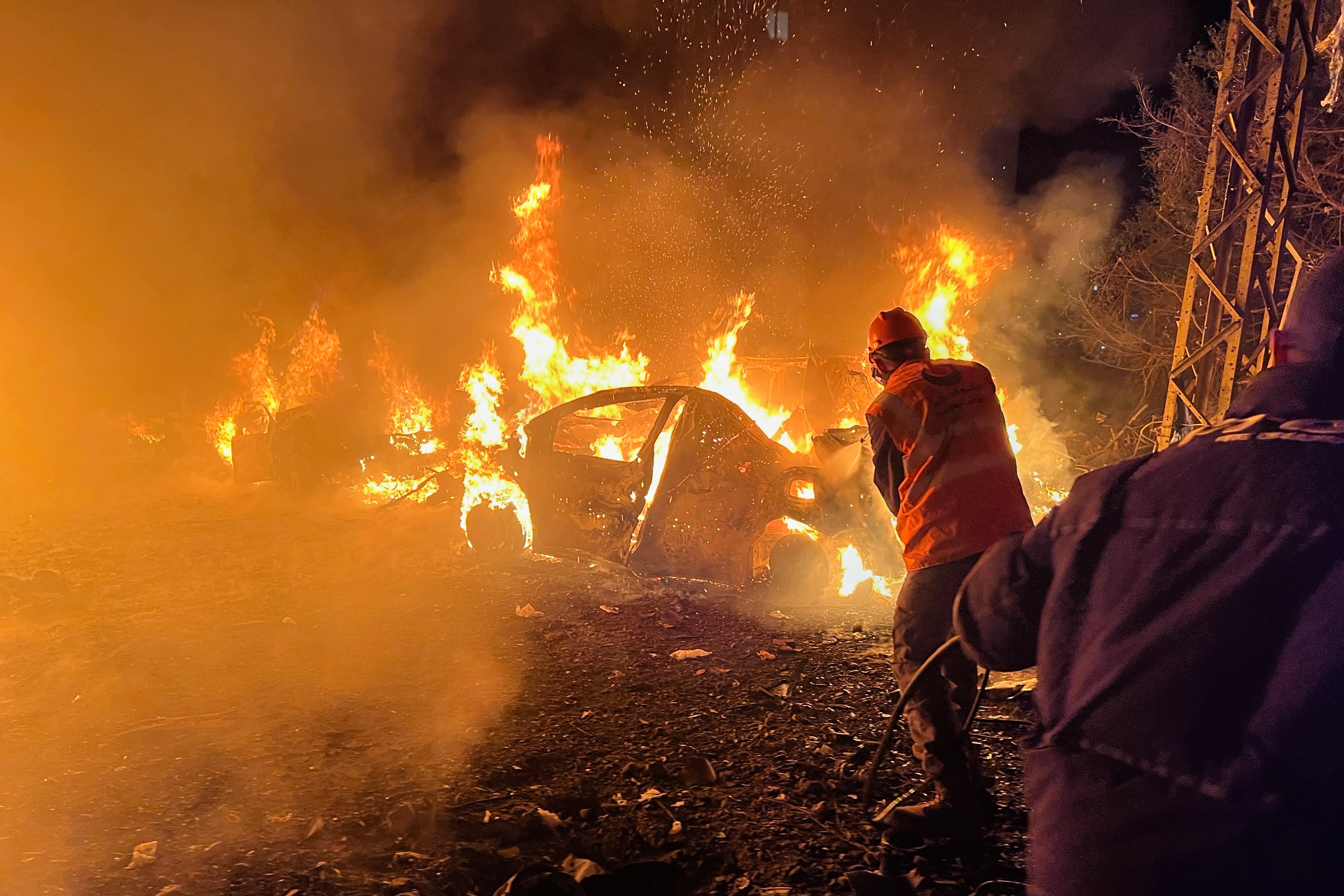
As of this Sunday morning, at least 16 deaths have been caused by the 24 forest fires in combat concentrated in the central-southern area of Chile. President Gabriel Boric has declared this morning a state of constitutional emergency of catastrophe in the regions of Ñuble and Biobío, which allows the Armed Forces to collaborate with the almost 3,000 firefighters deployed in the affected area. The Chilean president will travel to the epicenter of the catastrophe, where the expected extreme temperatures make efforts to control the fire difficult. More than 20,000 homes are without electricity.
The Minister of Security, Luis Cordero, has confirmed the death of 16 people (one in the Ñuble region and 15 in the Biobío region). Added to this are around twenty injured and, according to the authorities, the numbers may increase during the day. “It is only possible to verify the situation of damage, not only material but eventually in terms of human lives, once there is no danger so that the teams dedicated to these tasks, and particularly the police that carry out the investigations, can go to the scene of the events,” warned the Minister of the Interior, Álvaro Elizalde.
The governor of Biobío, Sergio Giacaman, compared the impact of the emergency with that of the devastating earthquake of 2010. “It is a worse catastrophe, in my understanding, than what we experienced in 2010,” he noted. In total, the flames have devastated more than 8,000 hectares in the south-central area of the South American country. Minister Elizalde, after meeting with the Committee for Disaster Risk Management (Cogrid), reported this morning that some 50,000 evacuation alerts have been sent under the Emergency Alert System (SEA).
The elected president of Chile, José Antonio Kast, referred to the emergency around 11:00 in the morning on his social networks: “In the face of the devastating fires in Ñuble and Bio Bio, today the focus must be on fighting the fires, going to the aid of the affected people and supporting the authorities to face this emergency. There is no room for politics at this critical moment of the emergency.” In the Biobío region, forest fires have affected more than 5,000 hectares and in Ñuble, more than 4,000.
The National Disaster Prevention and Response Service (Senapred) has recommended the population to react calmly and follow the instructions of the authorities and emergency teams, especially with the SEA evacuation alerts. Esteban Krause, regional director of the National Forestry Corporation in Bío Bío, explained this morning that the speed of the wind has made it very difficult to control the fires and has anticipated that this Sunday will also be “a difficult day.” “High temperatures and strong winds are expected and unfortunately we have simultaneity of fires. That is, we have to divide resources into different areas to be able to control these fires,” he noted.
For more updates, visit our homepage: NewsTimesWire