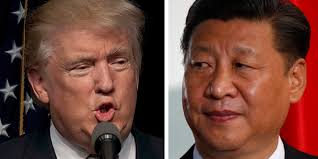
The year 2026 finds the world at a dangerous crossroads. While the average citizen is concerned with inflation, climate change, and healthcare, the corridors of power in Washington are echoing with the drums of a new conflict. The mainstream narrative is fixated on the so-called “China Threat,” but if we look beneath the surface, a different story emerges.
This is not a conflict born of necessity; it is a manufactured crisis designed to sustain the military-industrial complex profits and maintain a unipolar world order that is rapidly fading.
The Economic Engine of Confrontation
Why is the rhetoric surrounding US-China proxy war risks escalating now? To understand this, we must look at the economics of war. For decades, the US economy has been tethered to defense spending. When the Cold War ended, a “peace dividend” was promised but never delivered. Instead, new enemies were found.
Today, China’s rise as a global economic powerhouse—not through military conquest, but through infrastructure and trade—threatens the dominance of Western financial hegemony. By framing China as an existential threat, the “War Hawks” ensure that trillions of dollars continue to flow into weapons manufacturing rather than social programs. This is a classic socialist view on militarism: war is the ultimate tool for capital preservation.
South China Sea Geopolitics: A Flashpoint by Design
The South China Sea geopolitics are often cited as the primary reason for potential military intervention. We are told the US must protect “freedom of navigation.” However, a closer look reveals that the US is currently surrounding China with a “ring of steel”—a network of military bases from Japan to the Philippines.
Imagine the roles were reversed: if China had naval fleets patrolling the Gulf of Mexico or bases in Cuba, the US would consider it an act of war. The double standard of US military interventionism is the primary driver of tension in the region. To avoid a catastrophic miscalculation, we must demand a de-escalation and a return to people-to-people diplomacy.
Learning from the Past: Vietnam to Today
As someone who stood against the tide during the Vietnam era, I see haunting parallels in the current demonization of China. Just as the “Domino Theory” was used to justify the slaughter in Southeast Asia, the “China Threat” is being used to justify the militarization of the Pacific.
In my book, My Whirlwind Lives, I discuss how the anti-war movement succeeded by challenging the government’s lies and humanizing the supposed enemy. We need that same spirit today. We must realize that the working class in San Francisco has more in common with the working class in Shanghai than they do with the CEOs of Lockheed Martin or Raytheon.
The Human Cost of a New Cold War
A hot war with China would be unlike anything humanity has ever seen. We are talking about two nuclear-armed states. But even without a “hot” war, the human cost of economic sanctions and trade wars is already being felt.
-
Global Supply Chain Disruption: Pushing millions into poverty.
-
Environmental Destruction: Military activities are the largest polluters on earth.
-
Resource Diversion: Money spent on hypersonic missiles is money stolen from schools and hospitals.
Building the Anti-War Movement 2026
The fight for US-China proxy war risks requires us to reject the binary of “Us vs. Them.” We must advocate for a multipolar world where cooperation on climate change and pandemics takes precedence over naval drills and trade bans.
What can you do?
-
Educate: Challenge the “China Threat” narrative in your local communities.
-
Organize: Join organizations that prioritize diplomacy over defense contracts.
-
Support Independent Media: Read and share perspectives that the mainstream media refuses to cover.
The path to war is paved with silence. It is time for us to speak up, bridge the divide, and recognize that China is not our enemy—war is. for more news related blog to visit site newstimewire.