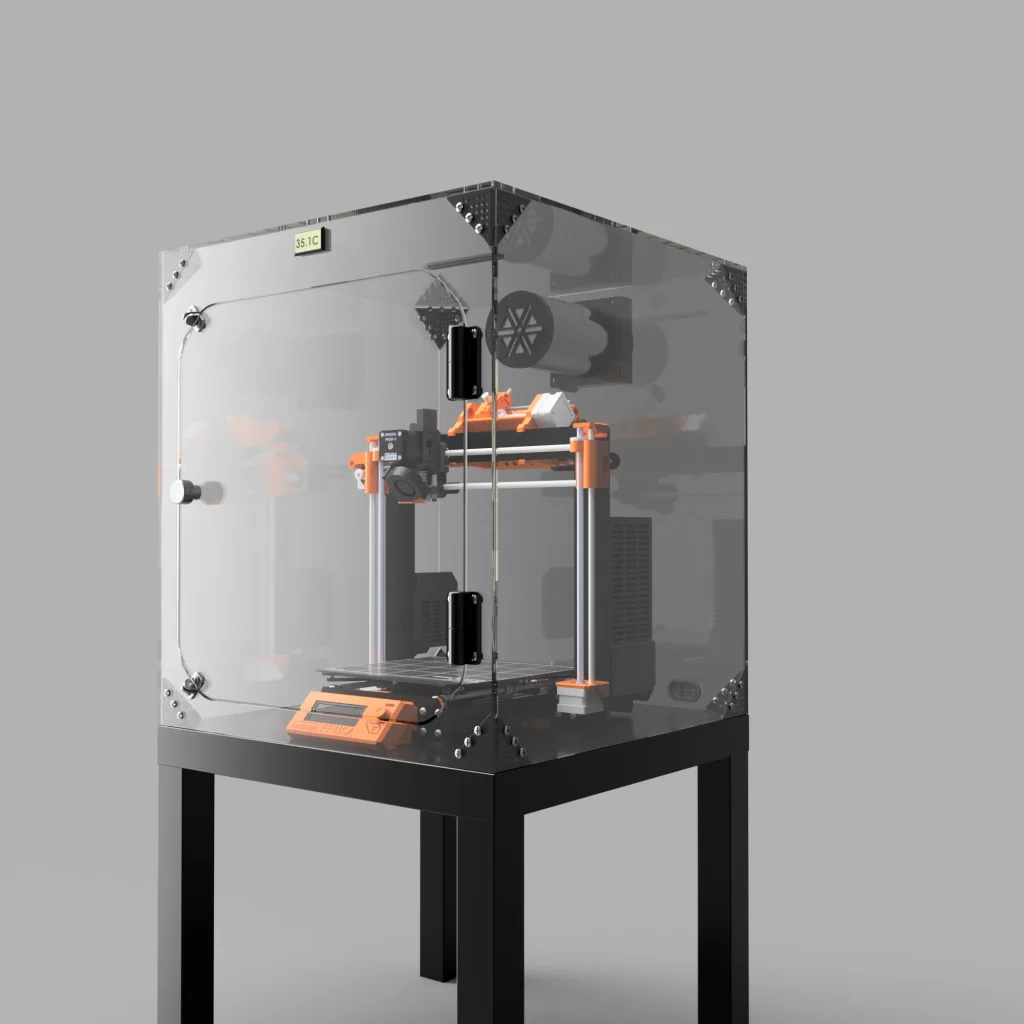
Moving beyond PLA and PETG often pushes makers into a new phase of 3D printing. Materials like ABS, ASA, and polycarbonate enable stronger, more heat-resistant parts, but they also introduce new challenges. Warping, poor layer adhesion, and unstable prints become common issues, especially on large-format printers. This is where many users begin asking an important question: Is the Prusa XL enclosure really worth it for high-temperature printing?
The answer depends on how you print, what materials you use, and the environment around your machine. Understanding what an enclosure actually does helps clarify whether it’s a necessary upgrade or simply a nice extra.
What a 3D Printer Enclosure Actually Does
A printer enclosure is more than just a box around your machine. It creates a controlled printing environment that reduces external variables that affect part quality.
Temperature Stability
High-temperature filaments react strongly to temperature fluctuations. Even small drafts can cause layers to cool unevenly, leading to cracking or warping. An enclosure traps heat around the printer and keeps the chamber temperature stable during long prints.
Protection From Airflow
Air movement from doors, windows, or HVAC systems often causes edge lifting on larger models. Enclosures block these air currents, allowing prints to cool slowly and evenly.
Fume Containment
Engineering plastics can release noticeable odors and ultrafine particles. While an enclosure alone doesn’t remove fumes, it makes filtration and ventilation possible through exhaust systems or carbon filters.
Why High-Temperature Materials Need an Enclosure
High-temperature filaments behave very differently from standard materials.
ABS and ASA
ABS and ASA shrink as they cool. When temperature changes occur too quickly, layers separate or corners lift off the build plate. Printing these materials in open air almost always leads to failures on larger parts.
An enclosed environment helps maintain consistent heat, significantly reducing these problems.
Polycarbonate and Blends
Polycarbonate requires even higher temperatures and is extremely sensitive to cooling. Without a stable chamber, prints may fail repeatedly before finishing.
For these materials, environmental control often matters more than slicer settings.
How the Prusa XL Enclosure Fits Into This
The Prusa XL is designed as a large-format, modular printer. Its open-frame structure works perfectly for lower-temperature materials, but advanced filaments demand more control.
Using the Prusa XL enclosure helps transform the printer into a more capable system for engineering materials by:
- Maintaining consistent chamber warmth
- Reducing thermal stress on large prints
- Allowing safer handling of fumes
- Supporting longer, multi-day print jobs
For users who occasionally print small ABS parts, workarounds may be available. But once print size increases, environmental stability becomes critical.
Print Quality Improvements You Can Expect
Reduced Warping on Large Parts
One of the biggest benefits users notice is improved bed adhesion on wide models. Corners remain flat instead of curling mid-print.
Stronger Layer Bonding
Stable temperatures allow layers to fuse properly. This improves mechanical strength and reduces cracking along layer lines.
Higher Success Rates
Failed prints waste time and filament. Enclosures increase consistency, which becomes especially valuable during long, complex jobs.
Is It Only About Heat?
Not entirely.
Noise Reduction
An enclosed printer dampens mechanical noise. This can make a noticeable difference when the printer runs in a home office or shared workspace.
Cleaner Print Area
Enclosures help keep dust away from belts, rails, and printed parts. Over time, this can reduce maintenance issues.
Safety and Comfort
When printing materials that emit odors, an enclosure allows controlled ventilation rather than allowing fumes to spread throughout the room.
Do You Still Need Extra Measures?
Even with an enclosure, some materials may require additional tuning.
Bed Surface and Adhesives
ABS and polycarbonate often benefit from specialized build plates or adhesives to maintain strong first-layer adhesion.
Ventilation Setup
An enclosure helps contain fumes, but proper exhaust or filtration is still recommended—especially in small rooms or shared spaces.
Temperature Management
While passive enclosures improve stability, some users printing extreme materials prefer active heating or monitoring to maintain ideal chamber conditions.
Is the Prusa XL Enclosure Worth the Cost?
The value depends on your printing goals.
It Makes Sense If You:
- Print ABS, ASA, or PC regularly
- Produce large or structural parts
- Run long prints that must finish successfully
- Work in a normal indoor room
- Want cleaner, more predictable results
It May Not Be Necessary If You:
- Print only PLA or PETG
- Rarely print large models
- Use the printer casually or occasionally
For serious makers, engineers, and professionals, the enclosure often becomes part of the core workflow rather than an optional upgrade.
Does It Help With PLA and PETG?
Interestingly, yes—though indirectly.
PLA and PETG don’t need heat retention, but they benefit from protection against drafts. Large flat prints can still lift in open environments. An enclosure helps maintain consistency, even if chamber heating isn’t required.
That said, care must be taken with PLA, as excessive heat can soften the filament path if ventilation is poor.
Final Thoughts
High-temperature printing demands environmental control. No amount of slicer tuning can fully compensate for unstable airflow and fluctuating temperatures. The Prusa XL enclosure provides the consistency needed to unlock the printer’s full potential when working with demanding materials.
If your goal is occasional experimentation, you might manage without it. But if you plan to rely on ABS, ASA, or polycarbonate for real projects, the enclosure shifts printing from trial and error to repeatable success.
In the long run, fewer failed prints, stronger parts, and a safer workspace often justify the investment, especially for those using the Prusa XL as more than just a hobby machine.