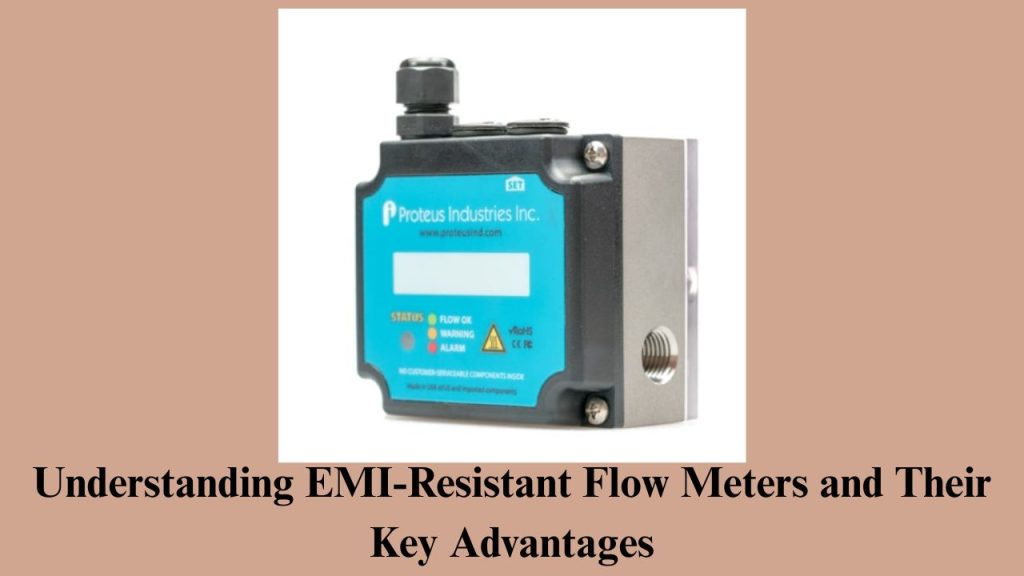
In modern industrial environments, electromagnetic interference is one of the most overlooked threats to measurement accuracy. From RF power supplies to heavy-duty motors and welding equipment, emi resistant flow meter sources are everywhere on the factory floor. For industries that depend on precise liquid flow monitoring such as manufacturing, automotive, and chemical processing even the slightest signal disruption can lead to costly errors, faulty readings, and unplanned downtime.
This is exactly why emi resistant flow meter have become an essential component in harsh operating environments. Designed to withstand high levels of electromagnetic and radio-frequency noise, these flow meters deliver stable, reliable readings even in the presence of powerful interference sources. In this blog, we will break down how EMI-resistant flow meters work, why they matter, and the advantages they offer for demanding industrial applications.
What Makes a Flow Meter EMI-Resistant?
A standard flow meter relies on electrical signals to measure and transmit flow data. When electromagnetic interference penetrates these signals, the result is noise, erratic readings, and inaccurate data. An EMI-resistant flow meter is engineered to block or absorb this interference before it can affect the internal circuitry.
This is achieved through a combination of shielded enclosures, filtered signal pathways, and advanced digital signal processing. The housing and internal components are designed so that external electromagnetic fields cannot couple into the measurement and output circuits. A high-quality EMI-resistant flow meter doesn’t just try to reduce noise after it appears—it’s built to stop electromagnetic interference from affecting the system in the first place. This forward-thinking approach is what truly sets advanced EMI-resistant flow meters apart from conventional models.
How EMI and RFI Affect Standard Flow Meters
Electromagnetic and radio-frequency interference are among the most common signal disturbances in industrial settings. EMI is typically generated by power lines, transformers, and switching power supplies, while RFI originates from wireless communication equipment, RF welding machines, and radio transmitters.
When a standard flow meter is exposed to these interference sources, the consequences can be serious. Readings may fluctuate unpredictably, output signals can become corrupted, and, in some cases, the meter may fail to operate at all. In applications where flow monitoring is critical to safety or product quality, these failures can lead to significant financial losses or even safety hazards. This is why industries operating near high-power equipment or in electrically noisy environments cannot afford to rely on conventional flow meters.
Key Advantages of EMI-Resistant Flow Meters
EMI-resistant flow meters offer a range of advantages that make them a smart investment for any demanding environment.
Consistent Measurement Accuracy – By eliminating the effects of external electromagnetic noise, these meters maintain a steady, reliable flow measurement regardless of surrounding interference. This consistency is vital for process control and quality assurance.
Enhanced Operational Reliability – In environments where equipment failure can halt production, EMI resistant flow meters provide a level of reliability that standard meters cannot match. They keep running smoothly even when other electrical systems nearby are generating significant noise.
Durable and Weather-Resistant Construction – Many EMI-resistant flow meters feature stainless steel housings and IP66-rated enclosures, making them suitable not only for high-interference environments but also for wet or harsh physical conditions. This dual protection extends the meter’s lifespan and reduces maintenance costs.
Versatile Output Options – Modern EMI-resistant flow meters typically offer standard output signals such as 0–10 VDC, 0–5 VDC, and 4–20 mA, along with onboard relay options for interlock functionality. This makes integration into existing control systems straightforward and flexible.
Wide Temperature Range – High-quality EMI-resistant flow meters can monitor liquid temperatures across a broad range, from sub-zero to elevated temperatures, making them suitable for a wide variety of industrial fluids and processes.
Industry Standard That Matters
When evaluating an flow meter, the IEC 61000-4-3 standard is the benchmark. This internationally recognized standard defines the testing methodology and performance requirements for immunity to radiated electromagnetic fields. A flow meter that meets or exceeds this standard has been rigorously tested and verified to perform reliably in the presence of high levels of electromagnetic interference.
Products that carry IEC 61000-4-3 compliance give engineers and procurement teams confidence that the device has been independently validated for use in harsh electrical environments. It is one of the most reliable indicators of a flow meter’s true EMI resistance.
Real-World Applications Where EMI-Resistant Flow Meters Are Essential
EMI-resistant flow meters are widely used across several demanding industries. In automotive manufacturing, they are deployed near robotic welding stations where RF energy is consistently present. In chemical processing, they ensure accurate flow control in facilities surrounded by heavy electrical infrastructure. In semiconductor fabrication and precision cooling systems, even minor signal interference can compromise product quality, making EMI-resistant meters a necessity rather than an option.
What to Look for When Choosing an EMI-Resistant Flow Meter
When selecting an EMI-resistant flow meter, consider the following factors. First, confirm that the product meets the IEC 61000-4-3 standard or has been laboratory tested at relevant RF power levels. Second, review the flow range and temperature specifications to ensure they are compatible with your specific application. Third, evaluate the housing material and IP rating to confirm it can handle the physical environment. Finally, check the available output options and whether onboard relay or thermocouple compatibility is included, as these features add flexibility to your system.
Conclusion
In a world where industrial environments are becoming increasingly complex and electrically demanding, EMI-resistant flow meters are no longer a luxury they are a necessity. They protect measurement integrity, enhance system reliability, and reduce the risk of costly operational failures. Whether you are running a manufacturing line, managing a chemical process, or operating precision cooling systems, choosing an EMI-resistant flow meter is one of the smartest investments you can make for long-term performance and peace of mind.