Accurate level measurement is essential for maintaining safety, efficiency, and process stability in industrial operations. From storage tanks and reactors to separators and silos, reliable level data supports inventory control, prevents overfilling or dry-running conditions, and ensures compliance with safety and environmental standards. Inaccurate level measurement can lead to product losses, equipment damage, unplanned shutdowns, and safety incidents. As industrial processes become more demanding, non-contact measurement technologies have gained importance due to their ability to operate reliably under harsh conditions. The Rosemount 5408 radar level transmitter is designed for such environments, where precision, robustness, and long-term measurement stability are critical.
What the Rosemount 5408 Is
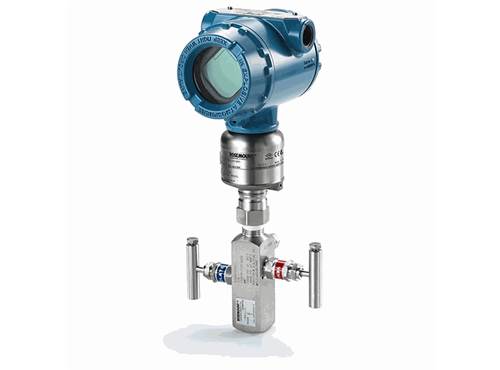
The Rosemount 5408 is a non-contact radar level transmitter designed for continuous level measurement in liquid applications. It uses microwave radar technology to measure the distance between the antenna and the surface of the process medium, converting this information into a continuous level signal for control and monitoring systems.
Developed under the Rosemount instrumentation portfolio, the 5408 is engineered for demanding industrial environments where traditional level measurement technologies may struggle. Its non-contact design eliminates direct exposure to the process medium, reducing the impact of corrosion, coating, temperature extremes, and pressure fluctuations on measurement performance.
Importance of Radar Level Measurement in Industry
Radar level measurement has become increasingly important in industrial applications due to its reliability in challenging conditions. Unlike mechanical or contact-based technologies, radar transmitters are unaffected by changes in process density, viscosity, conductivity, or temperature. This makes them well suited for applications involving aggressive chemicals, high pressures, high temperatures, or variable process conditions.
In industries where downtime is costly and safety risks are high, radar level measurement provides consistent performance with minimal maintenance requirements. Continuous, accurate level data enables better process control, improved inventory management, and early detection of abnormal operating conditions.
Design and Measurement Principle
The Rosemount 5408 operates by transmitting low-energy microwave signals toward the surface of the liquid being measured. These signals reflect off the surface and return to the transmitter antenna. The device calculates level based on the time it takes for the signal to travel to the surface and back.
Because the measurement is based on time-of-flight rather than physical contact, the transmitter maintains accuracy even in the presence of vapors, pressure changes, or temperature variations. The compact and robust antenna design supports reliable signal reflection in a wide range of tank geometries and installation configurations.
Applications of the Rosemount 5408
The Rosemount 5408 radar level transmitter is widely used in industrial applications where reliable liquid level measurement is required. Common applications include storage tanks containing hydrocarbons, chemicals, and refined products, as well as process vessels in chemical and petrochemical plants.
It is also applied in power generation facilities for level measurement in auxiliary systems, water and wastewater treatment plants for tank and basin monitoring, and general industrial manufacturing where consistent level measurement supports process efficiency and safety. Its non-contact operation makes it particularly suitable for applications involving corrosive or hazardous fluids.
Key Benefits in Industrial Operations
One of the primary advantages of the Rosemount 5408 is measurement reliability under challenging conditions. Because it does not contact the process medium, it is not affected by material buildup, corrosion, or wear, which are common causes of failure in contact-based level instruments.
The transmitter also offers stable performance over long operating periods, reducing the need for frequent recalibration. This contributes to lower maintenance effort and improved operational uptime. Its ability to provide accurate level data regardless of changes in process conditions supports consistent control and improved inventory accuracy.
Installation and Integration Considerations
Proper installation is essential for achieving optimal performance from any radar level transmitter. The Rosemount 5408 is designed to accommodate common industrial mounting options, making it suitable for installation on a wide range of tanks and vessels.
Consideration should be given to antenna positioning, tank geometry, and potential internal obstructions that could affect signal reflection. Integration with control systems such as distributed control systems or programmable logic controllers is typically straightforward due to standardized output signals and industrial communication compatibility.
Buying Considerations for Industrial Applications
When selecting a radar level transmitter such as the Rosemount 5408, several factors should be evaluated. These include the measurement range, process temperature and pressure, chemical compatibility of wetted components, and installation constraints.
It is also important to consider the criticality of the measurement within the process. Applications tied to safety, environmental compliance, or high-value inventory often justify higher-performance measurement solutions with proven long-term stability. Industrial teams frequently reference application guidance and instrumentation expertise from sources such as The Transmitter Shop to ensure correct technology selection and alignment with process requirements.
Maintenance and Long-Term Reliability
One of the key advantages of non-contact radar technology is reduced maintenance demand. Since the Rosemount 5408 does not contact the process fluid, there is minimal risk of sensor degradation due to corrosion, abrasion, or fouling.
Routine visual inspection of mounting hardware and periodic verification of signal quality are typically sufficient to maintain reliable operation. Calibration intervals are generally longer compared to contact-based technologies, particularly in stable process environments. Maintaining proper documentation of installation and verification activities supports long-term measurement confidence and compliance requirements.
Industries That Rely on Radar Level Measurement
Radar level transmitters such as the Rosemount 5408 are widely used across multiple industries. Oil and gas operations rely on radar level measurement for storage tanks and process vessels where accuracy and safety are critical. Chemical and petrochemical plants use radar technology to manage aggressive and high-temperature fluids.
Power generation facilities apply radar level measurement in balance-of-plant systems, while water and wastewater treatment facilities depend on reliable level data for tank and basin management. Manufacturing industries also benefit from radar level measurement where consistent, maintenance-friendly performance is required.
Conclusion
The Rosemount 5408 radar level transmitter is designed to meet the demands of modern industrial level measurement, offering reliable, non-contact performance in challenging process environments. Its radar-based measurement principle provides accuracy and stability regardless of changes in temperature, pressure, or fluid properties. By supporting safe operation, efficient inventory management, and reduced maintenance effort, the Rosemount 5408 plays an important role in industrial process control. In applications where dependable level measurement under harsh conditions is essential, radar technology continues to be a preferred solution for long-term operational reliability.