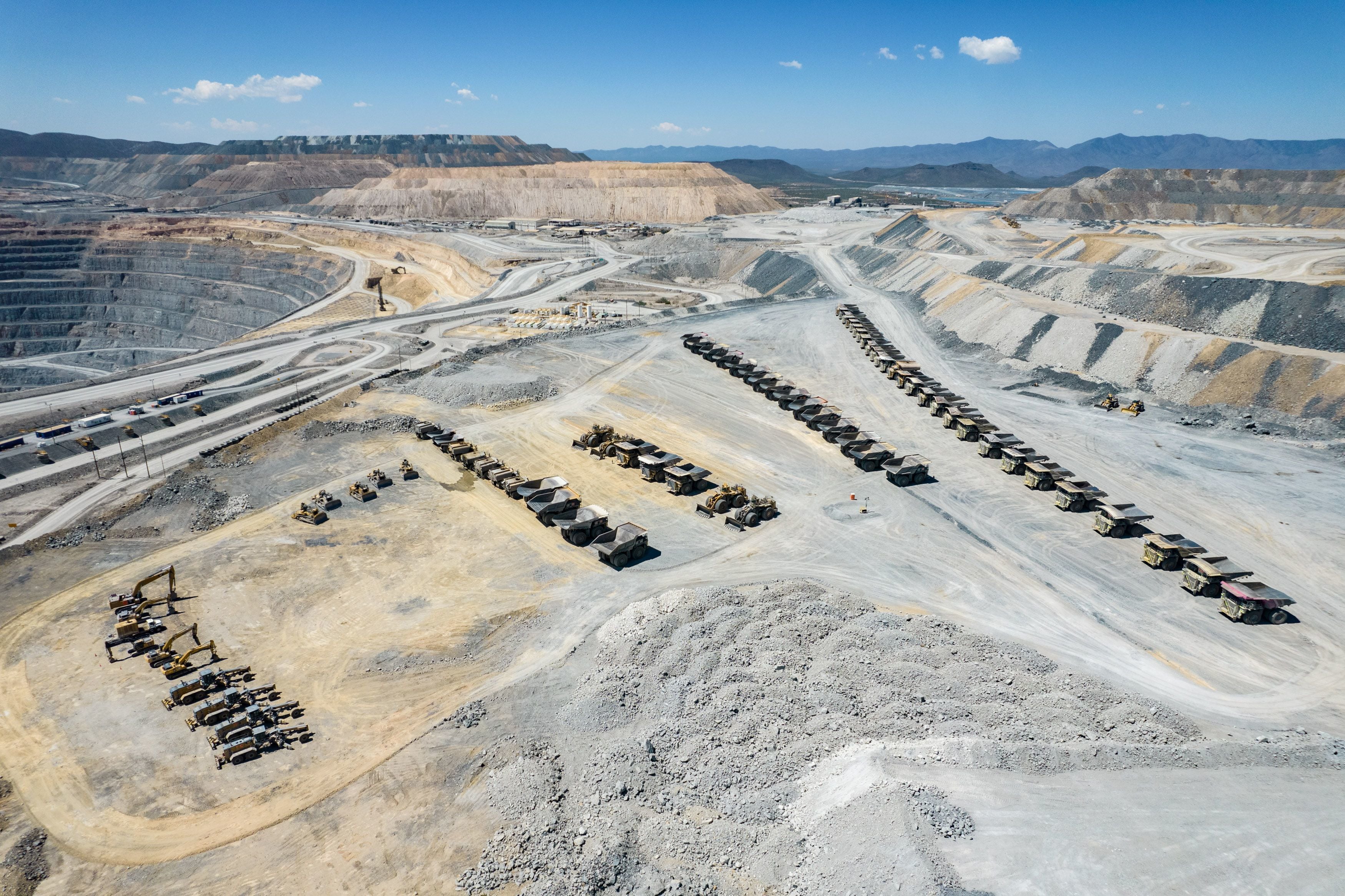
The mass kidnapping of 10 miners in Sinaloa in January has highlighted another aspect of the security crisis that has hit the mining sector in Mexico for years, spurred by the explosion in silver and gold prices. Criminal organizations, which exercise territorial control in some of the areas most abundant in mineral and metal resources, extort national and foreign companies, raising production costs and their security budgets. Companies are forced to pay the floor fee or directly hire suppliers related to their extortionists. In a Mexico where this crime is on the rise and affects the national economy, the crime against a group of workers outrages and at the same time calls into question when the Mexican Administration’s fighting strategy will be able to effectively tackle this problem. Meanwhile, in the United States, where these groups are considered terrorist organizations, the risk for companies that pay to work comes through legal means.
For John Price, an advisor to companies that land in Latin America—including mining companies—a combination of market factors and crime have been decisive in the kidnapping of the workers of the Canadian Vizsla Silver. “Silver prices are at a record level, and, at times like this, the activity of informal and illegal miners increases greatly,” says the general director of the firm Americas Market Intelligence. “Everyone enters the mining business even if they are not miners, including small or large organized crime gangs,” he adds. The price of silver has increased more than 120% in the last six months, while that of gold has grown 50%, as investors seek refuge due to the financial and commercial uncertainty that has affected other higher-risk assets.
This boom in the business means that both formal miners—like those of Viszla Silver—and informal miners end up exposed to the violence of the cartels. “The reality is that for many miners, not only Canadians but also Mexicans, it is very difficult, if you have a scale mine or are in silver or gold, to avoid the interference of organized crime that is very involved in mining,” adds Price.
Already into February, the bodies of at least five of the kidnapped workers have been identified in clandestine graves near El Verde, a town about 40 kilometers from the place of disappearance. In a statement this Thursday, Vizsla Silver confirmed that the other five people remain missing and that they are in contact with the victims’ families to provide financial and practical support. “Employee safety is one of our highest priorities and, since the kidnapping, Vizsla Silver has made significant investments in security and risk management,” the text reads.
“We are working with experienced and renowned security advisors,” he added, stressing that they maintain a zero-tolerance policy against bribery, corruption and extortion. He explains that although the project’s physical operations are suspended, engineering work is still being done remotely. The company has not specified, until now, what security was like in the camp where its employees were kidnapped.
The Donald Trump Administration has increased pressure to cut off the flow of revenue to organized crime, so in February 2025 it designated eight cartels and criminal groups, including Sinaloa and the Jalisco New Generation Cartel, as terrorist organizations. Based on this change, companies that give in to extortion could be subject to criminal investigations, accused of laundering money or financing their activity. This has already resulted in the freezing of bank accounts of some companies, as well as the intervention of three Mexican financial entities, for cases related to money laundering.
From the Mexican Government, it has been said that the kidnapped miners were mistaken for rivals by Los Chapitos, one of the criminal groups in the area, although it has emerged that their capture was inside the mining camp. In addition, the farm had to stop its activities less than a year ago due to security conditions. This crime also puts pressure on the security strategy of the Claudia Sheinbaum Administration, which came to power at the end of 2024, just when the civil war within the Sinaloa Cartel began between Joaquín’s children. El Chapo Guzmán and Ismael’s successors May Zambada.
This is not the only recent case. Last June, three miners were executed in the community of La Capilla del Taxte, in the municipality of Concordia, and in February 2025 the San Rafael mine in the municipality of Cosalá, Sinaloa, also owned by a Canadian company, stopped its activities due to insecurity. Local media published that since 2017 six mines—four in Concordia and two in Cosalá—had had to temporarily stop operations due to violence. Nor is this problem limited to Sinaloa. The Mexican Mining Chamber, in its latest report, assures that 97% of mining companies have suffered some type of crime, the most common being ant theft and extortion, concentrating in the States of Durango, Zacatecas and Guanajuato.
The Canadian mining company Telson Mining also stands out, which in 2019 suspended its activities at the Campo Colorado mine in Arcelia, Guerrero, due to extortion by the Michoacana Family. This situation is reflected in the documents of the National Secretariat leaked by the Guacamaya collective, where it is stated, at least since 2015, that “Johnny Hurtado Olascoava, alias The Fishis the top leader of the criminal organization and responsible for the kidnappings and extortion of mining companies and other companies in the region.” In 2016, six workers from the Beneficiadora de Minerales Temixco mine, right in Arcelia, were kidnapped.
“A very common way of collaborating with organized crime, and it is something that happens throughout Mexico, is that the groups know that they cannot directly extort mining companies,” adds consultant Price. Companies are faced with the dilemma of masking their payments due to pressure from Washington to cut off financing for “narcoterrorism,” as well as the need to remain attached to other laws in that country, where many are financed in the stock markets. “That’s why they buy different companies that are suppliers to the mining companies: the transporters that take the workers from the fields where they sleep, the food suppliers, the transportation companies that take the earth extract to the processor.” In this way, he says, companies can mitigate the threats of organized crime without directly violating the regulation or governance of their organizations.
In August 2024, the consulting firm Stratop Risk Consulting published a report in which analyzes the problems that criminal groups create in the mining industry in Mexico. Cases of extortion and floor rights increased by 16% between 2021 and 2022 alone and these payments generate a 3% increase in production costs, in addition to forcing greater budgets for security. In 2015, an executive from the Canadian mining company McEwen Mining, with operations in Sinaloa, assured that his company maintained a “good relationship” with the Mexican drug cartels, which had to give permission to explore new deposits. This analysis also brought into focus another derivative of the problem: criminal groups lead to the forced displacement of communities that oppose projects in regions of high mining conflict.
“In the case of mining, we have observed that some companies in this sector find it necessary to establish contacts with criminal groups in order to operate,” explains Armando Vargas, coordinator of the security program of Mexico Evalúa, an organization that has studied these phenomena in its study Companies under fire: Victimization and resilience of the business sector in Mexico. “This is because in some regions of Mexico, organized crime sets the rules of the game in some parts of the national territory. This direct contact is less costly for them than entering into the dynamics of floor collection and extortion, which are basically a criminal tax,” he adds.
This does not only affect the mining sector, but is common in the rest of the spheres of the Mexican economy. 50% of the businessmen of the Coparmex employer’s association maintain that they have been victims of a crime and only half consider that there are good investment conditions. Thus, extortion, in addition to being one of the few high-impact crimes that are on the rise, ends up being a threat to the plans to accelerate industrial and economic activity promoted by the president.
For more updates, visit our homepage: NewsTimesWire