Two recent days – separated for two weeks – are marking the conflict, fragile and hostile history between India and Pakistan: on April 22 and May 7. Both represent the collapse of a volatile and uncomfortable peace between these nuclear powers since the independence of India in 1947. On April 22, 26 tourists, all Indians except a Nepali, were killed in an attack in the Cashmiro region, often called El Paraíso on Earth, specifically in the Baisaram Valley, near the city of Pahalgam. It was the deadliest attack against Indian civilians from Bombay attacks in 2008. Five armed militants fired tourists in cold blood, pointing to their heads. And they selected the victims for their religious beliefs: they executed those who did not know how to recite verses of the Qur’an, while their loved ones, helpless, witnessed the scene with horror.
The silence was palpable for a little more than two weeks, until everything exploded: India responded with “precise, provided, responsible and non -scaller” attacks in the early hours of last Wednesday. The “strategic” and “directed against terrorism” operation, called the Sindoor operation, was “a retaliation for lost lives in Pahalgam,” according to a high Indian position.
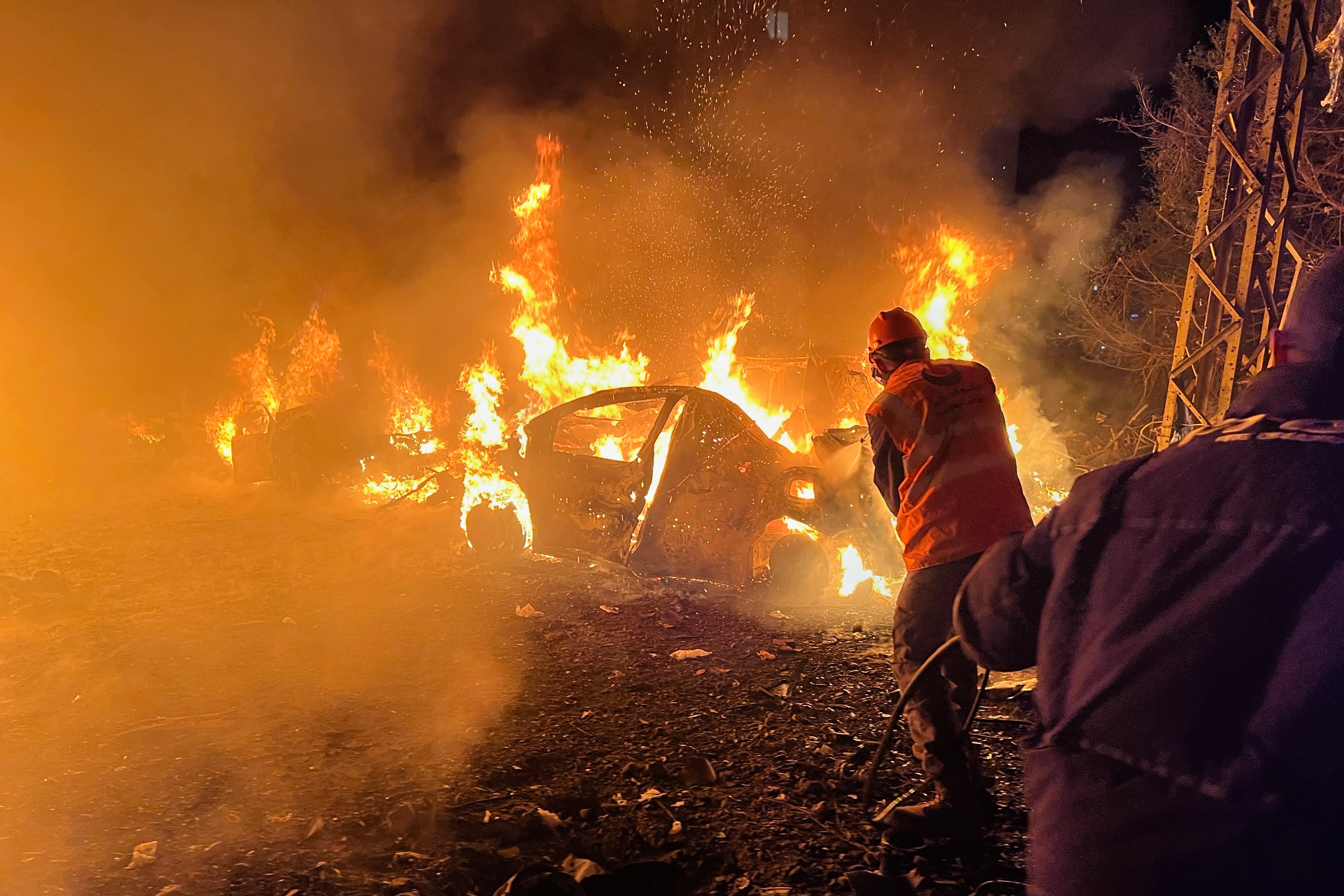
Accuracy missile attacks lasted 25 minutes and, according to New Delhi, targe de facto Between both countries. India states that whites were linked to Islamist groups Lashkar-E-Taiba and Jaish-E-Mohammed. The Indian Air Force used Rafale and Sukhoi Su-30, Cruise Missiles SCALP, Kamikaze drones and artillery projectiles smart long range.
Indian Foreign Secretary, Vikram Misri, Colonel Sofiya Qureshi and Commander Vyomika Singh gave press wheels on Wednesday and Thursday in which they affirmed that Operation Sindoor had only as terrorist white objectives, avoiding civil infrastructure and the loss of innocent lives.
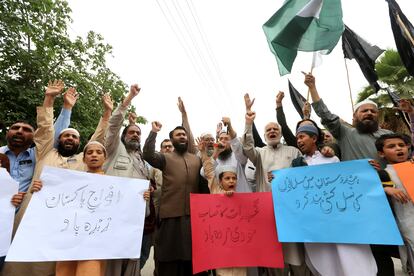
Pakistan has described the Indian attacks as “an act of war”, claiming that civil areas were hit, in which mosques or educational centers were affected, and 31 people died and another 57 were injured. India has reported the death of 16 civilians, including three women and five children, for the Pakistani attacks in different border districts.
After denying any link with terrorist groups, Pakistan intensified from Wednesday night his shots along the control line. A Gurdwara (SIJ temple) was attacked in the city of Poonch, in the Indian state of Jammu and Kashmir, causing the death of several civilians. Pakistan also tried to hit several military objectives in the north and west of India, using drones and missiles, but these were intercepted by the Indian Armed Forces.
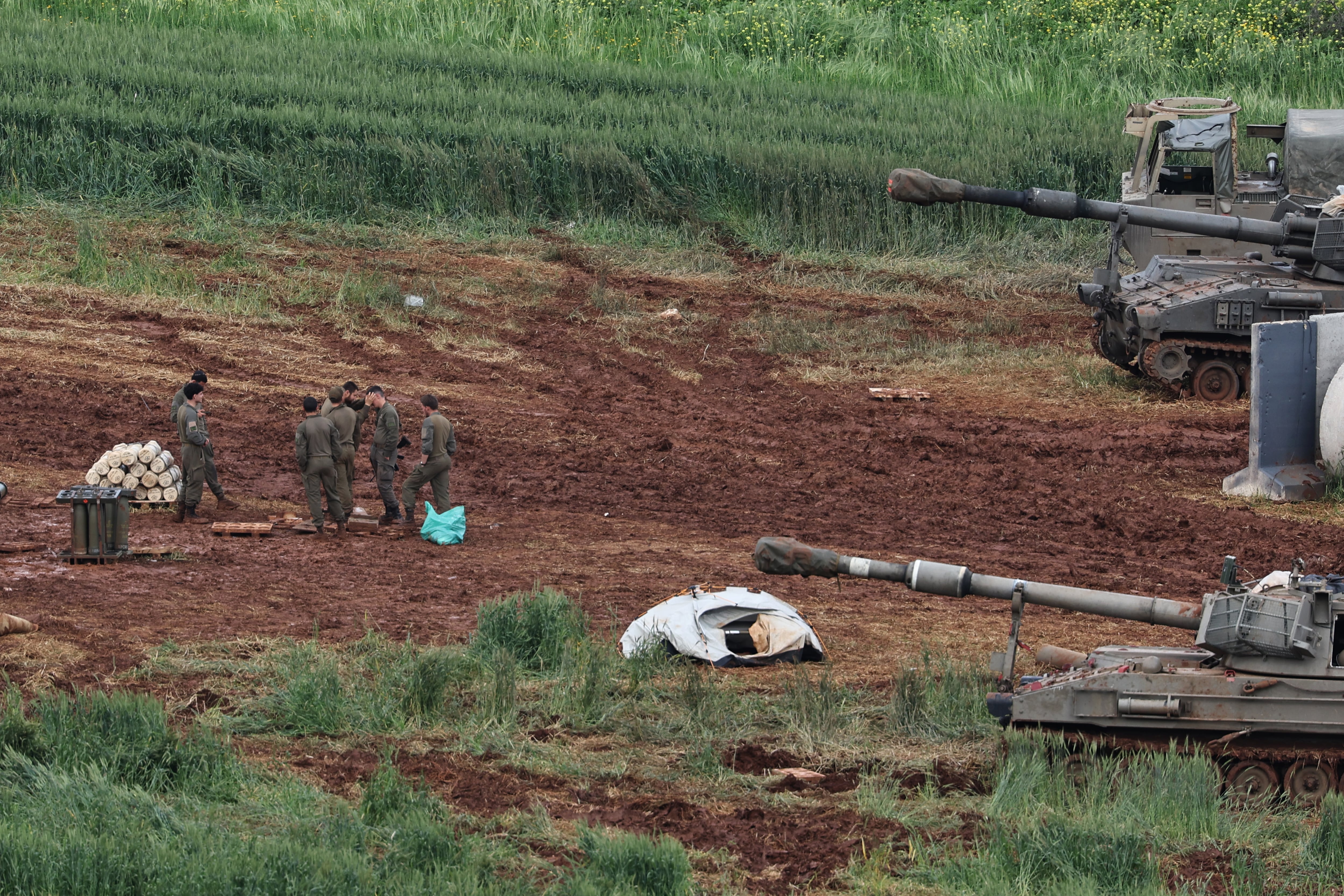
“We were forced to respond to these attacks,” Misri said Thursday. “(Drones and missiles) were neutralized. Currently, they are recovering in various places of the material used, which demonstrates the Pakistani attacks. On Thursday morning, the Armed Forces of India attacked radars and anti -aircraft defense systems in various parts of Pakistan. The Indian response has been carried out in the same line and with the same intensity as that of Pakistan, according to Pakistan. Foreign Secretary. On Wednesday night, the Indian army has already destroyed with drones an anti -aircraft defense system, near the city of Lahore. Pakistani prime minister, Shehbaz Sharif said that India “will suffer the consequences.”
At the last minute of Thursday, India assured that she had repelled a Pakistan air attack in the back controlled by New Delhi, where strong explosions were heard that activated the defense systems. According to a statement from the Indian Ministry of Defense, the military facilities of the cities of Jammu, Pathankot and Udhampur, close to the contact line, “were attacked by Pakistan with missiles and drones.” According to the statement, “there were no casualties.”
These cross -border attacks fell the coals of the long, volatile and conflicting relationship between the two countries. The epicenter of the conflict between New Delhi and Islamabad is the Cashmiro region, a dispute territory that has been the reason for several wars since the partition of India and Pakistan, in 1947. The revocation of the special status of the state of Jammu and Kashmir by New Delhi in 2019 tense even more relations. After the killing of tourists in Pahalgam, the Indian government also suspended the Indo Water Treaty, along with other diplomatic measures, which further aggravated tension.
As the situation, already volatile, continues to aggravate, the international community begins to move. The United Kingdom has declared that Pakistan must do more to combat terrorism. The Foreign Minister of Saudi Arabia, Adel Aljubeir, met with his counterparts from India, Subrahmanyam Jaishankar, and Iran, Abbas Araghchi, in New Delhi.
May 7 attacks were “precision blows” carried out by the Army and Air Force of India against nine terrorist infrastructure camps. According to New Delhi, among the objectives was the headquarters of Jaish-E-Mohammed in Bahawalpur, where the family of the leader of the organization, Masood Azhar lived-a dozen of their relatives and four collaborators died-as well as facilities of Lashkar-E-Taiba in Muridke and Muzaffrabad, in addition to six other terrorist training centers and indocting.
Pakistani prime minister said Wednesday against Parliament in Islamabad that five Indian fighters had been demolished during attacks; New Delhi has not confirmed the loss of those devices.
The escalation of the last days leaves both countries – and the entire world – in suspense, while the fragile peace between the two nuclear powers is held with pins. World leaders have urged New Delhi and Islamabad to act in moderation. The United States, France, the Netherlands and Panama have expressed their support for India, while China and Türkiye have expressed their support for Pakistan.
“This was seen coming”
A defense analyst in New Delhi, who prefers to maintain anonymity, says: “For anyone who has witnessed the history full of clashes between India and Pakistan, this was something that was seen coming for a long time. Pakistani society has changed, but its army does not.”
A former high position of the Armed Forces points out: “With regard to India, they have avenged what happened in Pahalgam and for them this has ended. There has not been a large -scale army mobilization, since India does not want to climb the situation anymore. Even so, we are on a maximum alert, fully prepared, drills are being carried out in several cities and the air spaces are closed.” The ex -military, who prefers not to give his name, adds: “We expect a retaliation, however, it is likely not to be conventional, but rather through undercover and infiltration measures.”
Experts believe that a major climb and new reprisals could be imminent, although the parties say they are not interested in a large -scale war. International actors advocate peace, but the way to the de -escalated is still uncertain in the face of new attacks.