The president of the United States, Donald Trump, said Friday – as usual, good morning and in a brief message on his social network, Truth – that an 80% tariff to Chinese imports “sounds good.” This post marks the first opportunity in which Trump offers an alternative to the current tax imposed on products from the Asian country: 145%, a figure that was growing between orders launched by the two powers as the commercial war began by Washington.
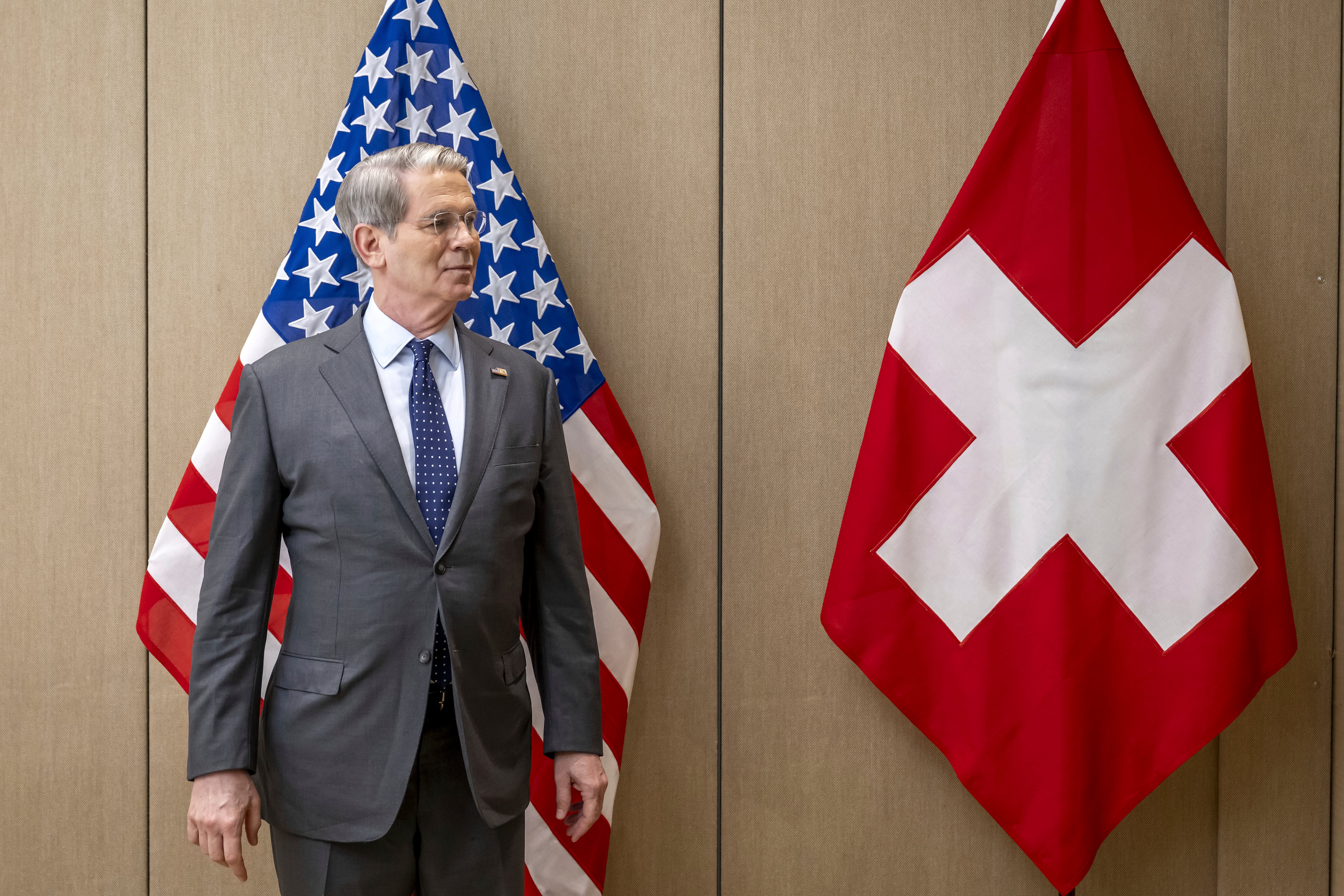
The message in Truth does not stay in that suggestion. Trump also discharges responsibility for another. “Scott B. decides,” writes the US president. Scott B. is the secretary of the Treasury Scott Besent, and is expected to be seen in Switzerland this Saturday for the first contact with He Lifeng, Chinese economic tsar, to initiate conversations that perhaps derive in a new commercial agreement. Beijing now reciprocally charges 125% to US imports.
The difference between one and another figure is due to the fact that Washington adds to that 125% of 20% of the “fentanyl tariff”, tax that Trump imposed at the beginning of his second presidency to three countries, in addition to China, Mexico and Canada, to which he blames for the serious public health crisis that traffic of the powerful opiate has caused in the United States. The imports of the United States from China fell in March to 29.4 billion dollars, its lowest level since March 2020, in full pandemic.
In the middle of that scenario, China, for the moment, seems to face the conversations with poise and a tone a challenging point. “We are not afraid,” said Hua Chunying, Vice Minister of Foreign Affairs, to the press this Friday. “We don’t want any war with any country. But we have to face reality,” he added, Reuters reports.
Together with Besent, he will sit this Saturday at the negotiating table at Geneva Jamieson Greer, representative of American international trade. After knowing last Tuesday the news of that meeting, which the Chinese authorities later confirmed, Besent declared in Fox News that the first contact would focus on “lowering tensions.” “We have to do it before we can advance,” added the Treasury head, who flew to Switzerland on Thursday, after accompanying Trump in the Oval Office during the announcement of a commercial pact with the United Kingdom.
That agreement is the first of those that arrives since the US President announced badly called “reciprocal” tariffs to dozens of their commercial partners. Then he backed down, and lifted them for all countries, except for China. He also gave his negotiators 90 days to reach new commercial pacts. That task is demonstrating more arduous than Trump predicted.
The details of the pact with the United Kingdom will be completed in “the coming weeks,” Trump said, despite which he and British Labor Prime Minister Keir Starmer, described him as “historical” and “very beneficial for the two parties.” It is known that the universal tariff of 10% is in force on British imports imposed on April 2, although cars rates fall from 25% to 10% to a quota of 10,000 units per year, and those of steel and aluminum (25% also) disappear. The two countries have also signed a “reciprocal” access to the beef market. And ethanol tariffs also strive.
Open the markets
In another message in Truth, the US president wrote this Friday that “China should open their market to the United States.” “It would be very beneficial for them !!! The closed markets no longer work !!!”, he added. Nor is it entirely clear if its erratic and aggressive commercial policy has the desired effect. During their first 100 days in the White House, the markets fell as it was not remembered since the time of Gerald Ford (1974-1977).
His tariff attacks have caused a resurgence of Canadian nationalism, and the victory in the last elections of Marc Carly and the Liberal Party, which was buried in the surveys before Trump launched his attacks on the northern neighbor. Meanwhile, the isolationist attitude of Washington is encouraging the forge of new alliances between capitals looking for a plan B in view of the fact that one can no longer be trusted how power used in the first world power: this week, without going any further, India and the United Kingdom signed a new free trade agreement.
At home, the economy continues to behave admirably resistant. Employment creation is maintained and inflation is at the moment subject, although the fear that tariffs raise the cost of the consumption products of Americans remains very present, also in Trump’s mind, which this week has been entangled in the suggestion to US girls that they should settle for “two dolls instead of 30 ″.
The price and unemployment indicators led to the Federal Reserve last Wednesday to announce that it maintains interest rates, despite Trump’s pressures to obtain a reduction. This Friday, the US president lashed back against the president of the monetary agency, Jerome Powell. He did it, once, in Truth and half of a morning in which he concentrated his efforts to comment on the state of the economy and to comment on who should direct “the very cinocecentric (daily) The Wall Street Journal: “The costs go down, there is no inflation. (A stage) very different from what the Fed and the false news media were expected!” He wrote.