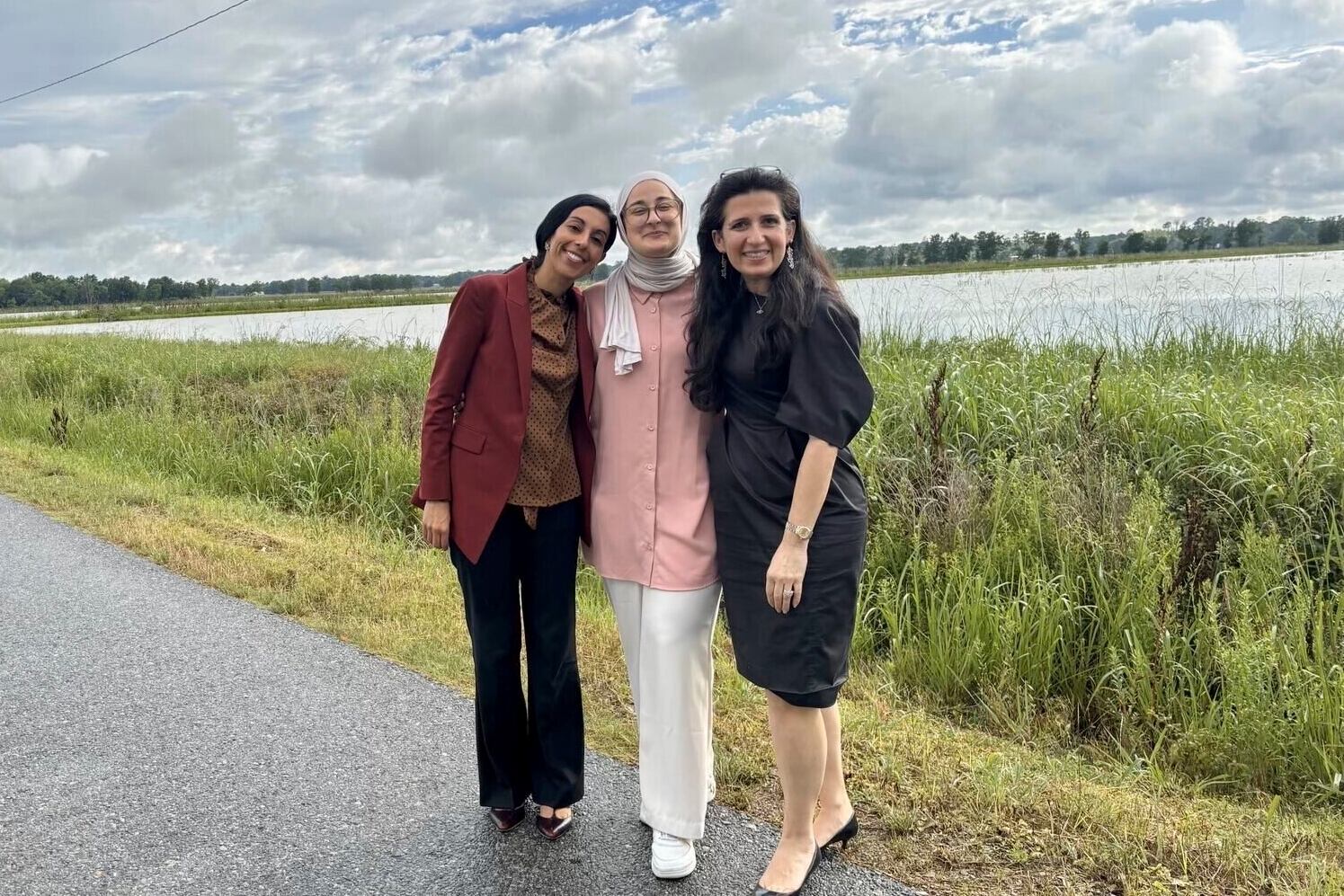
Rümeysa Öztürk, the Turkish student at the University of Tufts, has abandoned the Louisiana Migration Detention Center on Friday afternoon in which he was for six weeks. The arrest of this 30 -year -old woman caused a stir at the end of March, after a handful of hooded agents of the Customs Immigration and Control Service (ICE, for the acronym in English) stopped her and handcuffed in the street of a suburb of Massachusetts. The case caused the outrage of several sectors of society, especially when it was learned that the apprehension responded to the support of Öztürk to Palestine.
The Öztürk departure from the Basile Detention Center was ordered by William Sessions, a Vermont -based federal district judge. “His arrest cannot continue,” said the Togado at a telematic audience in which the student and her lawyers participated. The case that the government carries against it for its immigration status and the revocation of its visa will continue its course in the courts. Öztürk will remain free without the need to carry a geolocation bracelet.
“This woman is completely committed to her academic career,” said Sessions during the audience. In his decision, the judge did not impose travel restrictions for the doctoral student. He also ruled out that he represented a danger to the community or that there was a risk of escape. However, he asked Öztürk’s lawyers to be pending in case the conditions must be modified after the information shared with the court.
Sessions assured during the hearing that the authorities showed no more evidence to justify the Öztürk arrest beyond an editorial he wrote with three colleagues in the University newspaper, The Tufts Daily. The student criticized in this the position of the university with the proportions who demanded to cut relationships and investments with Israel for their role in the genocide in Gaza.
Tricia McLaughlin, the Undersecretary of the National Security Department said in March, without showing evidence, that Öztürk, Muslim, supports Hamas, a terrorist group in the eyes of Washington. The State Department revoked his visa days before his detention and without notifying her. The reason was that his activism “undermines the country’s foreign policy by creating a hostile environment for Jewish students.”
Judge Sessions, however, considers that this case raises many doubts linked to the first amendment, about freedom of expression, and due process. The student’s lawyers claim that they did not know about her for more than 24 hours after the arrest registered in the town of Somerville.
During the audience, Öztürk argued the impact that detention has left to his health. He detailed to the judge that the stress situation and the conditions in the Luisiana arrest center, where he shares with 23 women a space designed for 14 people. He has suffered 12 asthmatic attacks in total since he was arrested on March 25. The most serious was at Atlanta airport the day she was transferred to Basile. “I was very afraid and I began to cry,” the student recalled this Friday.
Mahsa Khanbabai, Öztürk’s lawyer, says her client is “relieved and very happy.” “Since when to criticize oppression is a crime? Since when to report a genocide, it has become a cause to be imprisoned?” The lawyer said. Öztürk will be back in Massachusetts on Saturday, where you will continue the investigation of your thesis on adolescents and social networks, which you must deliver in December to be titled in February. “Completing my doctorate is very important to me,” said the student at the audience.