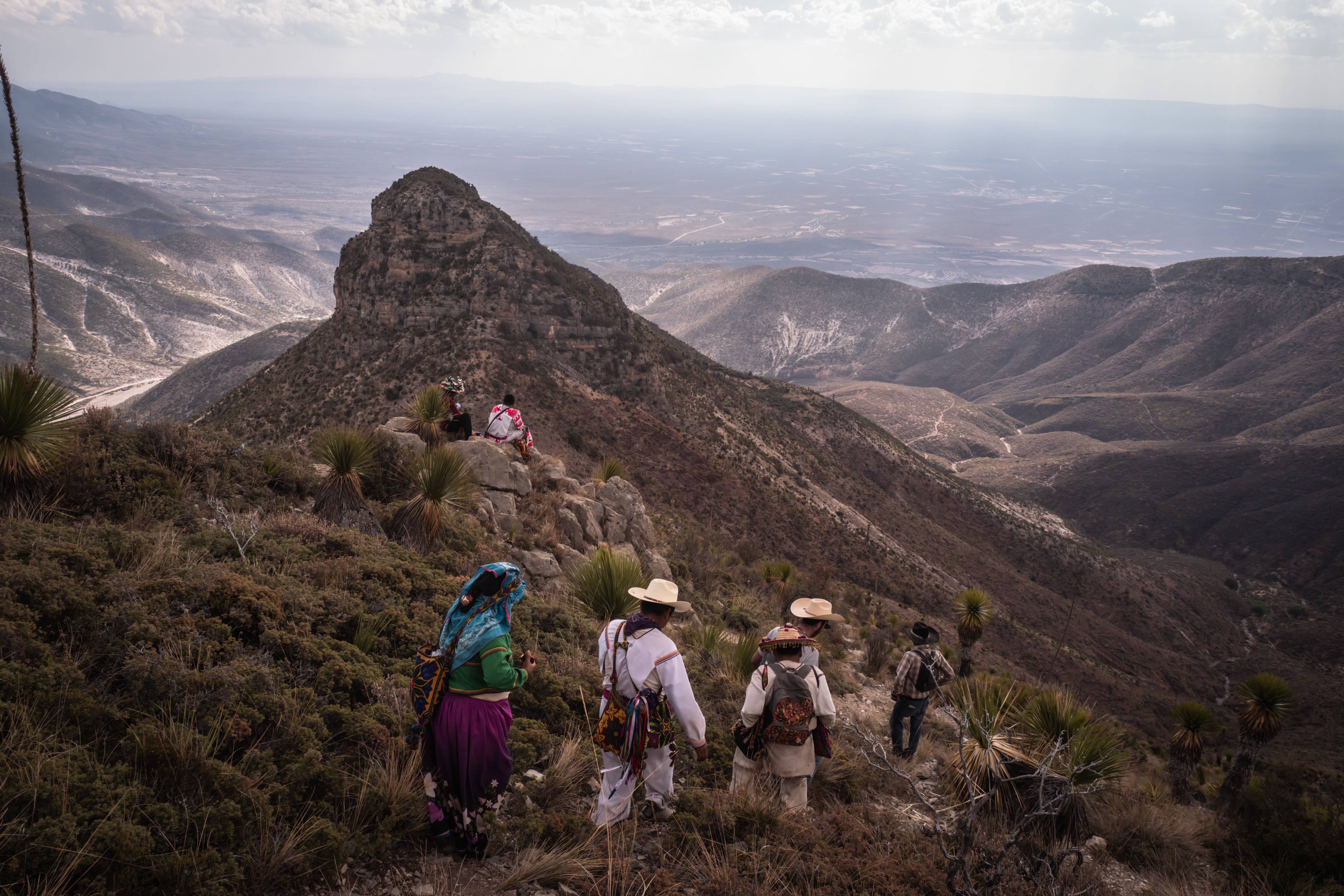
The United Nations Educational, Science and Culture Organization (UNESCO) has included the Wixárika route through the sacred sites to Wirikuta as part of the World Heritage List, the first time that a living indigenous tradition appears in the list. Announced this Saturday, the registration was approved at the 47th Session of the Unesco World Heritage Committee, held in Paris, France. With this statement, Mexico adds 36 world heritage goods. Now, a cultural landscape is incorporated with 20 components, identified together with Wixaritari authorities (Wixárika plural), which cover more than 500 kilometers between the states of Nayarit, Durango, Jalisco, Zacatecas and San Luis Potosí.
The route begins in which today is known as Sierra Huichol, until you reach the Chihuahua desert, with additional sacred sites in Nayarit and Durango. It was recognized as an exceptional and representative example of ancestral ceremonial and exchange routes, which have culturally connected and enriched the peoples of the American continent during millennia.
The Wixaritari community considers that the registration in the World Heritage List is a survival tool for its culture, because it is the maximum legal protection that can be given to its assets in international law, in accordance with what was cited by the Secretariat of Culture of Mexico. “The nomination worked on the risks of the last decades for the population increase, the growth of agricultural and industrial projects and mining concessions, as well as the decrease in Hikuri (Peyote), in San Luis Potosí,” said the representative of the Regional Council Wixárika, Totupica Candelario Robles, from Paris.
After the declaration, the General Director of the National Institute of Anthropology and History (INAH), Diego Prieto Hernández, explained that “it is an ancestral pilgrimage route where the Wixaritari practice rituals to endorse their relationship of respect and reciprocity with the earth, to promote the well -being of the people and ensure a successful agricultural cycle, so that the cornfield is given by the corn and corn.
The Wixaritari sacred sites are found in islets, wetlands, rivers, lagoons, springs, rocks and rock formations and have persisted against multiple changes throughout history, including predation, being an intimate testimony of cultural relationships and traditional ecological, biological and climatic knowledge for the conservation of ecosystems.
Wirikuta, in addition, is a megadiverse territory, where most species that inhabit the great Chihuahuan desert are concentrated. There are hundreds of endemic cacti, and one in particular that for thousands of years has been the sacrament of the Wixaritari: the Peyote or Hikuri (Lophophora Williamsii), A blue green cactus that is its direct route of communication with the gods.
For more updates, visit our homepage: NewsTimesWire
https://elpais.com/mexico/2025-07-12/la-unesco-declara-a-la-ruta-wixarica-como-patrimonio-mundial-para-evitar-la-depredacion-de-la-emblematica-zona.html