The leadership of the Bolivarian Revolution runs to talk with its international allies. The precariousness of Venezuelan finances adds to the lack of liquidity left by the country’s Chevron exit, the lack of prices and the hardening of the sanctions imposed by the administration of Donald Trump to Caracas.
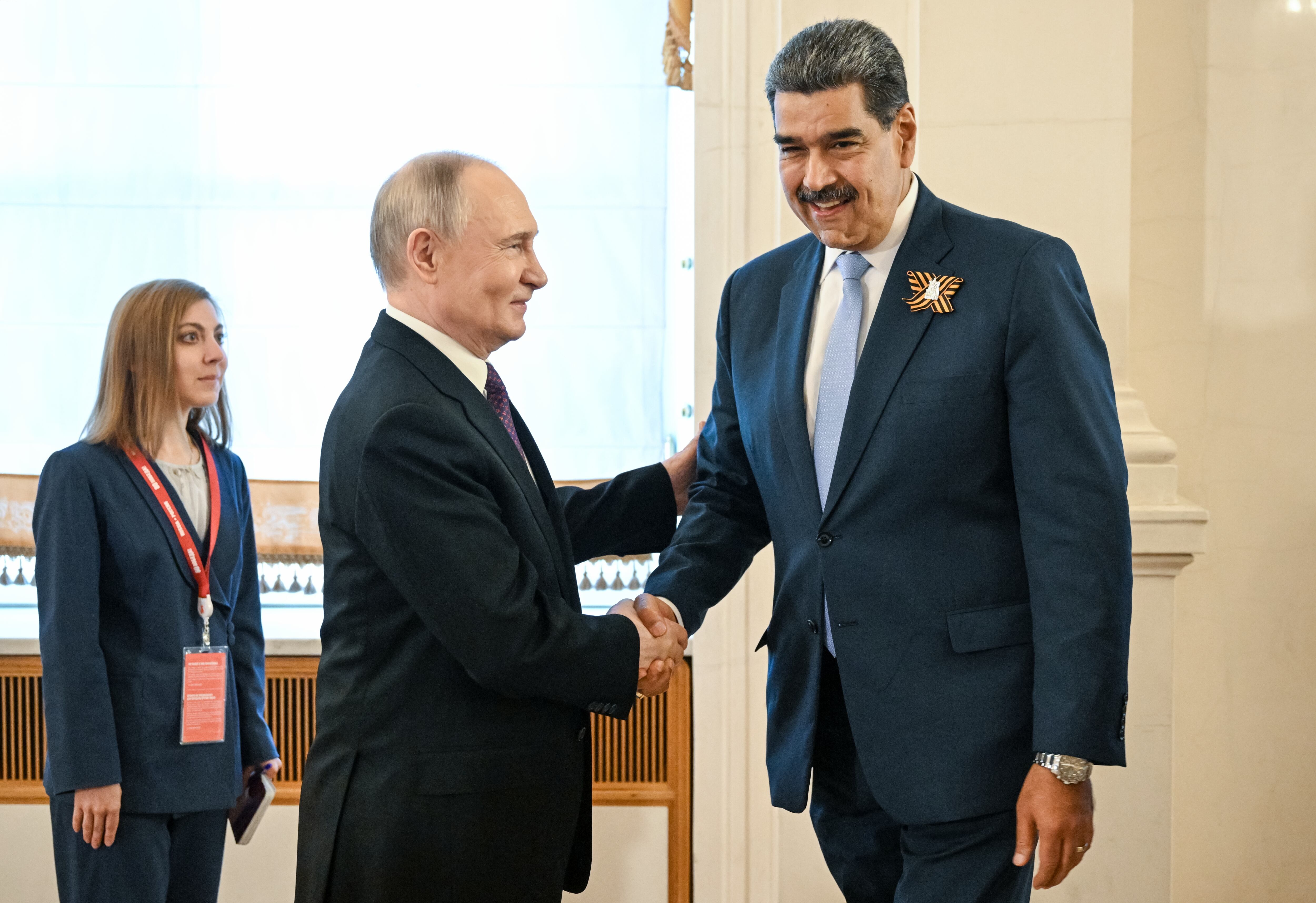
Visiting Moscow, invited to the Victory Day Parade against Nazism, the president of Venezuela, Nicolás Maduro, has signed with his Russian counterpart, Vladimir Putin, – one of the few in the world that has recognized his electoral victory last July – a series of “strategic association” agreements between the two countries.
In the conversation he had with his Venezuelan ally, Putin commented that the commercial balance between Moscow and Caracas has increased 64% by 2024 “and has the prospects of continuing to grow.”
The Venezuelan state television network reported that the agreement with Russia “will remain effective for the next 10 years.” The agreement covers areas such as “hydrocarbons, finance, air connections, technology, pharmacy, military cooperation and security”
Venezuelan Chancellor Yván Gil, highlighted the dimensions of the pact, and commented that “it is the first time that a Latin American country signs a treaty of this caliber.” “It arrives 80 years after the establishment of diplomatic relations between Russia and Venezuela,” he added, a fact that the Venezuelan government does not tire of highlighting. Dimitri Peskov, spokesman for Kremlin, also commented that the signed agreement “is a framework of weight, substantial and very important.”
Venezuela has been able to have advances in its cooperation with Russia strengthening its military teams, producing weapons together and providing unquestionable efficiency for the intelligence services of Chavism. Russian oil investments in Venezuela, however, have not been as abundant as one would expect, at least so far.
A few days ago, the Vice President of Venezuela and Minister of Hydrocarbons, Delcy Rodríguez, visited Shangái to continue several commercial and productive agreements with the Government and Chinese businessmen, with a special emphasis on the oil issue.
Maduro himself has announced “new investments from China.” After a break, Caracas and Beijing had signed, again, several framework agreements to support another “strategic association” to every event, relaunched in 2023.
This time Rodríguez met with DAI Houliang, president of the Chinese state giant Petroleum Corporation (CNPC), who had abandoned his businesses in the Caribbean country in 2020, to talk possibilities of investments and joint sales of Venezuelan crude oil.
For years, China supported Venezuela Chavista contributing millionaire figures, as loans, to finance some of its development funds. Important part of this money was evil and poorly executed, diverted by corruption, leaving works and agreements to the end that ended up annoying Beijing in the late last decade.
The Chinese maintained their diplomatic support for Venezuela, but for a while they refrained from investing in the country, hoping that Caracas began paying their millionaire debts, which has been doing.
The commercial challenges of the president of the United States, Donald Trump, and the Kremlin Careo with Washington, still in force, open space to Maduro to seek amparo and investments in their two great geopolitical allies at a time of isolation.
Meanwhile, within the country, the Venezuelan economic landscape darkens again. The Chevron march has produced a drop in national income that Asdrúbal Oliveros, director of the Ecoanalithic firm, calculates in 50%, higher than initially estimated.
The exchange rate depreciates almost every day. The official dollar is sold today to 91 bolivars. On March 31, the impression will be extended among experts that will return annual inflation close to 200%. In 2024 it was 48%, being the first time in more than 10 years that two -digit inflation occurs.
Venezuela had crossed three years of modest economic growth and low in its inflation levels after the total collapse of its economy in the previous years. The growth was supported, in part, by the lung of some special licenses granted to US and European oil companies to participate in the exploitation of oil and local gas by the Joe Biden Democratic government.
All this occurred within the framework of the political negotiations that Maduro was then carrying out with Washington before the fraud allegations of the last presidential elections of July 28. The state Petróleos de Venezuela has improved its internal processes a bit after the productive debacle of the previous decade, but needs a lot of money and technology to take care of the extrapeted oil fields alone in which it was associated with Chevron.
Venezuela depends as never before international investment to increase its production of crude oil and stabilize its accounts. Maduro’s government is animated, announcing the increase in non -oil productive items, but in general, the Venezuelan economy remains extremely vulnerable and weak in a scenario that has suppressed the possibility of a political change.
In his good times, especially before the arrival of Hugo Chávez to power, the PDVSA state was responsible for all the exploration, exploitation, technical support, research and sale of oil, gas and all energy and bituminous derivatives that were refined and exported to all the confines of the globe.
In an interview with the journalist Román Lozinski at the Unión Radio circuit, Oliveros raised the arrival of a new contraction. “The numbers we see by 2025 are of significant deterioration, and the main harmed will be the ones who depend on a salary in bolivars; senior citizens and public employees,” he said.