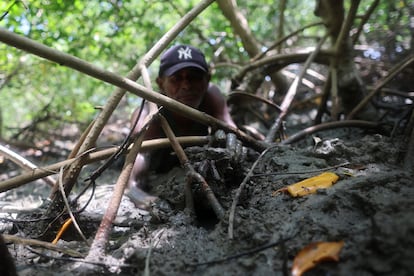
Throughout the Brazilian Amazon coast, through the states of AMAPÁ, PARÁ and Maranhão, one of the most important mangrove forests in the world, which despite being a key piece in the face of climate change and economic support for tens of thousands of families, is increasingly threatened.
These vast coastal wetlands, in addition to being one of the most effective natural barriers to the arrival of hurricanes and tsamot, are one of the most powerful ‘blue’ blue carbon ecosystems on earth, since their complex roots systems are capable of storing carbon emissions for centuries, which makes them invaluable in the fight against global warming.
In addition to their environmental value, mangroves support comprehensive life forms. In the Brazilian north, traditional crab fishermen represent only one of the many communities whose cultural and economic activities are intertwined with the ecosystem. In some states, mangrove fishing represents up to 50% of all artisanal fishing production, thanks to families that capture crabs, shellfish, fish and shrimp using traditional methods transmitted from generation to generation.
However, this natural treasure faces growing threats. Historically economically undervalued, in the last 40 years 20% of these aquatic tropical forests have been lost for the sake of urban development, reducing their global coverage and leaving millions of people more vulnerable to floods.
When mangroves are destroyed, their carbon rich soils are exposed to oxygen, releasing centuries of carbon stored to the atmosphere, which could potentially contribute up to 10% of the total emissions related to deforestation worldwide.
In addition to these threats, the National Congress of Brazil, of conservative majority, recently approved a bill that seeks to make the norms of Environmental Impact Declaration more flexible, dismantling much of the legislation that Brazil has built in recent decades. This legislative project called the “Law of Devastation” by Ecologists, Scientists and Defenders of Territory, was approved a few months after the country received the heart of the Brazilian Amazon, the conference of the parts of the United Nations Framework Convention on Climate Change (COP30), which aimed to present the country as a global leader against climate change
Given this climate summit, scientists and Brazilian activists underline that it is essential to take immediate measures to meet the international objectives for the reduction of carbon emissions and mangroves conservation. The fate of these ecosystems will be a decisive evidence for the true will of the Brazilian government to protect its natural heritage and contribute to global climate regulation.
For more updates, visit our homepage: NewsTimesWire