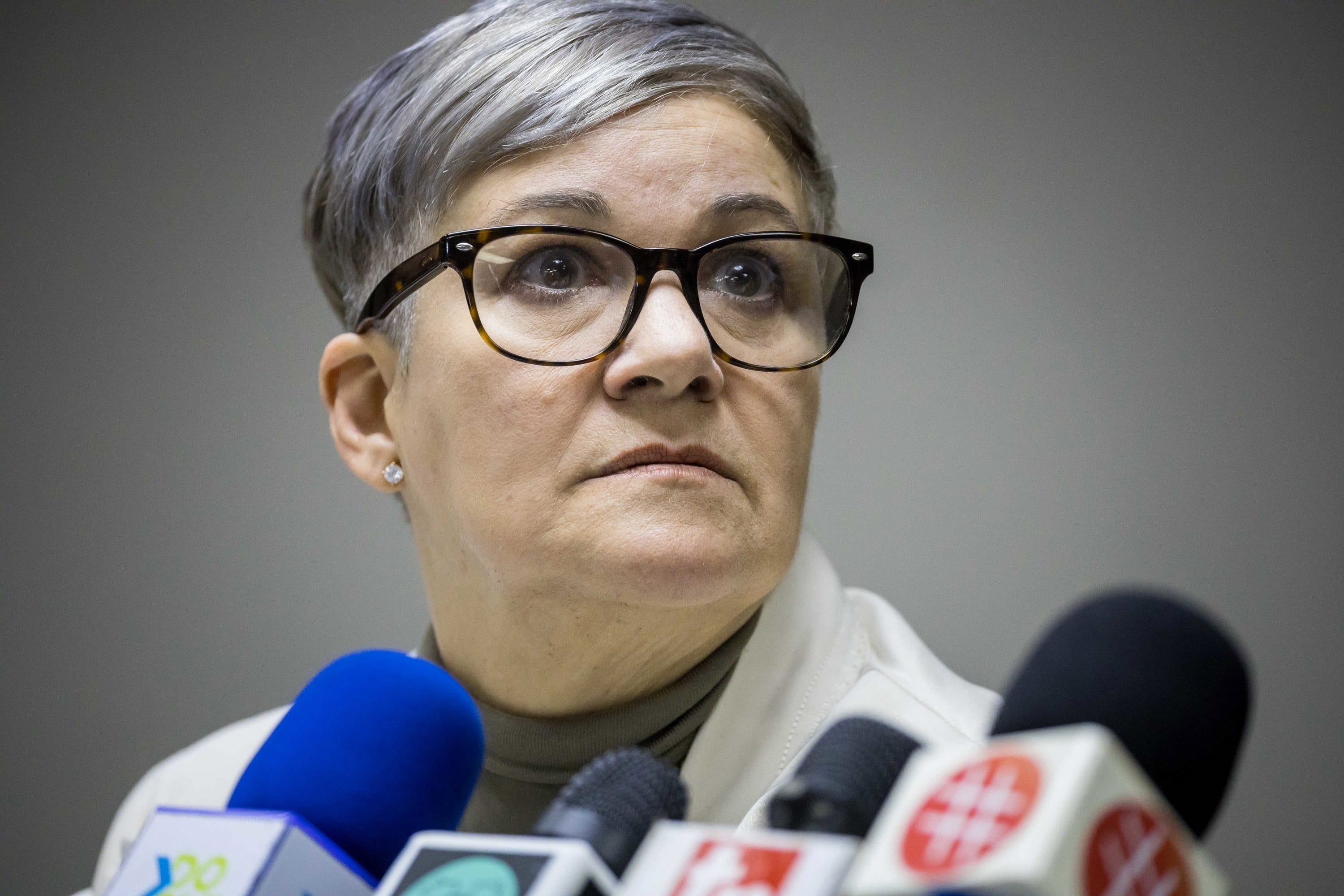
The Venezuelan lawyer and revolutionary militant María Alejandra Díaz has informed through a statement in her social networks that last January took refuge in the Colombian Embassy in Caracas, after months of persecution and siege of the security forces. The leader has denounced that, although, since then, he had received diplomatic asylum, as verbally communicated by Ambassador Milton Rengifo, so far he has not received the salvoconduct he requires to leave Venezuela with diplomatic protection.
“I remained hidden until on January 11, 2025, and being still under the persecution of the PNB (Bolivarian National Police) Antiterrorism, I presented myself at the residence of the Colombian ambassador to Venezuela requesting diplomatic asylum against the harassment of the national government. Based on my formal request and the corresponding story. Refrain from issuing opinions about internal policy and “express request to keep silent” made by the Colombian ambassador.
Until 2017, Díaz was aligned to the government. He was a member of the Constituent Assembly that Nicolás Maduro convened several regulations to defend Parliament after the opposition was made with most seats. He even became acidic and recurring speaker in state television programs, which are part of the media artillery that Chavismo shoots daily against his opponents. Then he distanced himself from Chavismo in power along with old allies of the so -called Bolivarian Revolution such as the Communist Party of Venezuela and other leftist sectors that have been out of the block that orbits around the official party.
After the questioned presidential elections of July 28, Díaz became more uncomfortable for the Government when he demanded at the end of 2024, through an appeal to amparo to the Supreme Court of Justice, that the minutes and the correlation of votes at the regional and local levels that will endorse the result announced that night by the electoral authorities with which Maduro was re -elected for a third mandate. In the action, it was accompanied by other dissidents of Chavismo and the former presidential candidate and moderate tendency opponent, Enrique Márquez, who has more than six months imprisoned.
Díaz’s attempt to resolve by judicial means the crisis in which Venezuela entered a year ago against him. The Supreme Court considered the procedure advanced by Díaz as “a recklessness”, and “a disrespect”, on a subject already tried, and justified the punishment of Díaz “given the serious accusations warned in the present action of constitutional protection, which question the power that the Electoral Chamber and the Constitutional Chamber of the Supreme Court of Justice are held, and also intend to generate anxiety and commotion.” They fined it and ordered their disqualification for legal exercise.
At the end of July, the United Nations special rapporteur about the independence of magistrates and lawyers, Margaret Satterthwaite, said in a report that asked the Venezuelan government five questions about the case of Díaz and did not get answers and warned that permanent harassment and disciplinary and economic sanctions against them “seem to be part of a broader pattern of intimidation aimed at silence that represent victims of human rights violations, present nullity actions against regulations contrary to human rights and file demands against officials who could be involved in human rights violations by action or omission. ”
This statement of the United Nations Rapporteur, according to the message published Tuesday by Díaz, is what has led her to publicly denounce her situation on which she adds that two months ago she was verbally informed in the embassy that the Venezuelan government refused to grant safe -conduct “because there was no persecution” against him. The lawyer demands that the safe -conduct be awarded and adds that for “ambassador instructions” and “without formal response, beyond verbal communications, several meetings have been held with embassy officials in Caracas, looking for a solution to the subject.” He ensures that all proposals have been rejected for not guaranteeing their security to get out of the ambassador’s residence in Caracas.
Díaz’s complaint could complicate relations between the two countries, although perhaps not in the way it happened a year ago at the Argentine embassy in Caracas, where for more than a year they were leaders close to the opposition leader María Corina Machado, a situation that was complicated after the rupture of relations between the governments of Javier Milei and Maduro. The security forces besieged for months the diplomatic headquarters and the refugees came out after a rescue operation in which the United States claimed to have participated.
In the statement, Díaz thanks President Gustavo Petro for having granted the asylum – of the one who insists, only has a verbal communication of the Rengifo ambassador – and asks that his case be attended by virtue of the international agreements that govern this matter and the recent agreement signed between Venezuela and Colombia for the creation of the binational zone, “as a sign of a lasting peace that begins with respect to international laws”.
For more updates, visit our homepage: NewsTimesWire