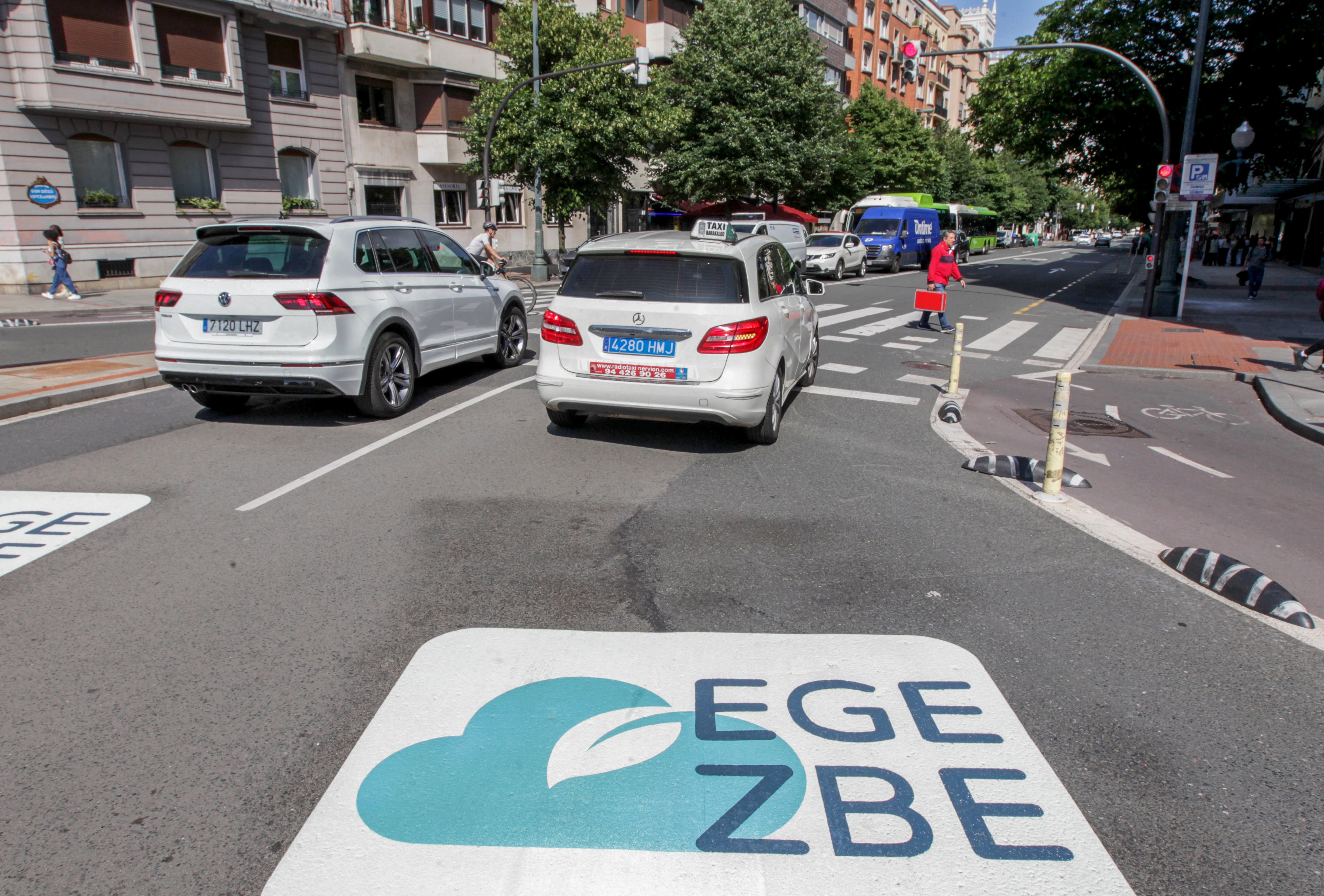
Only one third of the 153 municipalities of more than 50,000 inhabitants that should already have a low -emission zone (ZBE) – at the beginning were 151 but have joined two more due to the growth of its population – has launched it. A report from the State Advocacy, to which the country has had access, supports that the Ministry of Transportation sanctions the municipalities that requested aid to implement one of these areas of restricted traffic if they do not start them before the end of the year. In addition, the Department of Oscar Puente already requires one of these areas of restricted traffic to receive state -owned state transport aid.
Low emission areas are areas – normally in the center of the cities – in which the passage to the most polluting cars, the oldest, based on the labels of the General Directorate of Traffic (DGT); In general, those who have one A (or without label) are vetoed and in some cases also those with a B or C, and the passage to neighbors, hybrids and electric are allowed. It is a tool to reduce pollution and emissions in cities, as Madrid and Barcelona have achieved, the first to apply them.
The 2021 climate change law forced the 153 cities with more than 50,000 inhabitants to have one running on January 1, 2023, but more than two years later, most remain without having it. According to the latest ecological transition data, 53 already have a ZBE, although three are in municipalities not obliged to implement them – Gavà, Sant Joan Despí and Sant Adrià de Besòs. Of the remaining, there are 94 in process; It is foresee that many are installed before the end of the year, although others will not arrive on time.
In addition, there are nine who refuse to fulfill the law and have not initiated the procedures (or have not communicated to the Ministry), in addition to 11 island territories. The ecological transition norm did not include a mechanism to sanction the breeding cities. Transport, which subsidized the installation of many of these areas, already warned that their intention was to sanction the towns that requested funds to install a Zbe and have not launched it. The last execution date of these aid is December 31, 2025.
Now, a State Advocacy report supports this transport position. The department in charge of carrying out the legal interpretation of the state norms indicates that the municipalities that have received a subsidy – proceed of the European funds Next Generation – can be sanctioned and, in addition, they can be asked for the reimbursement of the subsidy.
Thus, it considers that the municipalities of more than 50,000 inhabitants who have breached the obligation to have implanted a low emissions zone could be sanctioned by the commission of a serious or very serious infraction, which can entail a amount of two and up to three times the help perceived.
In addition, the document indicates that local entities that have breached the obligation to justify the employment given to the funds received, once the period established for its presentation has elapsed, could be sanctioned by the commission of a serious infraction.
And he points out that the breach of the commitment to have implanted a ZBE will be the cause of reimbursement when referring to the subsidable actions aimed at fulfilling the objective of accelerating the implementation of low -emissions areas and the non -compliance is the non -execution of the actions that have been subject to the help granted within the stipulated period.
Transport sources consider that this interpretation supports its position. “With European funds, money is given to the municipalities so that the Zbe installation does not cost them so much. But if they are not used for what they were requested, that money must be returned to Brussels, which, in addition, generates a damage to the State. That is why it is important that the advice says that, in some cases, a violation of breach could be raised.”
No aid for breach
The Ministry already requires these one of these areas of restricted traffic to receive state aid to public transport of the second semester of 2025. “Municipalities have to send a responsible statement that the ZBE will be in operation over 2025. That is, they can not have it today but be in the process of having it,” they point out.
These are funds that receive cities for their urban or interurban bus networks, which can arrive directly or through regional organizations such as the Regional Transport Consortium of Madrid or the Metropolitan Area of Barcelona.
The deadline to request these aid is already over, although there are still no figures on how many municipalities are going to be left out because they do not have a zbe in operation throughout the year. If any city presents the responsible statement but does not start it before it ends 2025, it could be asked to return the funds received to boost public transport.
With these two measures, the Executive wants to make clear his commitment to reinforce the ZBE and link them to an improvement in public transport. Above all, at a time when these areas of restricted traffic seem in question in some countries: the deputies of a commission of the National Assembly of France voted in March in favor of the elimination of these areas, in a decision that they still have to endorse the assembly and the Senate of that country.
For more updates, visit our homepage: NewsTimesWire