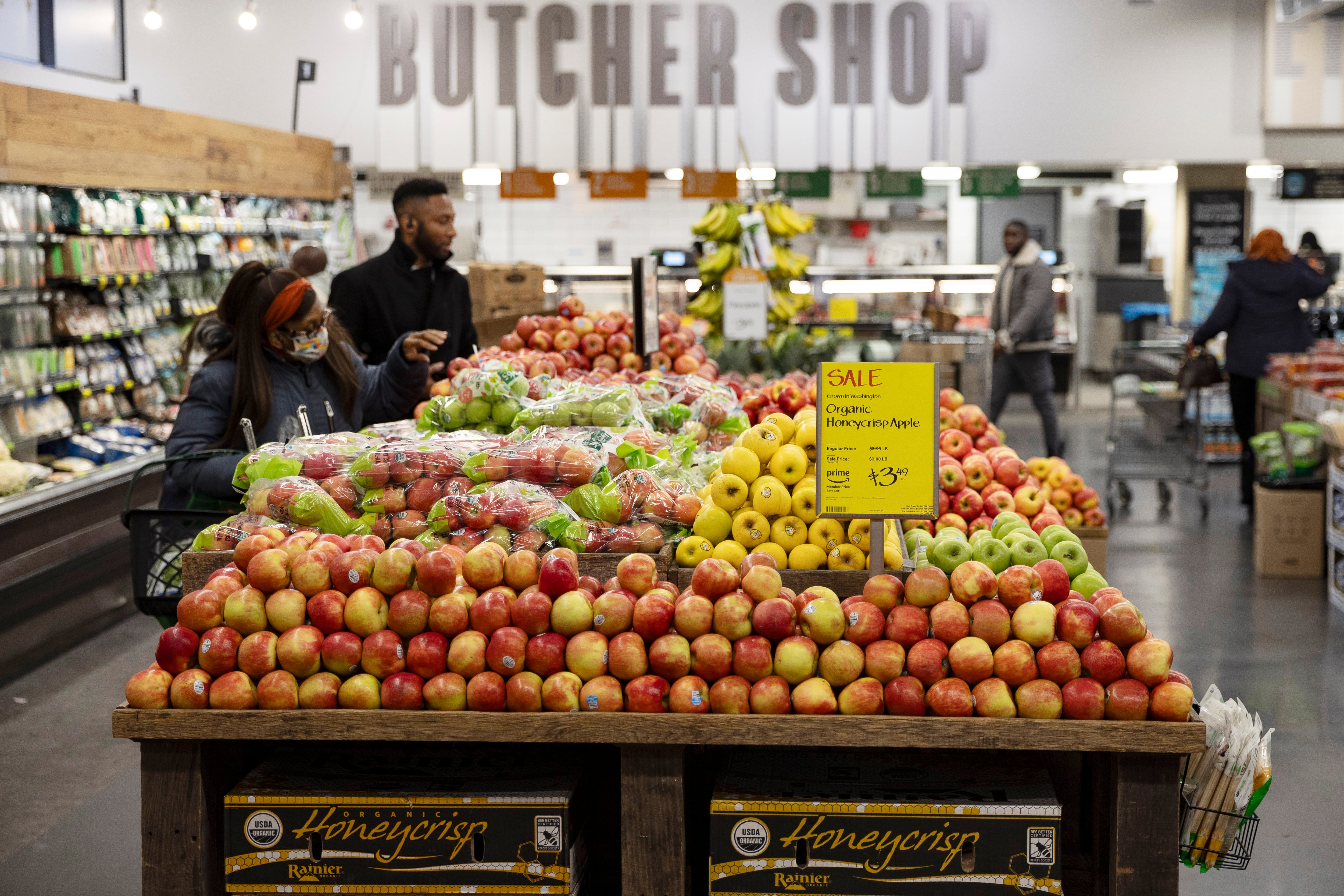
Inflation gives another respite to Donald Trump. The United States Consumption Price Index (CPI) was moderated in April to 2.3 % year -on -year. This is: low a tenth with respect to March. This is its lower increase since February 2021, according to public data on Tuesday by the Office of Labor Statistics (BLS). In terms of monthly variation, prices rose 0.2%, data that follows the 0.1% decrease recorded in March. The underlying price index, which excludes volatile food and energy categories, also increased 0.2% compared to the previous month.
The data is better than analysts expected, which are also afraid that this is the last moment of calm before the storm that unleash the effects of the commercial war launched by Trump on their return to the White House. It was at the beginning of that month of April when Trump imposed tariffs on dozens of business members of the United States who later lifted to give a period of 90 days during which to reach commercial agreements separately with each of them.
Those levies, expression of the Isolationist ideal of Trump and his America First (United States first), raise the prices of imported items, so they also have an impact on the shopping basket. The truce ordered by the US president also incorporated a minimum universal tariff for all countries of 10%. In the steel, aluminum and cars sectors that rate amounts to 25%. Trump also held the tariffs to China, of 145%, although this Monday he announced, after a meeting in Switzerland, which would reduce them to 30% (the universal 10% plus 20% of what the White House calls “the fentanyl tariff”, designed to contain the international traffic of that powerful opiate).
This is the third consecutive month of figures below those planned. The explanation to that may be that the goods most exposed to tariff fluctuations (products such as clothing or new cars) did not see their prices increase. There are two possible explanations: or that importers and shops are absorbing part of the new costs or that the items were imported before the tariffs came into force, according to analysts cited by the Bloomberg agency.
Well for Powell
The April CPI also serves to give the reason to Jerome Powell, president of the Federal Reserve, which last week ignored Trump’s pressures and refused to lower interest rates. Powell opted for the strategy of “waiting and seeing” until the next Fed meeting, scheduled for June. Its mission is double: control inflation and encourage job creation, and both indicators are showing an admirable resilience despite the volatile policies of the White House.
Inflation data also reflects some weakness of demand in certain categories of services, such as trips and leisure. The temporary agreement reached with China has largely reduced projections on the damage that tariffs will inflict to the economy. Although several economists claim that it is now likely that the US avoids a recession, tariffs will continue to maintain inflation well above the objective of the Central Bank. The low impact of tariffs could be seen in the so -called underlying prices of goods, which exclude imports.
“We could be at a sweet moment right now for the trends of underlying inflation. The prices of basic goods have not yet reflected impact of tariff increases, while the inflation of the services continues to gradually decrease,” says Brian Coulton, chief economist of Fitch Ratings, in a note collected by Bloomberg. “The underlying inflation of goods is likely to rebound in the coming months, since as the stocks of imported goods are exhausted before the tariff increases.”
For more updates, visit our homepage: NewsTimesWire