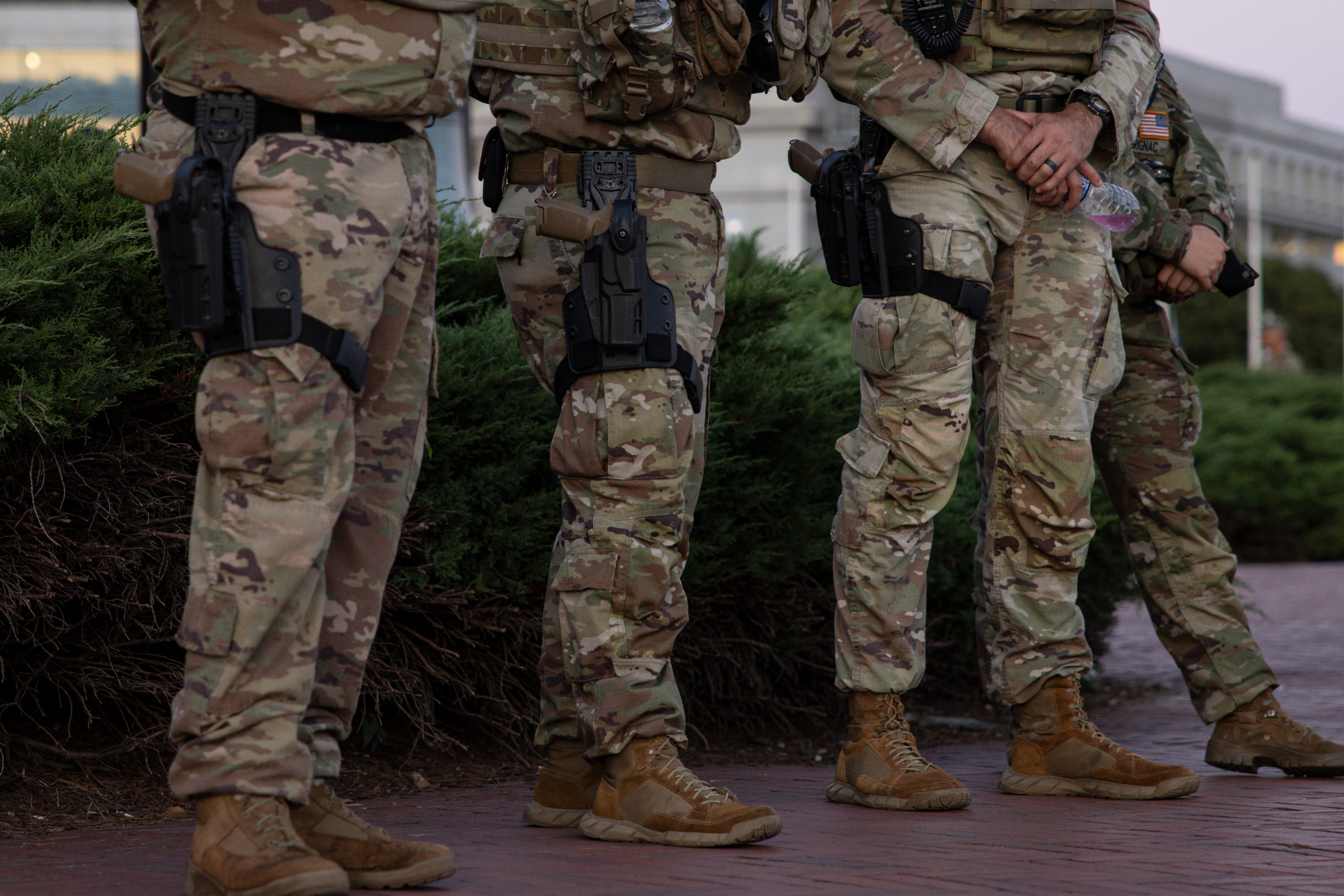
The capital of the United States has filed a lawsuit against the country’s government for the deployment of the National Guard in its streets ordered last month by President Donald Trump. From August 11, thousands of soldiers of the local guard and seven other states patrol the main monuments and the Metro system, among other Washington points, to stop what the president considers a wave of crime such that it made an emergency declaration necessary. Official figures, on the other hand, indicate otherwise.
“No American city would have to see US soldiers patrolling its streets, especially soldiers from outside the State, who do not pay accounts to local residents or are formed in the local measures of maintenance of the order,” said Washington’s attorney general Brian Schwalb. “We have filed this demand to end this federal excess.”
The lawsuit comes two days after a federal judge in San Francisco declared illegal a similar deployment of Troops of the National Guard ordered by Trump last June in Los Angeles, also with the argument of protecting citizen security. Also between growing threats from the White House tenant to repeat the operation in other Democratic majority cities, including Chicago, Baltimore or, since this week, in New Orleans. All of them, like Washington and Los Angeles, are governed by Democratic and African American mayors.
Trump presumes that the deployments that have occurred have drastically improved security in both cities. This same Thursday, the president boasted on his social network, Truth, of the number of arrests in Washington since patroling the streets not only soldiers, but also agents of the Federal Police and immigration. According to the White House data, 1,669 arrests have occurred in the three weeks of deployment and 709 criminals have departed from the streets.
The surveys, however, point to a deep discontent between the 700,000 people living in their urban center and the more than six million in the metropolitan area. About 80% opposes deployment, and 78% is considered less safe due to the presence of troops in the streets. Known professionals in the hospitality sector, such as the Spanish chef José Andrés, have criticized the president’s decision publicly and denounces a decrease in the occupation in bars and restaurants since the beginning of the operation.
In a statement, White House spokeswoman Jackson considered the city’s demand as “another attempt to harm, at the expense of residents and visitors to the Columbia district, the enormous success of the president’s operation to stop the violent crime in Washington.”
In the case of Los Angeles, the judge in charge of the case, Charles Breyer, decided that the deployment of troops violates the POSSE Comitatus Law, signed in 1878 and that prohibits troops from performing maintenance functions of the order. “The evidence presented at the trial established that the defendants systematically resorted to the use of armed soldiers (whose identities were often darkened by armor) and military vehicles to establish perimeters of protection and barriers to traffic, participate in the control of crowds and in general demonstrate a military presence around Los Angeles. In short, the defendants violated the Pose Comitatus law,” the magistrate wrote.
Another rule, the law against insurrection, 218 years old, authorizes the President to deploy the National Guard – composed by reservists who compatible this activity with their usual employment – in case of rebellion against the Government in any of the states of the Union. That rule clarifies that the presidential order must reach “at the request of the Legislature (of the affected State), or the governor if the legislature cannot meet”, but also grants the president the power to send troops of the National Guard if he considers it necessary to combat that insurrection.
Washington’s case is different, since the city has no status status, but merely district. His National Guard, which in the case of states is under the command of the governor, is under the direct command of the president. But the demand alleges that the deployment order, without the express permission of Mayor Muriel Bower, violates the autonomy of the city, enshrined by a law of 1973. The demand is also echoed on the arguments of Los Angeles, pointing out that the presence of the military in the streets “passes over a fundamental principle of US democracy, that the army should not participate in maintenance tasks of the order in national territory.”
It is the second demand that Washington presents against Trump’s order. In the first, he argued that the president could not take control of the Local Police, as provided for the text of the document. Finally, the Attorney General, Pam Bondi, was approved that federal agents have a more limited role in their cooperation in the operations of the Metropolitan Police.
For more updates, visit our homepage: NewsTimesWire