
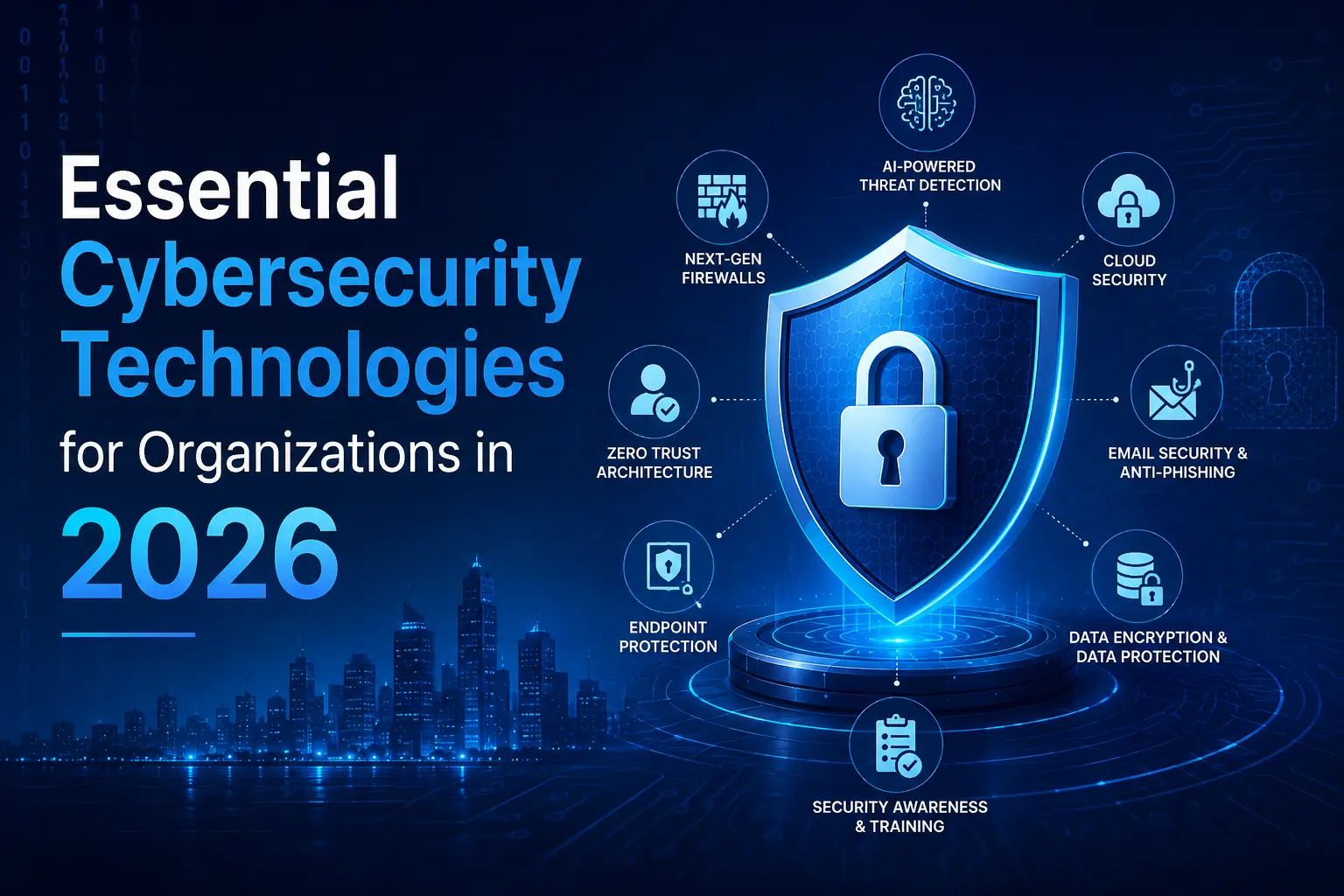
The cybersecurity landscape in 2026 is defined by a rapid acceleration in AI-driven threats and the necessity for extreme operational resilience. As adversaries leverage large language models (LLMs) and autonomous agents to conduct hyper-personalized social engineering and automated attacks, organizations must move beyond perimeter-based defenses. Achieving a robust security posture today requires a layered, proactive approach that prioritizes identity, automated visibility, and the security of the AI models themselves.
Core Technologies for Modern Defense
Modern organizational security is no longer about isolated tools; it is about cohesive, intelligent platforms that can identify and neutralize threats in real-time. The following technologies serve as the backbone for protecting against the next generation of digital risks.
-
Identity and Access Management (IAM): With credentials serving as the primary target for attackers, advanced IAM platforms are essential. These systems enforce multi-factor authentication (MFA) and provide just-in-time access, ensuring users have the absolute minimum permissions required to perform their specific roles.
-
Endpoint Detection and Response (EDR): Since the endpoint is the physical point where most AI-driven attacks manifest, EDR solutions are critical. These tools continuously monitor device behavior, utilizing machine learning to detect anomalies that traditional signature-based antivirus software would miss.
-
Cloud-Native Application Protection Platforms (CNAPP): As organizations migrate more assets to the cloud, CNAPP provides a unified view across complex, multi-cloud environments. This helps security teams identify misconfigurations, vulnerability gaps, and compliance issues within development pipelines before they can be exploited.
-
AI-Powered Threat Detection: To combat the speed of AI-enabled adversaries, organizations must deploy security tools that leverage “superintelligence” platforms. These systems use knowledge graphs to correlate vast amounts of telemetry data, spotting patterns that indicate a coordinated breach attempt across both IT and operational technology (OT) systems.
-
Network Segmentation and Zero Trust Architecture: Implicit trust is a liability. By segmenting the network and enforcing Zero Trust principles, organizations contain potential breaches. This ensures that even if one segment is compromised, attackers cannot move laterally to access sensitive “crown jewel” data.
Strategic Implementation Framework
Protecting an organization is a continuous process of inventorying, securing, and testing. Following a structured framework ensures that no asset—whether it is a legacy device or a new AI agent—is left vulnerable.
-
Comprehensive Asset Inventory: You cannot protect what you do not know exists. Maintain an exhaustive, real-time inventory of all cloud resources, remote devices, and shadow IT.
-
Continuous Vulnerability Management: Move beyond periodic scanning. Implement automated patch management and vulnerability assessments to shrink the window of opportunity for attackers.
-
Third-Party Risk Assessment: Treat suppliers as an extension of your own perimeter. Require vendors to demonstrate their security maturity through standardized assessments, SOC 2 reports, and regular access reviews.
-
Simulated Incident Response: Documented plans are only as good as their execution. Conduct annual tabletop exercises and simulated phishing campaigns to train employees and test your recovery playbooks.
-
Data Resilience and Testing: Follow the 3-2-1 backup rule (three copies, two types of storage, one off-site). Most importantly, perform actual restoration tests to ensure your data is usable when you need it most.
Prioritizing AI and Post-Quantum Readiness
As we move through 2026, security teams must prepare for two major shifts: the proliferation of autonomous AI agents and the impending arrival of quantum computing. Securing AI involves not just protecting the business from malicious models, but also securing the internal models, prompts, and training data from tampering or “poisoning.” Simultaneously, organizations should begin an inventory of their current cryptographic implementations, identifying data sensitive enough to require migration to quantum-resistant algorithms. By embedding these forward-looking security requirements into daily operations, organizations can maintain resilience in an increasingly volatile digital economy.
Frequently Asked Questions
1. Why is Zero Trust essential in 2026?Zero Trust removes the “implicit trust” that attackers exploit. By verifying every user, device, and application attempt, regardless of whether it originates inside or outside the network, organizations significantly limit the impact of a potential breach.
2. How do I protect my organization against AI-driven phishing?Beyond traditional filters, implement AI-powered email security that analyzes communication patterns for anomalies. Most importantly, conduct continuous, realistic phishing simulations to train employees to spot deepfakes and LLM-crafted social engineering.
3. What is the biggest mistake organizations make with backups? The most common failure is failing to test the restoration process. Having a backup is only half the battle; if you cannot prove you can restore the data quickly and reliably during an incident, your business remains at high risk.
4. How does IT/OT convergence increase my security risk?The integration of IT systems with Operational Technology (like industrial controllers) creates new pathways for cyber-attacks to cause physical harm. Organizations must apply micro-segmentation to these legacy environments to isolate them from the broader network.
5. What is the first step in securing AI agents? Start by mapping out where AI is being used in your organization and what data it touches. Implement identity controls for these agents just as you would for human users, ensuring they operate with the principle of least privilege.
