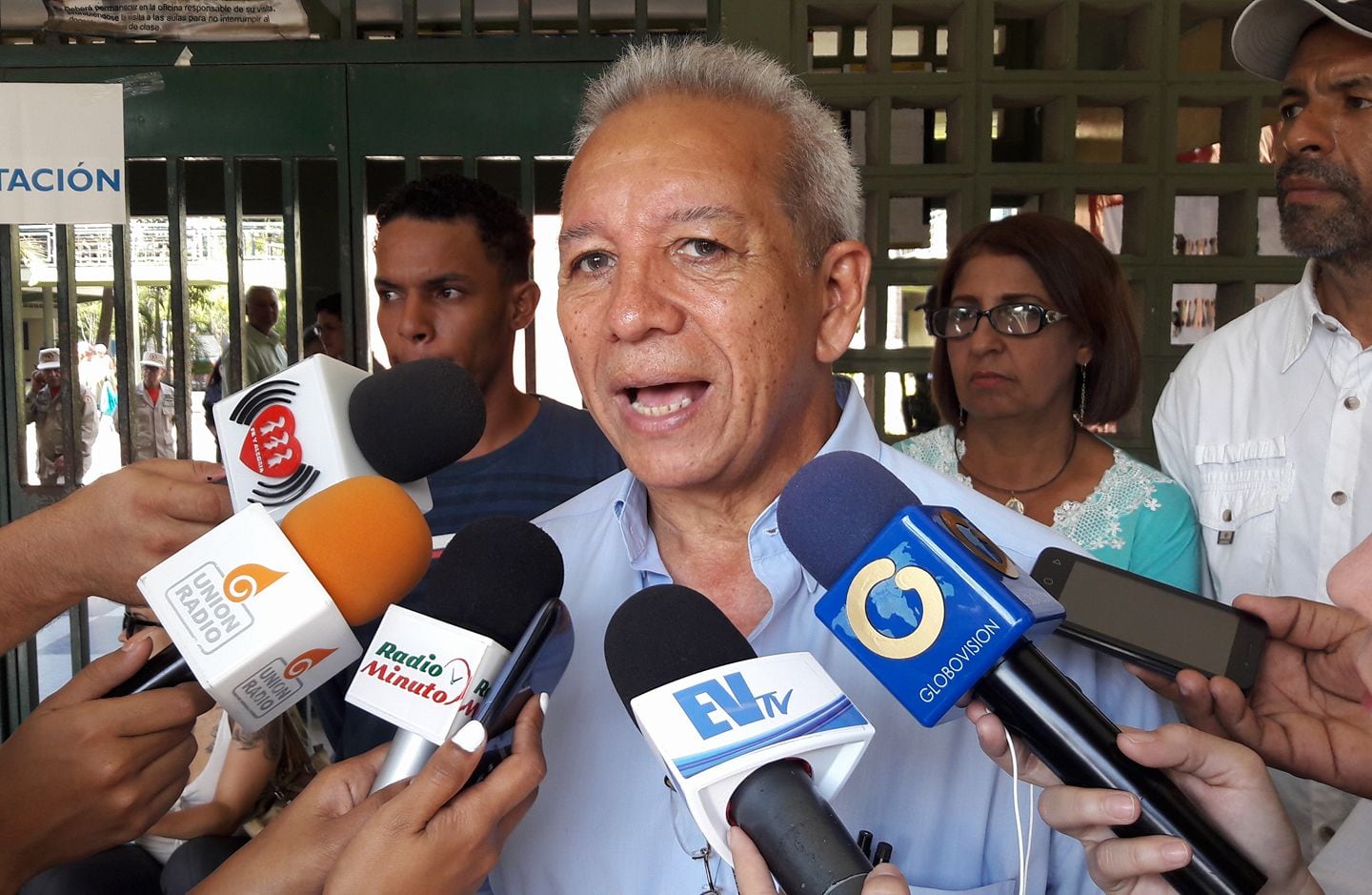
The Venezuelan opposition political leader Macario González, 73, has been missing for more than three weeks. His relatives presume that he was detained by the Chavista police at the end of the afternoon of September 12, the last time he was heard from. González left the Universidad Centroccidental Lisandro Alvarado (UCLA) where he works as a Law professor. Days before, he had written several messages on X in defense of freedom of expression and the release of political prisoners.
They do not know where he is being held, what his health conditions are, or what he is accused of. His loved ones are very concerned because he suffers from hypertension. As has happened in other cases, the authorities have been tight-lipped with the relatives. González is a member of Voluntad Popular, was a deputy of the National Assembly in 2025 and also served as mayor of the city of Barquisimeto.
Macarena González, daughter of the politician, has no doubt that her father’s case qualifies as a forced disappearance. The Committee for the Freedom of Political Prisoners, Clippve, has registered 170 cases of this type, of greater or lesser severity, from 2024 to 2025. Several of them are foreigners.
The most common thing is that, at some point, the authorities end up presenting the detainees in the Anti-Terrorism Courts, usually in virtual hearings with links from the video calling application Zoom. The average waiting time is usually, according to what relatives of detainees report, one to two months. Many prisoners remain incommunicado and without visitors for long periods of time.
Relatives of prisoners attest that the period between the arrest of the accused and the information about his trial, or the place where he is being held, is very disturbing. “I hope he is fine. This will not be the story of the Argentine military, it is not The night of the pencils, but it’s still hell. “He suffers a lot,” explains Macarena González. “Not knowing anything, where he is, what he is doing to him, if he is okay, what they are accusing him of, is very frustrating.”
The Venezuelan authorities categorically deny that they are committing forced disappearances. They argue that the people who have been taken to prison in these months are involved in crimes against State security. It is, they claim, a legitimate procedure. They maintain that the relatives are finally informed about the process.
Macario González, 73, was a prominent left-wing university leader at the University of the Andes in the 1970s and 1980s. He was active in the MIR, a small Marxist party during the years of democracy, and in the 1990s in the MAS, the social democratic formation with the greatest national reach.
He is a national leader, but he has had a prominent role as a politician in the State of Lara, where he is from. González has been active in most of the electoral alliances of the opposition currents to confront Chavismo and was part of the Democratic Unity Roundtable. In recent years, he joined the military in the Voluntad Popular party, founded by Leopoldo López.
Although in a less spectacular and newsworthy manner than the previous year, arrests for political reasons have continued their pace in the Venezuela of 2025. These arrests have particularly targeted national and regional middle cadres of the Vente Venezuela and Voluntad Popular parties.
One of the latest arrests was that of José Enrique Pérez, electoral coordinator of Vente Venezuela in the state of Trujillo, on September 28. The party estimates that 112 of its leaders have been prosecuted in recent months for political reasons.
In Venezuela there are, to date, some 823 political prisoners, according to the information offered by the NGO Foro Penal. “The cases of people arbitrarily detained and subjected to long periods of incommunicado detention have increased during this time,” says Provea, an NGO specialized in the defense of Human Rights.
In the midst of the delicate national situation, María Corina Machado, an underground opposition leader, has repeatedly denounced the situation of political prisoners in the country in recent months, and has asked the new Pope, Leo
Meanwhile, the Government of Nicolás Maduro assures that the country lives in a permanent conspiracy by “extremist sectors”, incited by the United States, who seek to alter public peace and ignore the electoral results of last year’s presidential elections, in which Maduro proclaimed himself the winner.
For more updates, visit our homepage: NewsTimesWire