The unexpected turn of approach to kyiv that the president of the United States, Donald Trump, offered after meeting in New York with his Ukrainian counterpart, Volodymyr Zelensky, at the end of September, has not yet materialized in significant decisions that reflect this change in position. In the two weeks since then, however, certain announcements have emerged that lead to the interpretation that Washington has really changed its point of view after having remained aligned for months with the Russian president, Vladimir Putin. First, US authorities have referred to the possibility of offering intelligence support to kyiv on long-range targets in Russian territory. Second, Washington has opened the door to supplying Tomahawk missiles to the Ukrainian army after being requested by Zelensky, which is the weapon he most hopes for. This has been pointed out by Vice President JD Vance, who recognizes, however, that the last word belongs to Trump.
The American president, proud of the momentum he has achieved to pacify Gaza, recognizes, however, that he was wrong with Ukraine. “I thought it would be easy. I get along very well with Putin and I thought it would be… I’m very disappointed in him because I thought it would be easy to solve, but it turned out to be maybe more difficult than the Middle East,” he said after a meeting with Canadian Prime Minister Mark Carney.
In this context, Zelensky announced this Thursday the sending of a high delegation of his Government to the United States headed by the Prime Minister, Yulia Svyrydenko, together with the head of the presidential office, Andriy Yermak, and the representative for sanctions policy, Vladyslav Vlasyuk. The issues they hope to discuss are air defense, energy – whose infrastructure is one of the main targets of Russian attacks these days -, sanctions on Moscow, the possible path of negotiations and frozen assets with the United States.
The Tomahawk is a long-range subsonic cruise missile – up to 2,500 kilometers – that will make attacks on Russian targets much more effective than with drones or the medium and short-range missiles used until now during the war such as the British Storm Shadow – up to 250 km. For this reason, Moscow has been quick to warn that this would mean crossing a dangerous line in the conflict in an attempt to deter Washington. “This will ruin our relations or, at least, the emerging positive trend in these relations,” Putin said in statements to public television, although without expressly referring to the Tomahawk’s ability to carry a nuclear warhead.
Trump, for his part, fears that the consequences of selling those missiles will get out of hand and recognizes that his desire not to escalate the war weighs on his final decision, which is why he wants to know in advance what specific use Ukraine will make of those rockets, he told reporters at the White House. The US envoy for Ukraine, Keith Kellog, has indicated in statements to the Fox network that in Russia “there are no sanctuaries”, in reference to the fact that kyiv has no restrictions on its objectives.
How many Tomahawks would Ukraine need? “The more the merrier,” responds political and military analyst Alexander Kovalenco. “Until we achieve victory,” he assesses in a telephone conversation. In any case, he adds, it will depend on the different variants of this missile that kyiv receives. There are bunker-busters, which could be used against underground military installations, or there are those with cluster munitions, to attack airfields. Kovalenco cites several examples of those that could reach Ukraine. The BGM-109C Tomahawk (TLAM-C), which could be used to hit airport infrastructure or command centers. The BGM-109D (TLAM-D), equipped with multiple bombs that could be dispersed over a wide area to neutralize troop concentrations, vehicle formations, or air defenses. Or the Block VB, also for different ground targets.
Ukraine has long-range drones capable of flying between 1,200 and 1,800 kilometers before reaching their target. In fact, they have already hit Moscow several times, but they have certain limitations regarding long-range missiles. First, its speed is lower than that of the Tomahawk, which can fly at about 1,000 kilometers per hour. Second, the Tomahawk can be reprogrammed and redirected during flight and has a much greater capacity to transport explosives as it has a warhead of up to 450 kilos. This greatly multiplies, as Kovalenco explains, the ability of the Ukrainian army to strike hundreds of kilometers inside Russian territory military bases, weapons depots, production centers or airfields where the Kremlin’s combat aviation is concentrated.
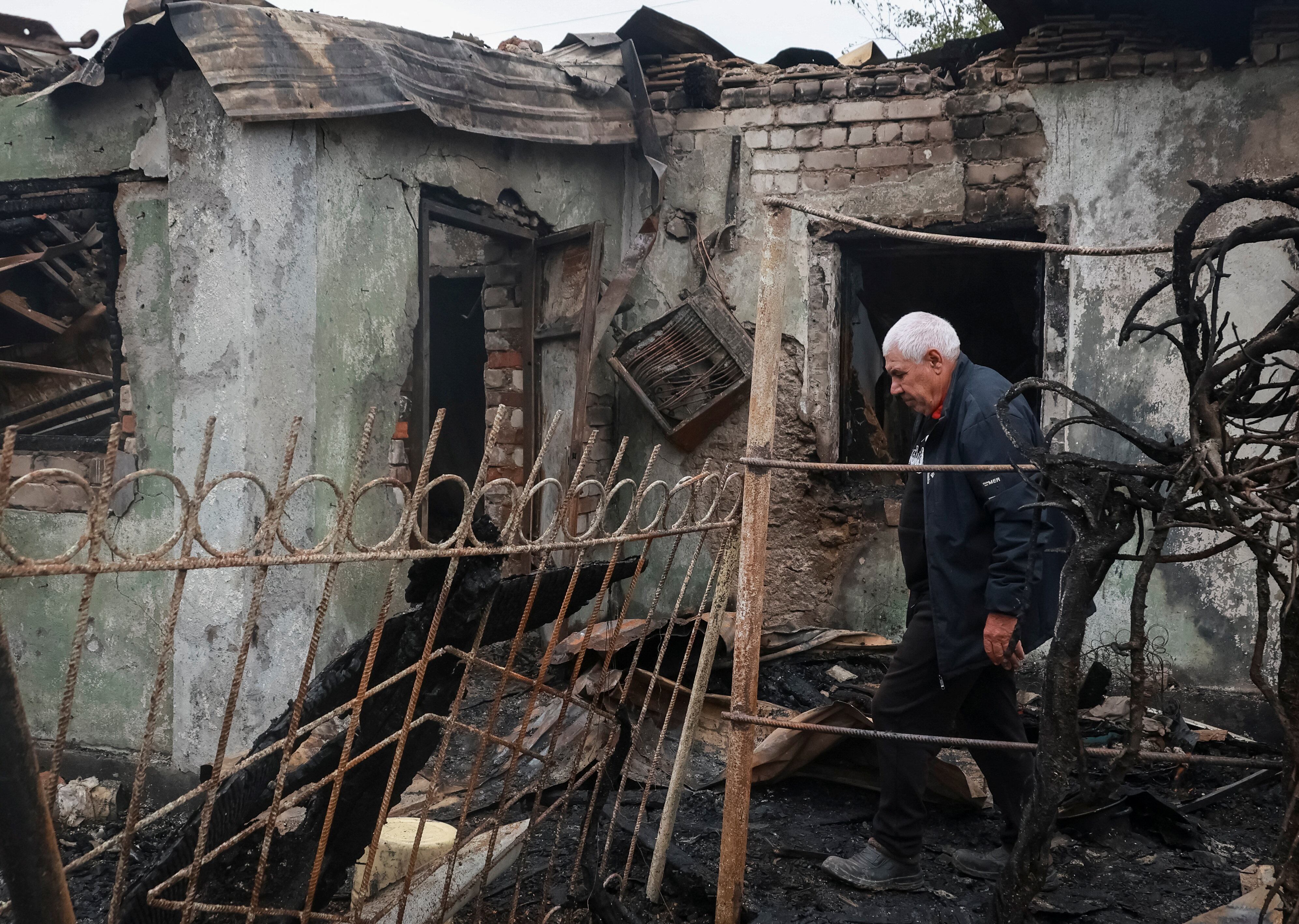
In this sense, days before the possible supply of Tomahawks was announced, the United States said that it would also provide Ukraine with intelligence-level information on long-range energy infrastructure targets in Russia that could be hit with this type of missile, according to the newspaper. The Wall Street Journal. Energy infrastructure is one of the main objectives that Moscow is attacking these days in Ukrainian territory with the intention, as in previous years, of complicating the life of the population with the arrival of the colder months.
Meanwhile, Ukraine continues to advance in the manufacturing and improvement of its own long-range missile, the Flamingo – up to 3,000 km. It is their main bet to try to reduce the advantage that Moscow has in this field with its cruise and ballistic missiles. In any case, the Flamingo will not be mass produced until the end of this year or early 2026. It is essential for the internal weapons production machinery to be maintained and foreign financing to grow, Zelensky maintains, while offering in exchange the export of weapons to allied countries.
Since the start of the full-scale Russian invasion in February 2022, the capacity of the Ukrainian defense industry has increased tenfold, according to data offered at a defense forum by Zelensky on October 6. “Our production potential, just for drones and missiles, will reach 35 billion dollars (about 30 million euros) in 2026. More than 40% of the weapons used on the front are already manufactured in Ukraine (…) and by the end of the year, at least 50%,” estimates the president.
The Tomahawks’ entry into the war equation takes place less than two months after Trump received Putin in Alaska. Since then, the positions of both seem to have diverged, especially due to the turnaround announced by the Republican leader coinciding with the UN General Assembly. Then, while receiving Zelensky, he published a message on his Truth social network that suddenly brought his position closer to that of kyiv. “I believe that Ukraine, with the support of the European Union, is in a position to fight and RECOVER all (soil) of Ukraine back to its original form,” Trump wrote. Since then, tensions have been rising with Russian drone activity over NATO airspace and Washington opening the door to supporting long-range strikes inside Russia by Ukraine.
The controversy surrounding the authorization by the United States for Ukraine to use its weapons in Russian territory comes from the mandate of Democrat Joe Biden, someone much more critical of Putin than his replacement in the White House. Finally, Biden’s permission came in May of last year. The Ukrainian army began to defend itself by first launching short-range projectiles at Kremlin targets, first by American Himars launchers and, later, by beginning to use ATACMS missiles, whose range is almost 300 kilometers. However, drones remain the main offensive bulwark.
The Kremlin has previously delayed the shipment of Western weapons to Ukraine such as ATACMS missiles, high mobility artillery rocket systems (HIMARS), F-16 fighter jets or Abrams tanks, recalls the Institute for the Study of War (ISW). However, the arrival of this weaponry “did not trigger a Russian reaction of escalation”, meaning that both the West and Ukraine have ended up not respecting those “red lines” marked by the Kremlin.
For more updates, visit our homepage: NewsTimesWire