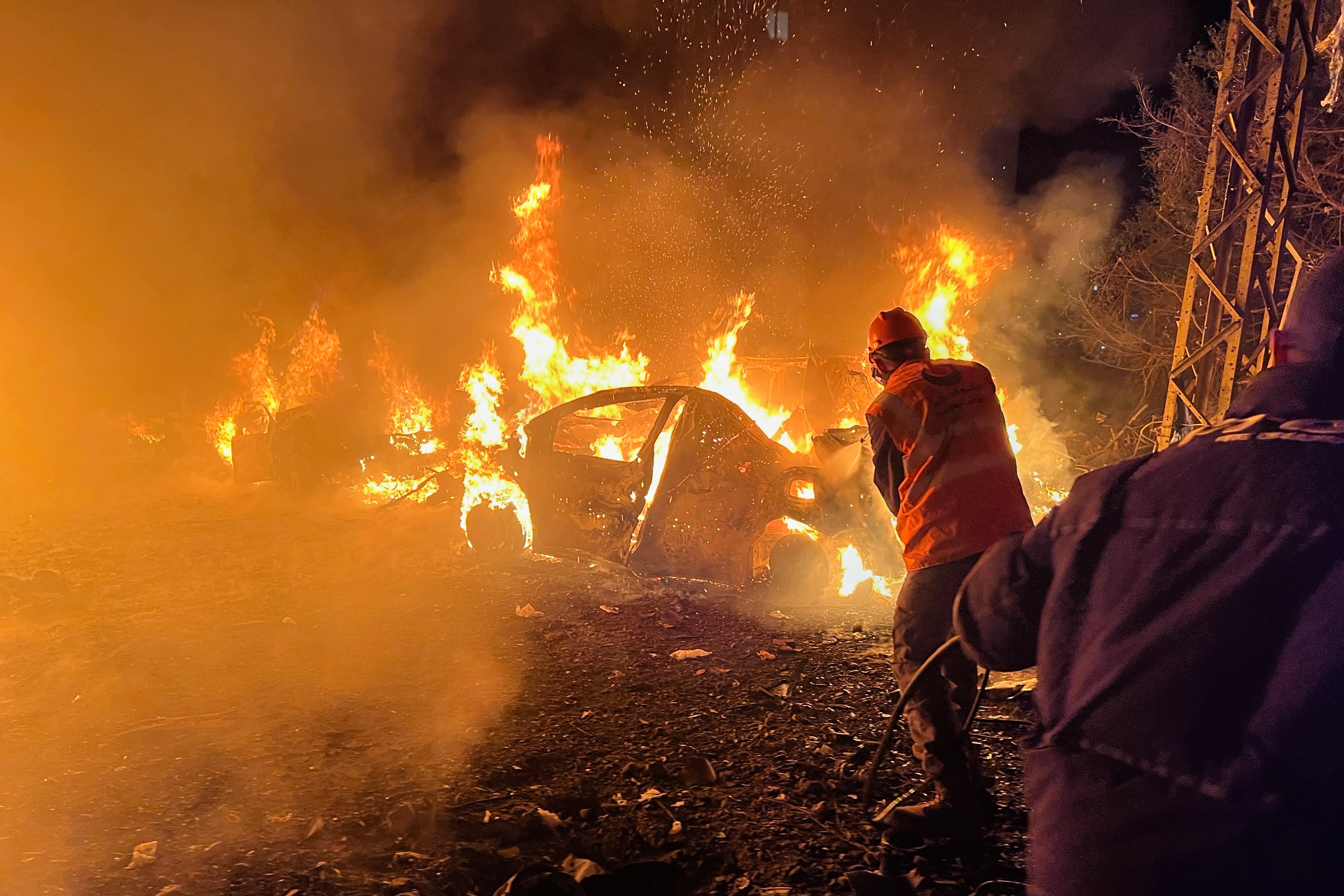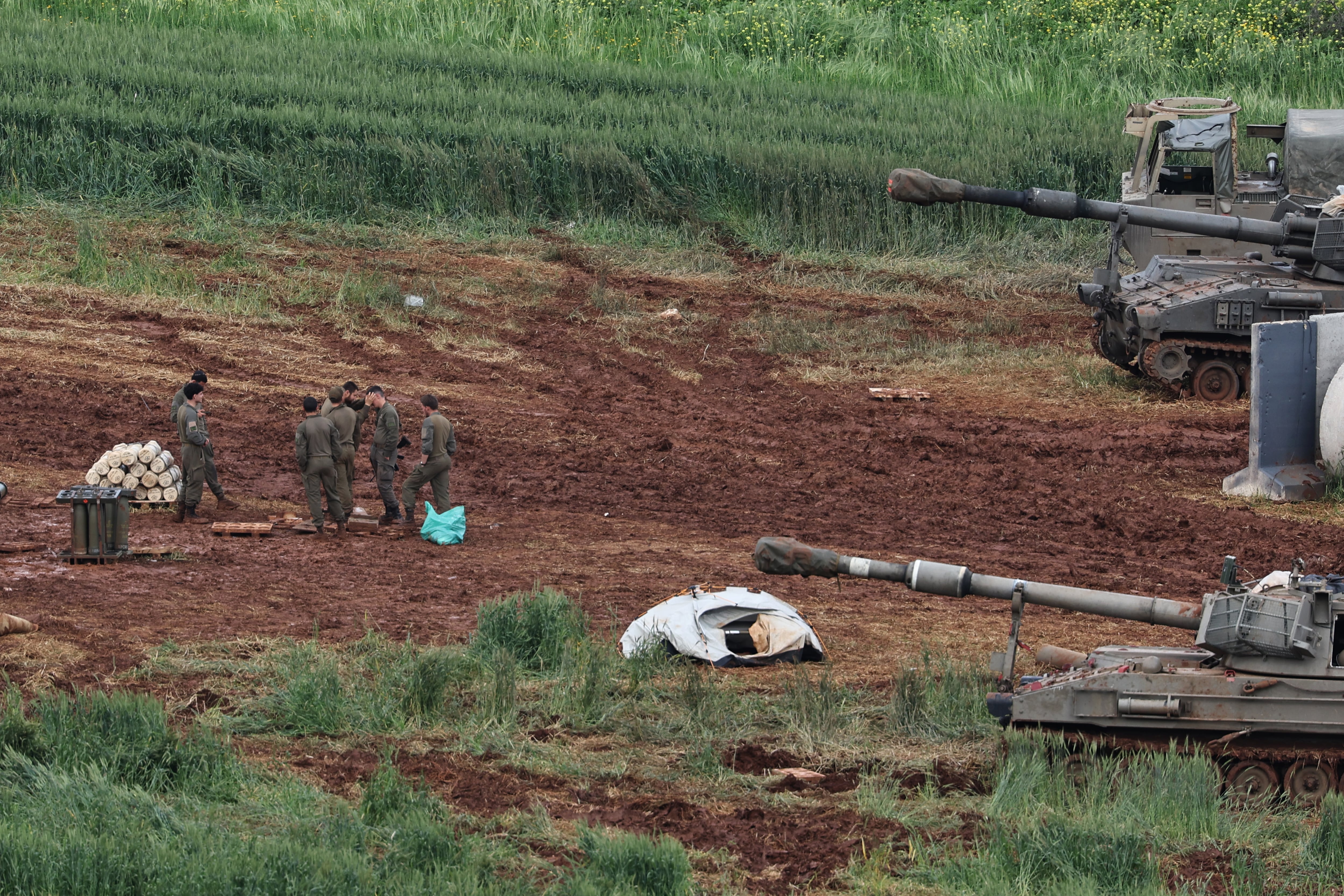
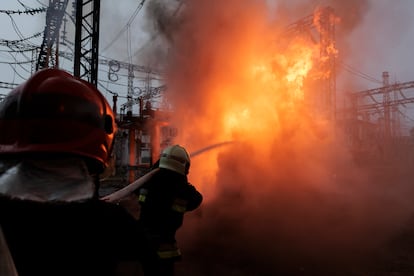
The fourth winter of the war is approaching in Ukraine, one of the great collateral battles waged by its population. And good proof of this is the increase in Russian bombings against substations and power plants in the country. According to data from the Ukrainian Government, Russia has launched 1,550 attacks against energy infrastructure in the last month, of which 160 reached their objective – the last one, in the early hours of this Friday, caused electricity outages in kyiv, the capital. “It has become a traditional tactic,” said the country’s president, Volodymyr Zelensky, in recent statements about the Russian pre-winter offensive, “Russia is trying to cause a (widespread) blackout in Ukraine.”
Despite being a fundamental civil infrastructure, in theory outside of war objectives, the electrical grid continues to be a daily objective of Moscow. The Kremlin admits that it hits energy facilities, but assures that only those linked to the Ukrainian army. Nothing could be further from the truth.
“They have been attacking our facilities daily since the first day of the invasion,” Maxim Timchenko, CEO of DTEK, the largest energy company in Ukraine, explains to EL PAÍS in a recent interview. “Since then, our mission has been to restore as much generating capacity as possible.” kyiv estimates that the country can now generate less than half the electricity it did before the war. A volume that, however, seems enough to get us through next winter.
Russian machinery has hit DTEK facilities three times in the last week: in Poltava (east) and in Odessa (south, facing the Black Sea). “Last year they caused damage to over 90% of our generation infrastructure, but we managed to recover,” continues Timchenko. “We are well prepared to overcome the winter: we have sufficient production capacity, both thermal and hydroelectric, a large amount of stored coal, and also gas, which we continue to import,” he added during a recent visit to Madrid.
Of that 90% of electricity generation lost in 2024, the energy company estimates to have recovered “between 70% and 80%.” Now the most difficult part remains: reaching 100% before the cold arrives, given that the remaining plants are the most damaged.
Good proof that Russia continues to prioritize this sector – as Bloomberg recently confirmed citing sources close to the Kremlin – is the gigantic Tripilia thermal power plant, on the right bank of the Dnieper, south of kyiv. On September 8, a swarm of around twenty unmanned attack aircraft caused serious damage to the plant managed by Centrenergo, on which users in the provinces of kyiv, Zhytomyr and Cherkasy depend. Thus, they ruined the restoration work of the facility, destroyed last spring.
Both the authorities and the electricity companies themselves have learned several lessons since the fateful February 24, 2022. “We have more experience and defensive capabilities,” says Timchenko. “However, they have changed their tactics, with massive attacks focused on some objectives. And the reliability of our equipment is less: some plants have suffered two, three and even four attacks”. The Russian army began massive bombing of electrical substations in the second year of the invasion. Once crushed, the shuttles targeted the large thermal power plants, vital for the current electricity supply.
Despite everything, Ukraine has known how to protect itself so that the impact of the bombs is less. An effort at three levels: anti-aircraft defense, rapid response to repair damage and private initiative to search for alternative sources of electricity. “I cannot reveal many details,” says the head of DTEK, “but I can say that coordination between our personnel and the air defense forces has been greatly improved: we can, for example, anticipate many of these attacks with drones or missiles, and that allows us to make changes in the mode of operation to minimize damage.”
At the end of 2023, the Government and the General Staff of the Ukrainian army designed a three-layer infrastructure protection plan: roofs and sandbag walls to prevent the impact of projectile fragments; concrete structures against direct collision from missiles or drones; and sarcophagi in the style of the Chernobyl nuclear power plant. In a recent talk in kyiv, Oleksandr Kharchenko, director of the Energy Industry Research Center, stated that this third level has not been reached, especially due to its cost, although the first two seem sufficient.
With low temperatures already knocking on the door, the number one goal of a giant like DTEK is that, “although the service is not going to be as reliable” as they would like, citizens can have electricity in a period in which, although the majority of heating is gas, electricity demand is growing strongly.
The feeling, both in the Executive and in the citizens and in the companies in the sector, is that the country is well protected. “This time, Russia will not be able to plunge Ukraine into darkness either,” Timchenko maintains. “They can make our lives miserable, very, very difficult… But they will not destroy our energy system,” he continues. “We will survive the next winter, as we have survived the previous ones. And the level of suffering of our population will depend, above all, on the scale of the Russian attacks and the defensive effectiveness of our air forces.”
They are fallible. This Thursday, a Russian attack on facilities in the province of Chernihiv (northeast, near the border with Russia and Belarus) left more than 70,000 people without power. Last week, the Finnish president and one of the main supporters of Ukraine in the EU, Alexander Stubb, explained this in conversation with EL PAÍS: what worries him most at this time of the war, he said, was the destructive capacity of the Russian attacks on the Ukrainian energy sector. Shortly after, on Friday, DTEK announced the closure of several gas infrastructures in Poltava after a powerful Russian attack.
Resistance despite daily bombings
The combined push of the Government, companies, the army and citizens allows us, however, to understand the country’s resistance to the daily hammering of Russian bombs on the energy infrastructure. “We are Ukrainians,” Timchenko adds. “I am very grateful to our people for making it possible, for staying in plants that know they are going to be attacked, with checkpoints in the control centers… They are an example of heroism.”
In a telephone conversation, Kharchenko, former energy advisor to the Government, affirms that among his country’s merits is having built large fortifications to protect the facilities and the rapid restoration of what was destroyed: “We are better than a year ago and much better than two years ago.” Gas and coal reserves, he says, make it possible to guarantee a less harsh winter. It also applauds the creation of small generation units that work in the event of an attack and the decentralization of electrical infrastructure.
However, as Ukrainian Air Force spokespersons reiterate almost daily, no 100% protection is possible. “The biggest danger I see this year,” Kharchenko continues, “will be in the areas close to the war front.” Areas where a Russian projectile can hit an electrical substation in a matter of minutes, with no time to react.
For decades, Ukraine bought most of the gas it consumed from Russia. In fact, a no small part of the fuel demanded by other European countries passed through its territory until the closure, last January, of the so-called Ukraine Transit, one of the gas pipelines that connected the Eurasian country with the EU. It was one of the greatest paradoxes since the beginning of the invasion: the fighting took place on the battlefield, but the gas continued to flow, unrelated to the conflict.
Now, Ukraine, like many other European countries, has become heavily dependent on liquefied natural gas (LNG) that arrives by ship from countries such as the United States, from which it bought a first shipment in December last year. Without its own regasification stations, what will be consumed this winter will be processed in ports in Poland and Lithuania.
The ‘Zapori factor’
The loss of the Zaporizhzhia nuclear power plant, the largest in Europe, was a serious blow to both national morale and security of supply. In just a few months of invasion it would go from injecting electricity into the Ukrainian grid to feeding its Russian counterpart, a situation that remains today.
“It represented 40% of our nuclear capacity, a very high figure. But, at the same time, our demand has fallen by 30% since the beginning of the invasion and that has allowed us to balance supply and demand,” says Timchenko. The increase in electricity imports from the EU (Poland, Romania, Hungary or Slovakia) since the emergency synchronization of the network in 2022 has also helped, and not a little.
Zaporizhzhia is also one of the most monitored places after days of massive bombing due to the risks that a projectile could reach the facilities. On September 23, an attack knocked out the power supply that powers the cooling and security systems. It was the tenth and longest blackout since the start of the full-scale invasion. Two weeks later, it still hasn’t been restored.
Batteries and renewables against blackouts
On the 1st, one of the largest battery systems in Eastern Europe began operating in six locations in Ukraine; among them, kyiv. Built in record time, its capacity will be small compared to total demand. But it will begin to help already this winter and, above all, it marks the path to follow from now on: the more electricity that can be stored in this type of facilities, the less damage will be caused by Russian attacks on generation plants. “If a plant disconnects from the grid, these batteries can maintain supply in the affected region, say 600,000 homes, for one, two or three hours, until it can be reconnected,” quantifies Maxim Timchenko, head of the energy company DTEK.
Beyond storage, the second future bet for the energy sector in Ukraine is renewables. “For us, they do not only have to do with the green transition, but with security of supply: we have been one of the first energy companies to experience the importance of distributed, decentralized generation: wind farms, solar parks, batteries…”, says the executive.
“You can have 300 megawatts spread over 50 wind turbines of six each or a single coal plant. To destroy the latter they need one or two missiles; destroying the former is practically impossible for them. And, if they succeeded, the repair would be much faster and easier,” explains Timchenko. “We suffered an attack on a solar park that caused us to lose hundreds of megawatts of power, and in a week we managed to recover them. That would have been impossible in a thermal power plant.”
For more updates, visit our homepage: NewsTimesWire