Originally from Bayamón, a town west of San Juan de Puerto Rico, Miguel Ángel Amadeo arrived with 13 years in New York by his mother, for which he was called “The Negrito de Vicenta”. It was 1947, and more than 70 years later Amadeo not only continues in the city, but has become a living legend. He is the owner of an emblematic and only music store, the musical establishment that takes more operational time in the entire city.
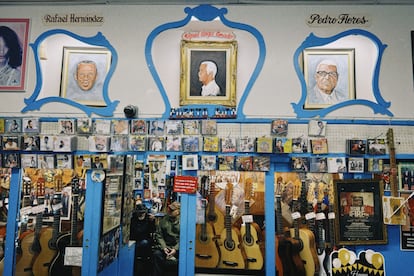
Go into Amadeo house, also known as OLD HERNANDEZ HOUSEin the 786 of Prospect Ave, in the Bronx, it is a round trip to Puerto Rico and, above all, to the history of Latin American music in the Big Apple. But also, and above that, it is the way to spend a while with Amadeo, one of the stars that, behind the curtain, wove what New York music with Hispanic roots is today. Although his name is Miguel, everyone knows him as Mike, In his English version, nickname he adopted when he moved from his native island to Manhattan because his teachers were less effort to pronounce it like that.
Amadeo is more than a record seller. He composed some of the most emblematic songs of Latin American music as To give it to me in life, From El Gran Combo de Puerto Rico, U Hey my advice, from Celia Cruz. He also collaborated with other music giants such as Héctor Lavoe and has more than 300 songs composed.
In 1955, Amadeo’s life, who had so far worked as a musician in bars and restaurants in the city, changed forever. He was offered a job at the Alegre Records record, a seal specialized in Latin American music, and did not think twice. While sings and touches the palms, putting one record after another in one of those radiocasetes that are already museum pieces, the artist says that he does not identify with what the general public knows as the salsa genre. “That is an invention to talk about genres such as full and bomb,” he says.
The music runs through his veins because he is the son of the composer and musician Titi Amadeo, although he “disregarded us very soon,” he says referring to him, his mother and his brother. His nephew, in addition, is Tito Nieves, one of the most successful active sauce singers.
What today is Casa Amadeo, formerly called Casa Hernández, opened its doors in 1941 as the second store of the Puerto Rican musical businesswoman Victoria Hernández and her brother, the popular musician Rafael Hernández. In 1969, Amadeo acquired it and gave it the name it maintains until today.
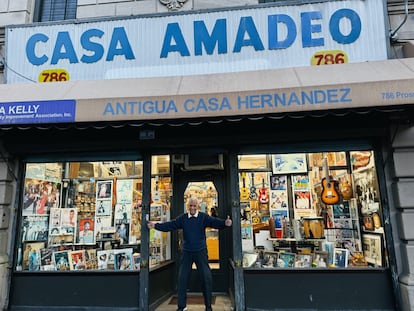
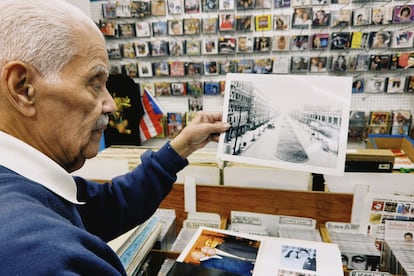
In the place there is no one to help you. “Why,” he asks, “how many customers have you seen enter here?” While the clientele is no longer what it was and you can count on the fingers of one hand, there is not a single day in which Amadeo leaves the shutter down, it opens from Monday to Saturday and is always ready to sing, talk and, of course, sell some record. Amadeo sells records of around $ 15. The last ones of the market do not usually have, and its clientele does not always know what they are going to look for, but they are sure that they will find something interesting. Also that they must carry cash, since the owner does not accept cards. He has all the inventory in his head, and points out a box where there are handwritten cards and in alphabetical order, as if it were a telephone list.
All these years in New York have failed to erase Puerto Rico. He feels island and does not want to be labeled as “New Yorican”, as Puerto Ricans born in the city are known. “I am Puerto Rican,” he says. And the question of whether he likes reggaeton, or his compatriot Bad Bunny, Amadeo is clear: “I hate reggaeton”, to which he adds: “It’s nothing personal, but I believe in form.”
Amadeo, although he does not say it directly, he does not believe in a relay and knows that it is irreplaceable. What happens with the store when it is no longer, either does it care.
For more updates, visit our homepage: NewsTimesWire