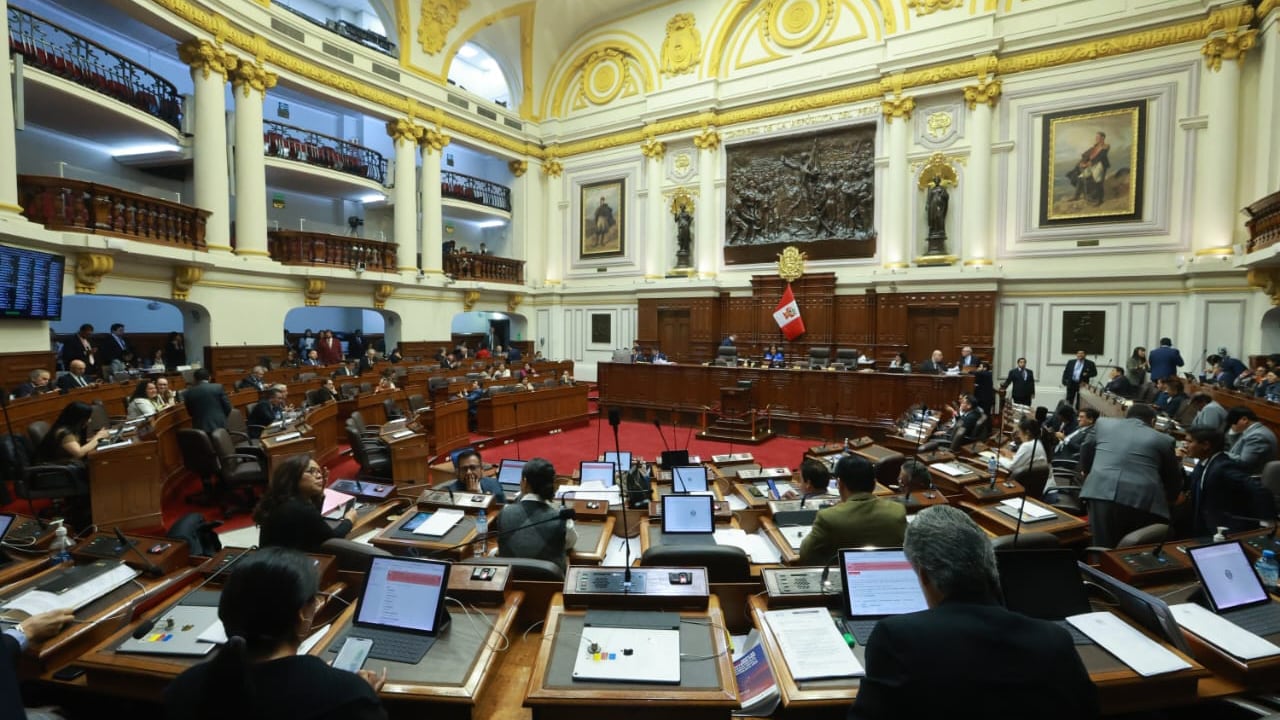
The Peruvian Congress has crossed a red line. This week he approved an amnesty aimed at favoring responsible for atrocious crimes committed during the last decades: forced disappearances, extrajudicial executions, torture. It is not just an ethically disgusting act. He is legally invalid, politically unsustainable and morally infamous. It represents the institutionalization of impunity as a state policy.
This rule does not seek “reconciliation”, as its promoters cynically allege. He seeks to shield criminals. It is another expression of the corrupt pact between Congress and the Executive, sealed to bury decades of struggle for justice and consecrate cover -up as a norm.
Against the victims, against history
In a country marked by the wounds of internal violence, this amnesty represents a direct affront to the victims, their families and national memory. It is the denial of their pain and the attempt to erase their names from history.
The Single Registry of Victims (RUV) documents 8,661 forced disappearances during the internal armed conflict. Other sources, such as the International Committee of the Red Cross and the Peruvian team of Forensic Anthropology, raise that figure to between 13,000 and 16,000. An important part of these crimes were committed by state agents. Not against armed fighters, but against defenseless civilians.
An emblematic case: that of the journalist of the newspaper The Republic Jaime Ayala Sulca, missing in 1984 after entering the base of the Navy in Huanta, Ayacucho. He had gone to file a complaint for military abuse. He never left again. His family – like thousands of others – has fought a long and dignified battle for justice. This amnesty now intends to erase its story. But they can’t do it.
Reinforcing privileges
In March 2025, a survey of the Peruvian Studies Institute revealed that only 2% of citizens support the work of Congress, the lowest figure that has been seen in the country. Far from taking actions to reverse that rejection, parliamentarians preferred to strengthen their privileges.
And this week they have approved the measures that can, on the one hand, avoid prison responsible for serious human rights violations and establish a kind of absolute “immunity” to future legislators.
Against international law, against the rule of law
This law flagrantly violates international obligations assumed by Peru. The Inter -American Court of Human Rights, in the Barrios Altos VS Peru case, clearly sentenced: amnesties that prevent investigating or sanctioning serious human rights violations are inadmissible. They are, in themselves, a form of impunity.
The Congress not only does not know this jurisprudence, but openly challenges the inter -American system, to which Peru submitted sovereignly. Thus, on the margin – and counter- of international law, it is placed.
Nor the Peruvian Constitution covers this outrage. The duty of the State is to guarantee rights, not protect those who violated them. This law denatures the constitutional order, perverts the legislative function and makes Congress an active criminal accomplice.
An unpublished setback in the region
The most alarming thing is that this type of amnesty is not recent in Latin America. While Argentina, Chile and Uruguay disassembled – with justice and courage – their laws of impunity, Peru heads towards an authoritarian regression that evokes the worst moments of Fujimorism.
It is no accident: several drivers of this rule are part of the corrupt pact, heirs of that regime.
This law is not an isolated fact: it is a symptom of a systemic decomposition. The Congress of the Pact acts as machinery at the service of cover -up, impunity and organized crime. Corruption and ineptitude mark their agenda. Despite its null citizen support, legisla to dismantle justice, protect criminals and hinder ongoing criminal proceedings. Treat the executioners as victims.
Propose now that justice abdique, which is not investigated, that retroactive impunity is granted, is an offense to the country. It is complicity with crime. One more!
The answer that will come
This illegality will have consequences. It will come – as has already occurred in the past – a firm response of the inter -American system, the international community, of human rights organizations and the Peruvian society itself. We are not facing an “ideological” debate, between “left” and “right.” The right to truth is at stake, justice is no longer repetition. This law must – and can be fought by all constitutional and international means.
Because what is played is not just the past. It is the moral present and the democratic future of Peru. History will not absolve those who agree with infamy today. But it will remind those who – in the middle of the opprobrium – raised their voice to prevent crime from being seen reconciliation and that oblivion is imposed as a state policy.
For more updates, visit our homepage: NewsTimesWire
https://elpais.com/america/2025-07-12/amnistia-en-peru-la-impunidad-como-politica-de-estado.html