Comments about a possible new technological bubble continue to spread through the financial markets. In these circumstances, the income statements of the two companies have drawn attention. start-ups of artificial intelligence (AI) in Silicon Valley, which show different evolutions in the face of the advance of this revolutionary technology. Thus, Anthropic is on track to reach profitability much sooner than its rival OpenAI, according to documents cited by The Wall Street Journal. Some emerging companies that compete in a scenario in which giants like Meta and Alphabet are also acting.
Thus, Anthropic, which is gaining users in the business field thanks to the capabilities of its chatbot Claude in programming and other areas, plans to achieve the break even (balance point in the accounts) for the first time in 2028. In this sense, the start-up would have raised its growth forecasts between 13% and 28% for the next three years, and expects to generate up to $70 billion in revenue in 2028, up from nearly $5 billion this year, according to a report published last week by The Information.
On the contrary, OpenAI expects its operating losses that year to increase to $74 billion, a figure that represents around three-quarters of its revenue, due to increased spending on computing, especially due to the deployment of infrastructure, with chips and data centers. In addition, the company that created the popular ChatGPT also expects to consume about 14 times more cash than Anthropic before turning a profit in 2030, according to the report cited by WSJ. Likewise, OpenAI expects lower profit margins than its competitor on its sales over the next five years.
Anthropic, which is backed by Amazon and Alphabet, expects business demand for its AI models to drive its growth. The start-up projected that its 2025 revenue from selling access to its AI models via an application programming interface (API) will roughly double the revenue OpenAI generates from selling APIs.
In this sense, OpenAI has designed a business plan to generate new income and meet its spending commitments, which exceed one trillion dollars in the next five years, after its multiple agreements with technology giants such as Oracle, AMD, Broadcom or Nvidia, and which have raised doubts among investors due to the effect of some companies’ businesses on others. In fact, while Nvidia agreed to invest $100 billion in the coming years in OpenAI, the latter closed an agreement that opened the doors to taking up to 10% of AMD’s capital.
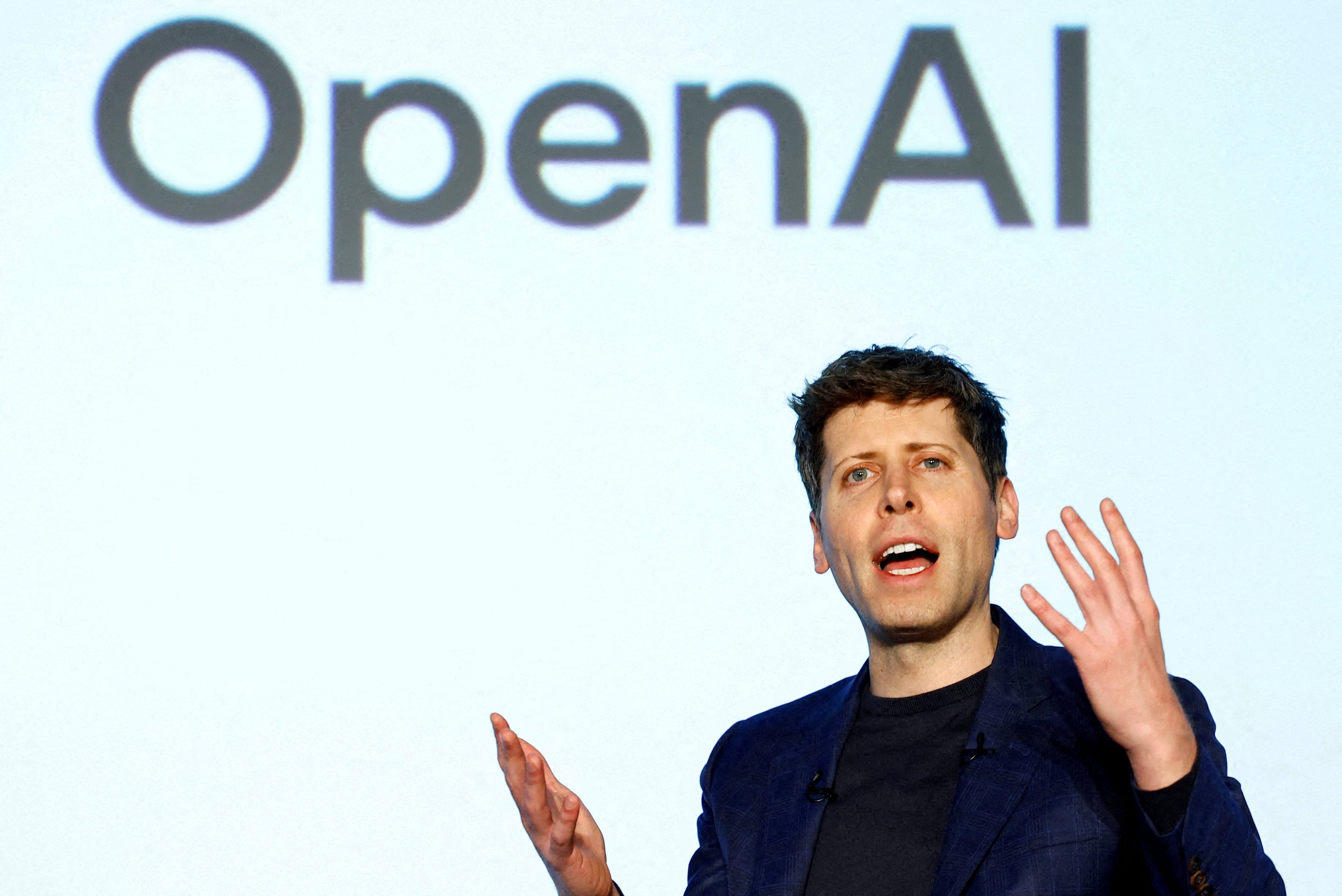
OpenAI’s plans include exploring contracts with governments; purchasing tools, an area where OpenAI has closed a broad alliance with WalMart; new video services; online advertising; technological solutions for companies; consumer hardware, with AI devices designed by Jony Ive (added last spring after the purchase of his company io, for $6.5 billion); become a computer and service provider cloud through its Stargate data center project, where it participates with Oracle and SoftBank, among others. In any case, the ambitious plans reflect its co-founder Sam Altman’s dream of turning OpenAI into a multi-billion dollar technology giant, thanks to AI.
For now, both companies have concentrated extensive resources with multimillion-dollar financing rounds, in which the main investors have participated, who trust in making their bets on businesses linked to AI profitable.
In March, OpenAI closed a financing round of $40 billion, led by SoftBank (which this week reiterated its commitment to the firm), with a valuation of $300 billion. During this fall, it has closed a process of selling shares by employees and former workers to investment groups, for 6,400 million, with a valuation of 500,000 million, which places the firm as the start-up most valuable in the world, ahead of SpaceX, Elon Musk’s space services company, ByteDance, parent of TikTok; and Anthropic itself. And there is already talk of a future IPO with a valuation of one billion.
Anthropic, for its part, completed a $13 billion Series F round in early September, led by Iconiq, Fidelity and Lightspeed Venture Partners, at a valuation of $183 billion. A good part of the financial elite of the United States, the Middle East and Asia participated in the transaction: Altimeter, Baillie Gifford, funds from BlackRock, Blackstone, Coatue, D1 Capital Partners, General Atlantic, General Catalyst, GIC, Goldman Sachs, Insight Partners, Jane Street, Ontario Teachers Pension Plan, Qatar Investment Authority, TPG, T. Rowe Price Associates, WCM Investment Management and XN.
The start-up also has ambitious infrastructure projects. Thus, Anthropic plans to invest $50 billion to build customized data centers for AI development in different locations in the United States, including states such as Texas and New York.
For more updates, visit our homepage: NewsTimesWire