Medieval alchemists did not know how to transform coal into gold: central banks do it. The archpriests of the monetary religion are essential because they have an impressive power: the ability to create and destroy money with a simple printer. Why is a blue note stamped with Lagarde’s signature and an architectural motif from ancient Greece worth 20 euros? Why can it be exchanged for lunch or a couple of movie tickets? Because with the trust that emanates from central banks, a business that has lasted for several centuries is sustained. Democracies grant the technocrats who are in charge of these entities control over money, which is almost like saying the controls of the economy, in exchange for price stability and prosperity. The contract implies an untouchable independence since the 1970s: since Nixon uttered the phrase “I greatly respect your independence, but I hope that you will independently come to the conclusion that my views are the ones to follow,” and immediately afterwards inflation went through the roof. That contract is about to be torn up for a handful of good reasons.
One: the central bankers got us out of that nightmare in the form of the Great Recession, but they failed to prevent inflation from eating away at purchasing power in almost the entire West, and they contributed decisively to inequality escalating to Himalayan levels. With the erosion of purchasing power and inequality, probably the most dangerous economic disease of the time, they have contributed to generating a formidable malaise that defines this age of anger in which we are installed. Two: its effectiveness is more than debatable. And three: they themselves have undermined their own independence. The ECB sent letters to Italy, Spain and Ireland in the middle of the Great Crisis to make the cuts dictated by Trichet and then Draghi, who had no mandate to interfere in national economic policies. Trump has landed in the White House and has come to the conclusion that the independence of the Federal Reserve does not interest him: what interests him is that the head of the Fed does what he says. It is curious, because the democratic deficit of the central banks was very clear for decades. It had to be a populist with neoconservative and almost pre-fascist instincts who made it clear that the king is naked.
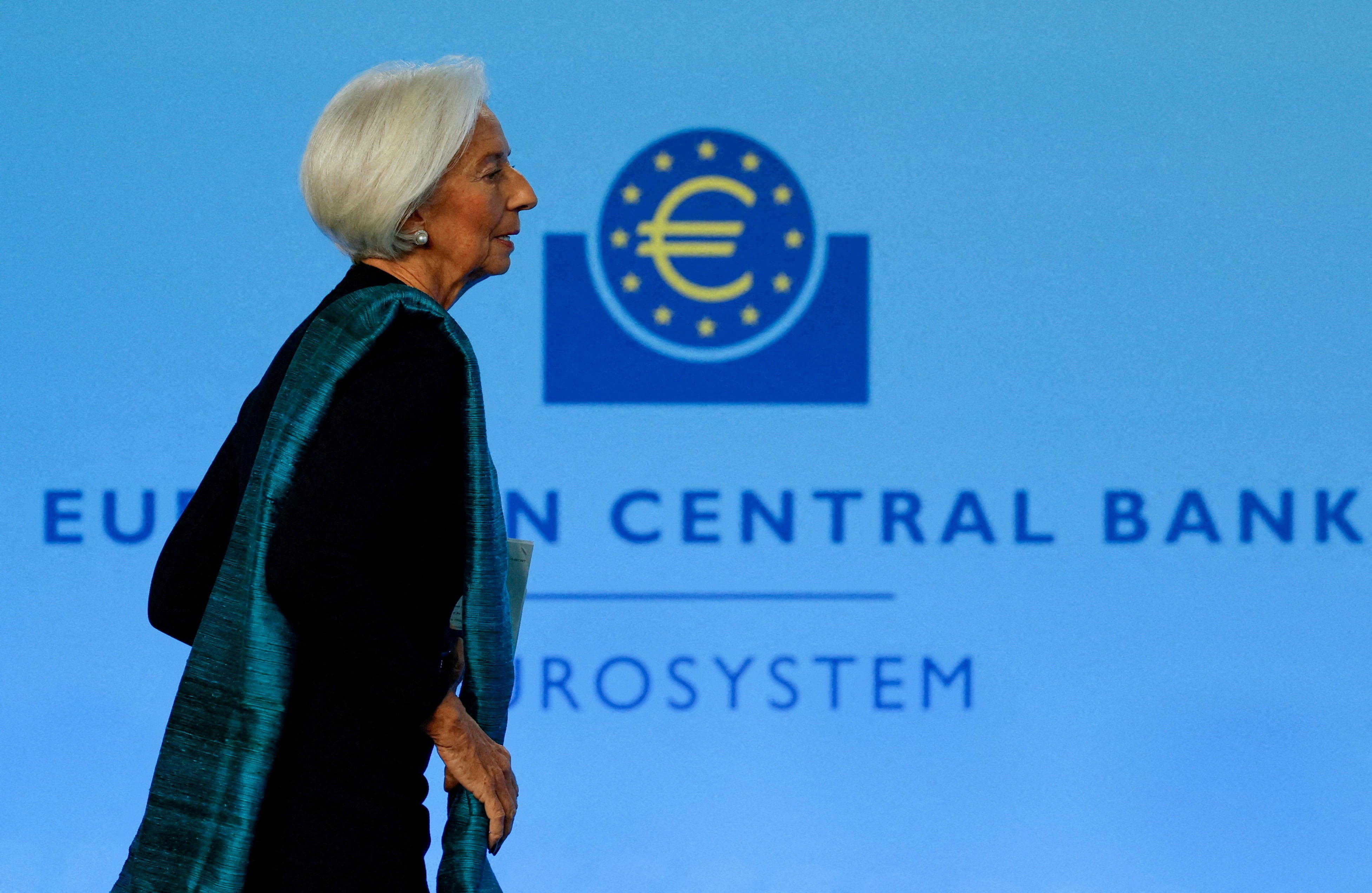
The European Central Bank has its own problems. It has to juggle so that its monetary policies equally benefit the 21 countries that are part of that strange animal called the euro: they almost always end up benefiting Germany and France. The eurozone is a monetary federation without a fiscal federation: political union is a long way off, and that weakens the euro. The ECB, in the midst of the crisis, had to choose between the failure of the euro and becoming a politicized institution, with measures that went far beyond its mandate: naturally, it chose the latter. And half of the Eurobank board is made up of former politicians, starting with President Lagarde and Vice President Guindos: Lagarde will also be haunted to death by that phrase dedicated to the corrupt Nicolas Sarkozy – “use me” – in a case for which she herself was convicted. Now, Lagarde seems willing to step aside so that the president of her country, the lame duck Emmanuel Macron, can appoint whoever he wants before a presidential election that looks very bad. It is still anathema for governments to tell Frankfurt what to do, but in the other direction the ECB has long been involved in politics and places its egregious positions at the disposal of presidential palaces, despite its sacrosanct independence. Lagarde will go to the private sector (there have been rumors about it for at least a year) and if this gesture is confirmed it shows, once again, that independence sounds like Captain Renault entering Rick’s, the place run by Humphrey Bogart in Casablanca: “Here we play.”
A race for the leadership of the ECB is opening up, which will be essential when the European economy once again enters the Sargasso Sea of the crisis. That may not be long in coming: the Great Recession ended falsely. A Dutchman, Klaas Knot, is the top favorite to preside over the Eurobank. A German, Joachim Nagel, aspires to the throne: Germany has never held that position. A Spaniard, Pablo Hernández de Cos, is perhaps the best candidate on paper, if there were no politicking in these appointments and if Spain knew how to play its cards: this is not always the case. There are also two other succulent positions, that of chief economist and one of the council seats, for which Spain has brilliant candidates: Óscar Arce, Ángel Ubide, even Minister Carlos Body. Here it is played: the Government parties and the opposition parties should all go together in that race. This is how the French, the Germans, the Italians, the Dutch make them.
But that political alchemy, in Spain, is more difficult than turning coal into gold.
For more updates, visit our homepage: NewsTimesWire