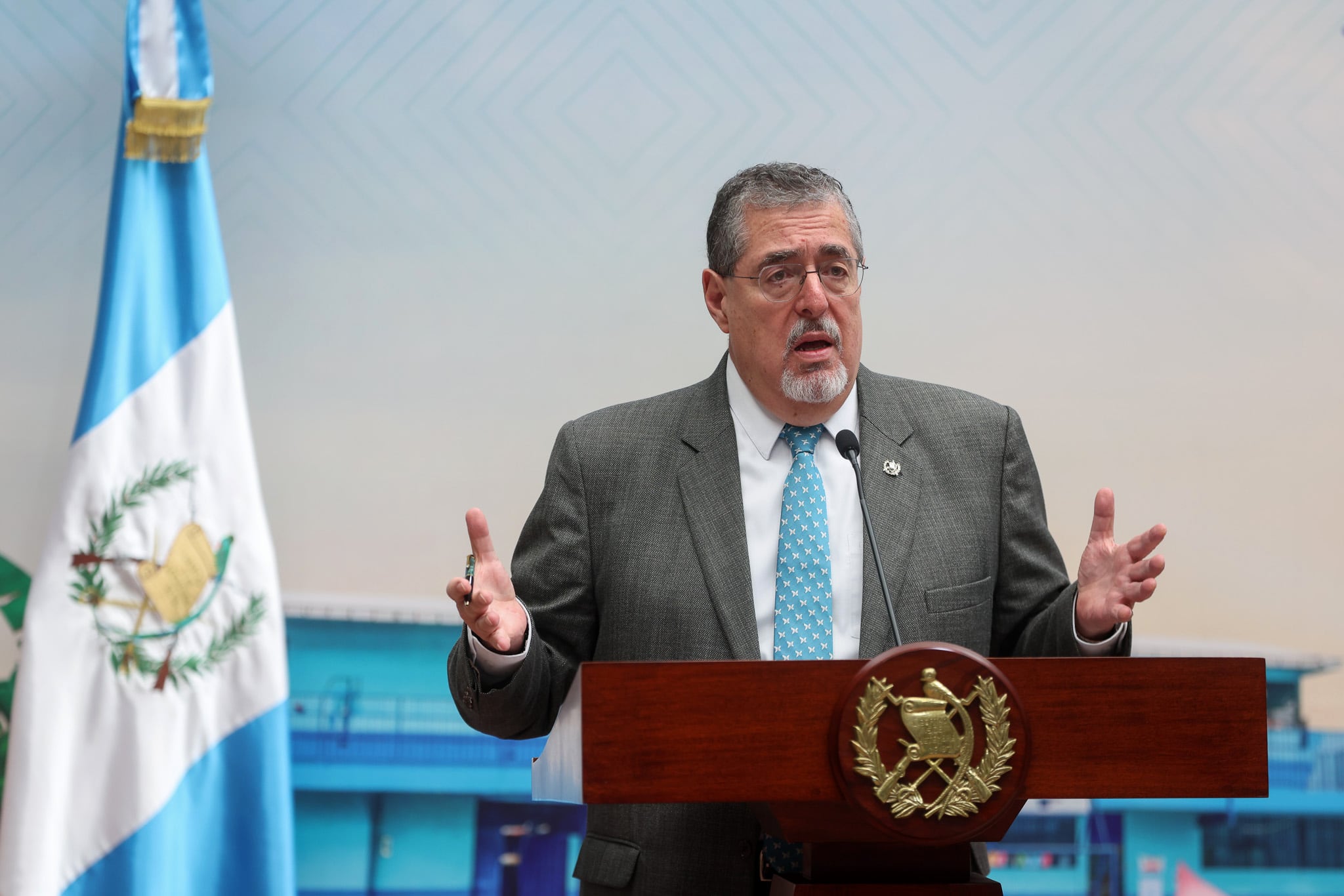
The president of Guatemala, Bernardo Arévalo, lifted this Monday the state of siege imposed nationwide in mid-January, after the Barrio 18 gang organized simultaneous riots in three prisons in the country and murdered eleven police officers in the capital in one weekend. The measure lasted a month and led to the capture of 91 gang members and the return of control of the penitentiary centers to the hands of the Government. Now the president assured that he will leave a permanent operation focused on the capital, Guatemala City.
On Sunday night, in a message broadcast on national television, the president stated that the measure achieved the isolation of the top leaders of the gangs in high-security prisons, the elimination of communication between them and the blocking of communication between the leaders in prison and the streets.
Arévalo also announced that he will decree a “state of prevention” throughout the country starting Tuesday and will execute a plan called “Metropolitan Sentinel,” which will consist of maintaining joint operations between the Police and the Army “in order not to stop the fight against organized crime.”
Initially, the state of siege imposed by Arévalo was compared to the emergency regime established in El Salvador by the government of Nayib Bukele since March 2022; However, from the beginning, Arévalo clearly distanced himself from that, as he stressed that the measure would not affect the daily lives of Guatemalans and would maintain respect for human rights.
Unlike the massive raids that allowed the capture of tens of thousands of people in the first days of the emergency regime in El Salvador, Arévalo announced in his presentation of results that the operations carried out in Guatemala were “surgical.” Among the actions carried out was the dismantling of several video surveillance networks that the gangs had installed in communities in the capital and the recapture of Carlos Reyes Popol, alias “Jocker” or “Buffón”, one of the top leaders of Barrio 18 who had escaped from a maximum security prison last year, and the isolation of Aldo Ochoa, alias “Lobo”, the top leader of the gang in Gutemala.
After regaining control of the penitentiary centers, the government also isolated other leaders like Lobo in containers reinforced with bars inside the “Renovación I” prison, one of those that was taken during the January riots.
According to data from the Gutemala Police, in a month of state of siege, the authorities carried out 4,632 operations in which they captured 3,870 people, and seized 384 firearms, six anti-tank ammunition, 481 thousand quetzales (about $62,000 dollars) and dismantled a drug laboratory in the north of the country.
The onslaught of Barrio 18
According to Arévalo’s statements given on national television on Sunday night, the attack on Barrio 18 in mid-January was a response to the withdrawal of privileges in the prisons that the structures had maintained since previous administrations “when seeing that this government does not give in and does not negotiate with criminals.” The government has also indicated that the attacks are linked to a power struggle between “corrupt actors” and the central government, although they have not named specific names.
A source close to President Arévalo assured El País that the gang attack is related to the upcoming elections for attorney general and Constitutional Court that are underway in Guatemala and that it could seize the power of corrupt actors within the system, such as the current attorney general Consuelo Porras, accused of corruption.
After the takeover of the three prisons and the murder of eleven police officers, the government captured eleven gang members, of whom they accused seven of homicide; However, the Prosecutor’s Office only accused them of illegal carrying of a firearm, illicit groups and drug possession, a fact that was repudiated by the central government. El País sought a reaction from Prosecutor Porras through its Press spokesperson, but until the closing of this note there was no response.
Porras, who also sought to be a judge of the Constitutional Court, was included in the list of “corrupt actors” known as the “Engel List” by the United States Department of State (DOS) in May 2022. The DOS accused her of “instructing prosecutors in the Guatemalan Public Ministry to dismiss cases based on political considerations and dismiss prosecutors who investigate cases involving acts of corruption.”
During the first quarter of this year, Guatemala will hold elections for magistrates of the Constitutional Court and attorney general, which has Guatemalan authorities in suspense.
For more updates, visit our homepage: NewsTimesWire