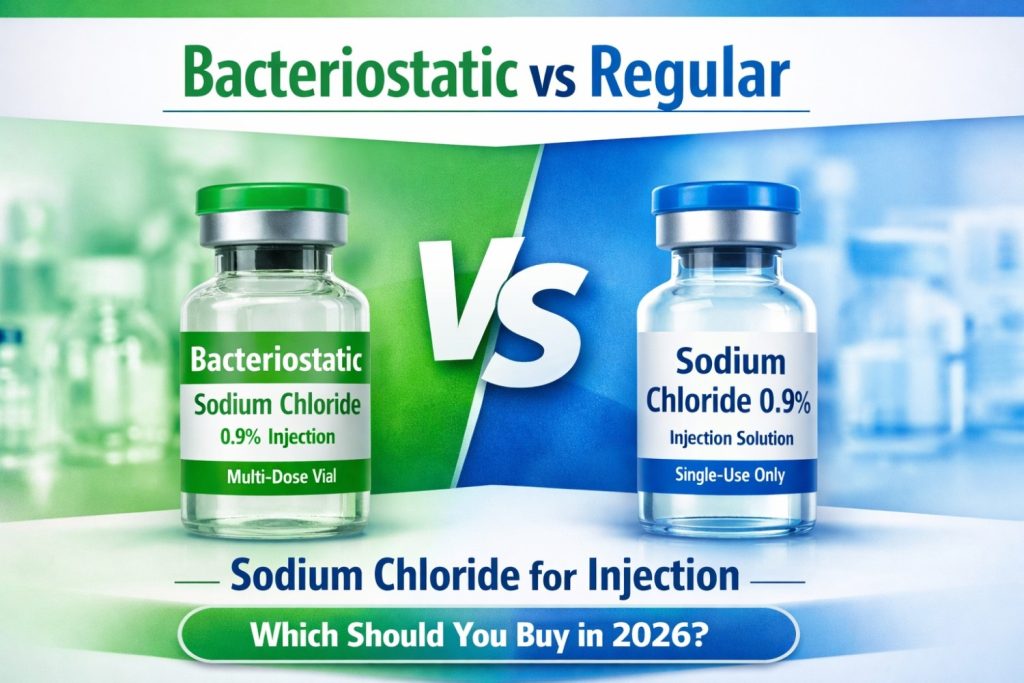
In 2026, the use of injectable saline solutions remains a foundational element in medical, clinical, and aesthetic settings. Whether you’re a healthcare professional, aesthetic clinician, or an informed buyer, understanding the difference between bacteriostatic vs regular sodium chloride for injection is critical in choosing the right product for your needs.
This comprehensive guide walks you through:
- What each type is
- How they differ
- Pros & cons
- When to use each
- And ultimately, which one you should buy in 2026
Let’s dive in.
What Is Sodium Chloride for Injection?
Sodium chloride for injection is a sterile saline solution made to match the body’s natural salt concentration (usually 0.9% NaCl). It plays a key role in:
- Rehydration
- IV flushing
- Diluting injectable medications
- Medical procedures
- Aesthetic treatments (e.g., dermal filler dilution)
There are two main variations:
- Regular (Standard) Sodium Chloride for Injection
- Bacteriostatic Sodium Chloride for Injection
Both are saline solutions, but they differ in formulation, use, and cost.
What Is Regular Sodium Chloride for Injection?
Regular sodium chloride for injection is:
- Sterile
- Single-use
- Free from preservatives
It’s commonly known as:
- Normal saline
- Sterile saline
- 0.9% NaCl injection
Ideal for:
General hydration and IV fluid replacement
Single-dose medication dilution
Situations requiring pure saline without additives
Limitations:
Cannot be reused once opened
No preservative protection
This makes it excellent for cases where a one-time sterile injection is necessary.
What Is Bacteriostatic Sodium Chloride for Injection?
Bacteriostatic sodium chloride for injection contains benzyl alcohol (or another approved preservative) that prevents bacterial growth. This feature allows:
- Multi-dose usage
- Longer usability after opening (when stored per guidelines)
It is ideal for:
- Frequent reconstitution
- Drawing multiple doses from a single vial
- Reducing wastage
Important notes:
- Designed for specific medical use
- Not suitable for newborns or certain sensitive populations
- Requires strict aseptic technique
Bacteriostatic vs Regular: Side-by-Side Comparison
| Feature | Regular Sodium Chloride | Bacteriostatic Sodium Chloride |
|---|---|---|
| Sterility | Yes | Yes |
| Preservative | ❌ | ✔ Benzyl alcohol |
| Multi-dose use | ❌ | ✔ |
| Shelf-life after opening | Hours | Days to weeks (if stored properly) |
| Common in | General clinical use | Reconstitution, aesthetic clinics |
| Best for | Single injections | Multiple draws from same vial |
| Cost | Lower | Higher |
Key Differences Explained
1. Preservatives
- Regular: Contains only sterile saline no additives.
- Bacteriostatic: Contains a preservative that inhibits bacterial growth, enabling multiple accesses.
2. Usage Frequency
- Regular: Designed for single use only.
- Bacteriostatic: Designed for multi-use when proper aseptic practices are followed.
3. Risk & Safety
- Regular: Minimal risk beyond standard sterile precautions.
- Bacteriostatic: Preservative can be unsuitable for certain individuals (infants, some patients), so clinical judgment is essential.
4. Cost Considerations
- Regular saline is generally cheaper per vial but can be more expensive in aggregate if used repeatedly due to discarding after one use.
- Bacteriostatic has a higher upfront cost but lower cost per dose (when you draw multiple doses).
When to Choose Regular Sodium Chloride for Injection
You should prioritize regular saline if:
- You need a pure sterile solution without additives
- The use is one-time only
- You are treating a sensitive patient population
- Protocol or regulatory standards eliminate preservative use
- You want the most basic, low-cost option
Examples:
- Standard IV fluid resuscitation
- Acute care procedures
- Sensitive patient groups (e.g., neonates, certain allergies)
When to Choose Bacteriostatic Sodium Chloride for Injection
Bacteriostatic saline is ideal if:
You will access the vial multiple times
Wastage reduction matters
You are working in settings requiring multiple reconstitutions (clinics, aesthetic use)
You need convenience with safety (preservative-protected)
Examples:
- Diluting medications for repeated doses
- Injectable aesthetic solutions
- Shared clinic use with aseptic technique
- Reconstituting peptide or drug compounds
Real Use Cases: Which One Wins?
Clinical Setting
- Emergency Rooms / Critical Care:
Regular saline is often preferred due to no preservatives and very rapid use.
Aesthetic & Cosmetic Clinics
- Dermal fillers, peptide reconstitutions, IV treatments:
Bacteriostatic sodium chloride is often more efficient and cost-effective since many preparations require repeated doses or multi-use handling.
Outpatient or Community Clinics
- Both types can be relevant. The choice often comes down to protocol & volume of usage.
Safety Tips: Bacteriostatic Saline Best Practices
If you choose bacteriostatic sodium chloride for injection, follow these safety practices:
Always use aseptic technique
Store vials per manufacturer instructions
Limit access to multi-use vials to trained personnel
Follow expiry and use-by guidelines strictly
Never use vials meant for single-use
These steps help avoid contamination and ensure patient safety.
Cost & Value in 2026
In 2026, healthcare budgets and clinic cost-efficiency matter more than ever. Here’s how costs compare:
| Cost Consideration | Regular Saline | Bacteriostatic Saline |
|---|---|---|
| Unit price (single vial) | Lower | Higher |
| Cost per dose (multi-use) | Higher | Lower |
| Wastage | Higher | Lower |
| Storage & Handling | Simple | Needs stricter control |
So while regular saline may seem cheaper upfront, bacteriostatic saline can be more economical for clinics with high usage volumes.
Which One Should You Buy in 2026?
Here’s a practical buying guide:
Buy Regular Sodium Chloride for Injection if:
You need single-use, preservative-free saline
Your protocol prohibits preservatives
You want the most basic injectable saline
Buy Bacteriostatic Sodium Chloride for Injection if:
You anticipate multiple uses per vial
You operate in a clinic with repeat dosing needs
Saving cost per dose matters
You follow strict aseptic protocols for multi-use vials
For many medical clinics, aesthetic practices, and advanced use cases in 2026, bacteriostatic sodium chloride offers superior flexibility, cost savings, and efficiency as long as it’s used responsibly.
Final Thoughts
The choice between bacteriostatic vs regular sodium chloride for injection depends on your:
End use
Safety requirements
Budget considerations
Volume of usage
Both have their place in clinical and professional practice, but understanding the differences empowers you to make safer, more cost-effective decisions.
If you’re still unsure, speak with your healthcare provider, pharmacist, or clinic supply specialist to determine the best fit for your specific application.