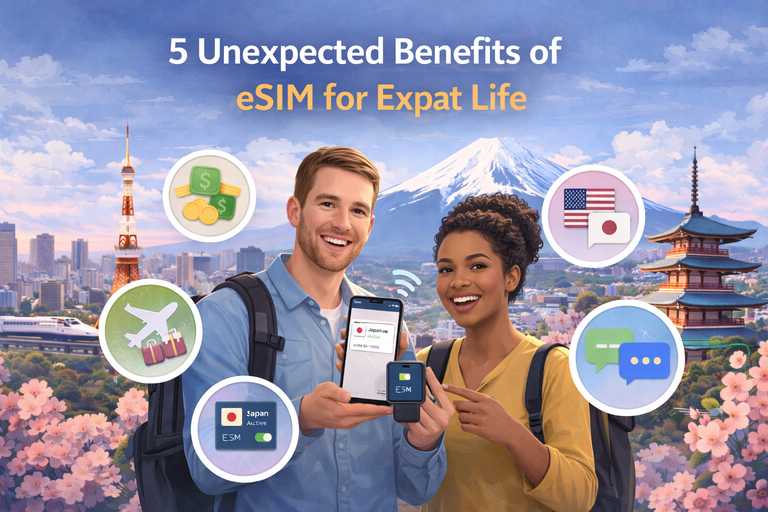
Moving abroad is exciting, but it also comes with a long list of practical challenges. From navigating a new language to setting up daily essentials, connectivity quickly becomes one of the most important (and often underestimated) needs for expats. Whether you’re relocating for work, study, or a long-term lifestyle change, staying connected reliably can make or break your experience.
Traditionally, expats relied on local eSIM cards or international roaming plans. But today, eSIM technology is changing the way people live, work, and stay connected overseas. Beyond basic convenience, eSIMs offer several unexpected advantages that make expat life smoother, especially in highly connected countries like Japan.
Here are five lesser-known but powerful benefits of using an eSIM as an expat, with a special focus on Japan.
- Instant Connectivity from Day One
One of the biggest challenges expats face is the “arrival gap”—those first few days when you don’t yet have local services set up. Searching for apartments, navigating public transport, or coordinating with employers all require immediate internet access.
With a Japan travel eSIM, you’re connected the moment you land. There’s no need to wait in airport lines, visit mobile stores, or deal with language barriers to purchase a local SIM. You simply activate your plan digitally and start using data right away.
For many expats, this immediate access reduces stress and helps them settle faster, especially during the critical first week abroad.
2. Flexibility Before Committing to a Local Contract
Long-term mobile contracts in a foreign country can be complicated. In Japan, for example, many local carriers require residency cards, local bank accounts, or long-term commitments things new expats may not have right away.
Using an eSIM allows you to stay connected without being locked into a contract. You can use an eSIM for Japan travel during your initial months while you explore long-term options. This flexibility is especially helpful for freelancers, remote workers, and students who may not know how long they’ll stay.
For those who don’t yet qualify for a local plan, an eSIM acts as a reliable bridge without paperwork or commitments.
- Seamless Balance Between Home and Host Country
Expats often need to maintain connections in two places at once. You may still rely on your home number for banking, verification codes, or family communication while also needing local data for daily life.
An eSIM makes this dual setup easy. Most modern smartphones support dual SIM functionality, allowing you to keep your home SIM active while using an eSIM for data in Japan. This setup avoids missed OTPs, banking alerts, or important calls.
Compared to swapping a physical SIM card for Japan, eSIMs provide a cleaner, more efficient solution for managing multiple numbers.
4. Cost Control Without Sacrificing Quality
Unexpected mobile bills are a common expat frustration. International roaming plans are expensive, and some local SIMs come with hidden fees or inflexible pricing.
The best eSIM for Japan offers transparent pricing, predictable data usage, and flexible top-ups. Expats can choose plans based on actual needs—whether that’s light usage for messaging or heavy data for remote work and video calls.
For many expats, eSIMs end up being more affordable than traditional roaming and more convenient than negotiating local mobile contracts, especially during short-to-medium stays.
5. Reliable Coverage Across Cities and Regions
Japan is known for excellent mobile infrastructure, but coverage quality still depends on the network you’re connected to. Many eSIM providers partner directly with top Japanese carriers, ensuring strong signal quality across major cities and even rural areas.
Whether you’re commuting in Tokyo, working remotely from Kyoto, or exploring smaller towns, a high-quality eSIM provides stable connectivity throughout the country. This reliability is crucial for expats who depend on mobile data for navigation, communication, and work.
While a Japan SIM card for tourist use can offer similar coverage, eSIMs remove the need for physical installation and make switching plans or providers far easier.
eSIM vs Traditional SIM: Why Expats Are Making the Switch
For years, buying a SIM card for Japan was the default solution for visitors and expats alike. While still a valid option, especially for older devices, physical SIMs come with limitations: card swapping, store visits, and limited flexibility.
eSIMs eliminate these friction points. They’re digital, instantly deployable, and easy to manage. For expats who value efficiency and control, eSIMs are becoming the preferred choice.
Who Benefits Most from Using an eSIM Abroad?
eSIMs are particularly well-suited for:
- New expats settling into Japan
- Digital nomads and remote workers
- International students
- Professionals on long-term assignments
- Frequent travelers who move between countries
For anyone navigating life abroad, eSIMs provide consistency in an otherwise constantly changing environment.
Final Thoughts: A Smarter Way to Stay Connected as an Expat
Expat life comes with enough unknowns connectivity shouldn’t be one of them. What starts as a short-term solution often becomes a long-term favorite once expats experience the flexibility, reliability, and simplicity of eSIM technology.
Whether you’re transitioning from a Japan SIM card for tourist use or skipping physical SIMs altogether, choosing the best eSIM for Japan can dramatically improve your day-to-day experience abroad.
From your first day in the country to long-term settlement, eSIMs offer a smarter, more adaptable way to stay connected—so you can focus less on logistics and more on building your life overseas