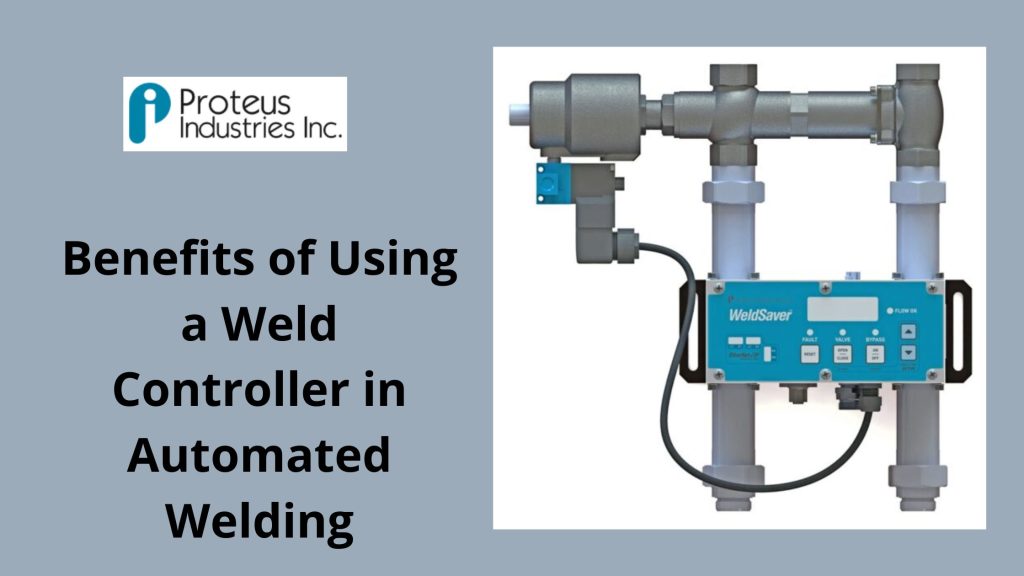
weld controller
Automated welding has become a cornerstone of modern manufacturing, revolutionising industries such as automotive, aerospace, and construction. As production lines become faster and more complex, the demand for consistent and precise welds continues to grow. However, challenges such as inconsistent weld quality, heat variation, and process inefficiencies still pose significant issues. This is where the weld controller comes into play. These advanced devices regulate and optimise the welding process, ensuring precision, repeatability, and safety in every weld. In this article, we examine the primary advantages of utilising a weld controller in automated welding systems, including its enhancement of productivity, efficiency, and overall weld quality.
What Is a Weld Controller?
A weld controller is an intelligent device designed to manage and regulate the critical parameters of a welding process. It precisely controls current, voltage, and timing to maintain uniform weld quality across multiple cycles. In automated environments, these controllers synchronise the welding equipment with robotic systems, ensuring smooth and repeatable operations. Weld controllers come in various types, including digital, adaptive, and programmable models, each tailored to specific industrial needs. Unlike traditional manual welding, where human control can lead to variability, a weld controller provides stable and reliable performance, making it indispensable for modern automated production lines.
How Weld Controllers Work in Automated Welding?
Weld controllers integrate seamlessly with robotic welding systems and automation software to regulate the process in real-time. Using built-in sensors and closed-loop feedback systems, they monitor key parameters, including current, voltage, temperature, and weld duration. When any variation is detected, the controller automatically adjusts the settings to maintain consistent output. It communicates with Programmable Logic Controllers (PLCs) and robotic arms to coordinate motion, timing, and power delivery. This intelligent synchronisation ensures precision welding even under high-speed manufacturing conditions, minimising downtime and human intervention.
Key Benefits of Using Weld Controllers
Consistent Weld Quality:
Weld controllers maintain stable current, voltage, and timing during every weld, ensuring uniformity. This reduces defects like weak joints or uneven penetration, providing high-quality, repeatable results even in high-volume production environments.
Compensating for Environmental Fluctuations:
Controllers adjust welding parameters in real-time to account for changes in ambient temperature, humidity, or material variation. This ensures that weld quality remains unaffected by environmental factors, maintaining precision and preventing inconsistencies in industrial processes.
Real-Time Error Detection:
Weld controllers continuously monitor the welding process for anomalies such as overcurrent, voltage drops, or irregular arc behaviour. When errors occur, the system alerts operators or automatically adjusts settings, reducing rework and preventing costly downtime.
Enhanced Productivity Through Automation:
By automatically controlling parameters and synchronising with robotic or automated systems, weld controllers speed up production cycles. Operators spend less time manually adjusting settings, allowing for faster and more efficient operations while maintaining consistent weld quality.
Built-In Safety Features:
Safety mechanisms such as overload protection, fault detection, and automatic shutdown prevent equipment damage and protect operators. These features reduce the risk of accidents, overheating, and electrical hazards, ensuring a safer industrial welding environment.
Reduced Human Error:
Automated control minimises reliance on operator skill for maintaining proper settings. This reduces mistakes caused by fatigue, inexperience, or distraction, ensuring consistent weld quality and improving reliability across repetitive or high-volume welding tasks.
Operational Reliability:
By combining precision control, error detection, and safety features, weld controllers ensure that welding operations run smoothly with minimal interruptions. This reliability reduces downtime, extends equipment lifespan, and supports consistent high-quality production in industrial environments.
Enhanced Quality and Consistency
Consistency is one of the most critical aspects of automated welding. Weld controllers ensure uniform results by stabilising current and voltage levels during every weld cycle. This precision eliminates variations caused by human error or machine fatigue, resulting in stronger, defect-free joints. Automated monitoring and control also reduce the chances of under-welding or overheating, which can compromise product integrity. For high-volume production lines, such as those in the automotive industry, weld controllers help maintain identical weld quality across thousands of components, boosting both productivity and brand reputation.
Industrial Applications
Weld controllers are used across a wide range of industrial applications:
- Automotive manufacturing: For robotic spot and seam welding of car bodies and components.
- Aerospace industry: Ensuring precision welds in lightweight alloys and critical components.
- Construction and shipbuilding: Providing consistent, durable welds for large structural assemblies.
- Electronics and energy sectors: Used in micro-welding processes that require fine precision and heat control.
- Their versatility and adaptability make them a crucial component for any automated welding system that prioritises accuracy and reliability.
Future of Automated Welding with Smart Controllers
AI-driven and IoT-enabled weld controllers are shaping the future of welding automation. These intelligent systems can predict maintenance needs, optimise performance through data analytics, and automatically adjust for maximum efficiency. Integration with Industry 4.0 technologies allows real-time data sharing and cloud-based monitoring, providing greater transparency and control. As machine learning and predictive maintenance continue to evolve, weld controllers will play an increasingly important role in ensuring precision, efficiency, and sustainability in smart manufacturing environments.
Conclusion
Weld controllers have become indispensable tools in the world of automated welding. They ensure superior precision, consistency, and efficiency while enhancing safety and reducing operational costs. By intelligently managing every aspect of the welding process, these devices eliminate errors and deliver repeatable, high-quality results. As industries continue to adopt automation and smart technologies, the role of weld controllers will only grow stronger. For manufacturers aiming to achieve optimal productivity, safety, and weld quality, investing in advanced weld control systems is a step toward the future of intelligent manufacturing.