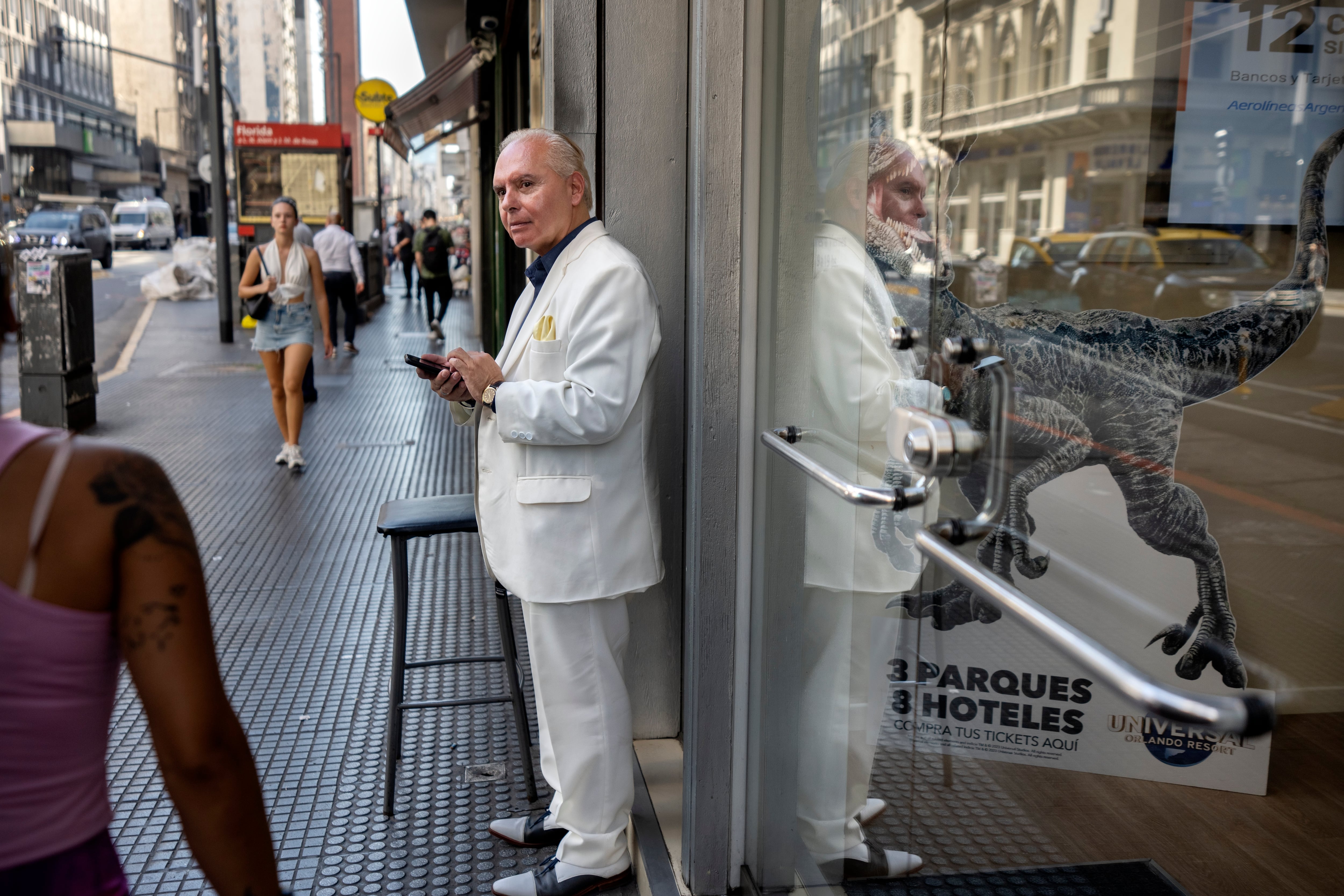
They are called trees because they sell and buy green (dollars) and usually stand in the middle of Florida Street, the most popular pedestrian in Buenos Aires. Heirs of the spokesman who shouted to the afternoon newspaper, in this financial version they advance on their victims with subtle “change, change” launched into the air without apparent recipient. Walking through Florida is usually an arduous task. If you are dressed as a tourist – he will escape the topic – we will have to endure the harassment of dozens of these porteños characters. If you are local, the trees will have some more mercy, just by being much less appetizing. The strategy is not to cross looks and continue long as affected by deafness. Only in this way can you escape the trees, the most visible face of the eternal Argentine economic collapse.
The currency market outside the legal circuits has almost a century of history in Argentina. Given the shortage of dollars in the Central Bank, the government on duty sets an “official” exchange rate, for foreign trade, and restricts the access of the currency to the savers. The immediate effect is the appearance of a parallel, black or Blueaccording to the denominations of the moment, where the dollar floats freely to the rhythm of supply and demand. These exchanges without state control are fed on money not declared, mostly owned by small savers that keep the fruit of their effort “under the mattress”, of so distrustful that they are of the traditional banking system. With the appearance of the black market, the “gap” appears, which is the difference between the contributions of the official and black dollar. In times of serious crisis, the gap easily exceeds 100%.
The trees lived their best years from the implementation of the so-called “CEPO” exchange during the presidency of Cristina Kirchner (2007-2015). Mauricio Macri lifted it in 2016 and put again in 2019, months before giving power in the middle of a serious economy. When the business is going well, you can count up to thirty trees between corner and corner of Florida Street. They are the visible face of a more complex structure. The purchase and sale operation is not done on the street: the customer will be driven by the tree to a “cave”, which can be from a luxurious office to the bottom of a sweet tooth store.
Money tables
The exchange rate does not put the tree, but an operator behind, in some of the “money tables” that move the silver that feeds the black system. Many times there are legal financials behind those operations that use trees to attract customers. The amounts are generally very small, of a few hundred dollars. Large operations go on the other hand and do without these retail professionals. Trees are a shelter for savers and tourists who do not want to give their dollars to the official price. But they have another capital function: they serve for the Argentine to walk, already very trained in these lides, can estimate with some degree of effect the health of the exchange system. When there is more stocks, they flourish; When the stock is loosen, they lose their reason for being and wilt.
The Government of Javier Milei agreed three weeks ago a rescue of 20,000 million dollars from the IMF and, strengthened international reserves, announced a partial lifting of the stocks. Natural persons can now buy and sell dollars freely at a established price between 1,000 and 1,400 pesos – under that line, the Central Buy Buy Currencies; Above, he sells them. Milei’s debut without stocks was not bad. The weight contradicted the depreciation predictions and the exchange rate remained without suffering within the flotation line established by the government, closer to the floor than the ceiling. The success of the official strategy was a direct shot to the trees, which practically disappeared from Florida Street. The most pessimistic say it’s just a matter of time for them to return. Milei, on the other hand, deals with “mandriles” to the agorers of defeat and ensures that “this time will be different.”
Here you can consult the latest letters of the correspondent