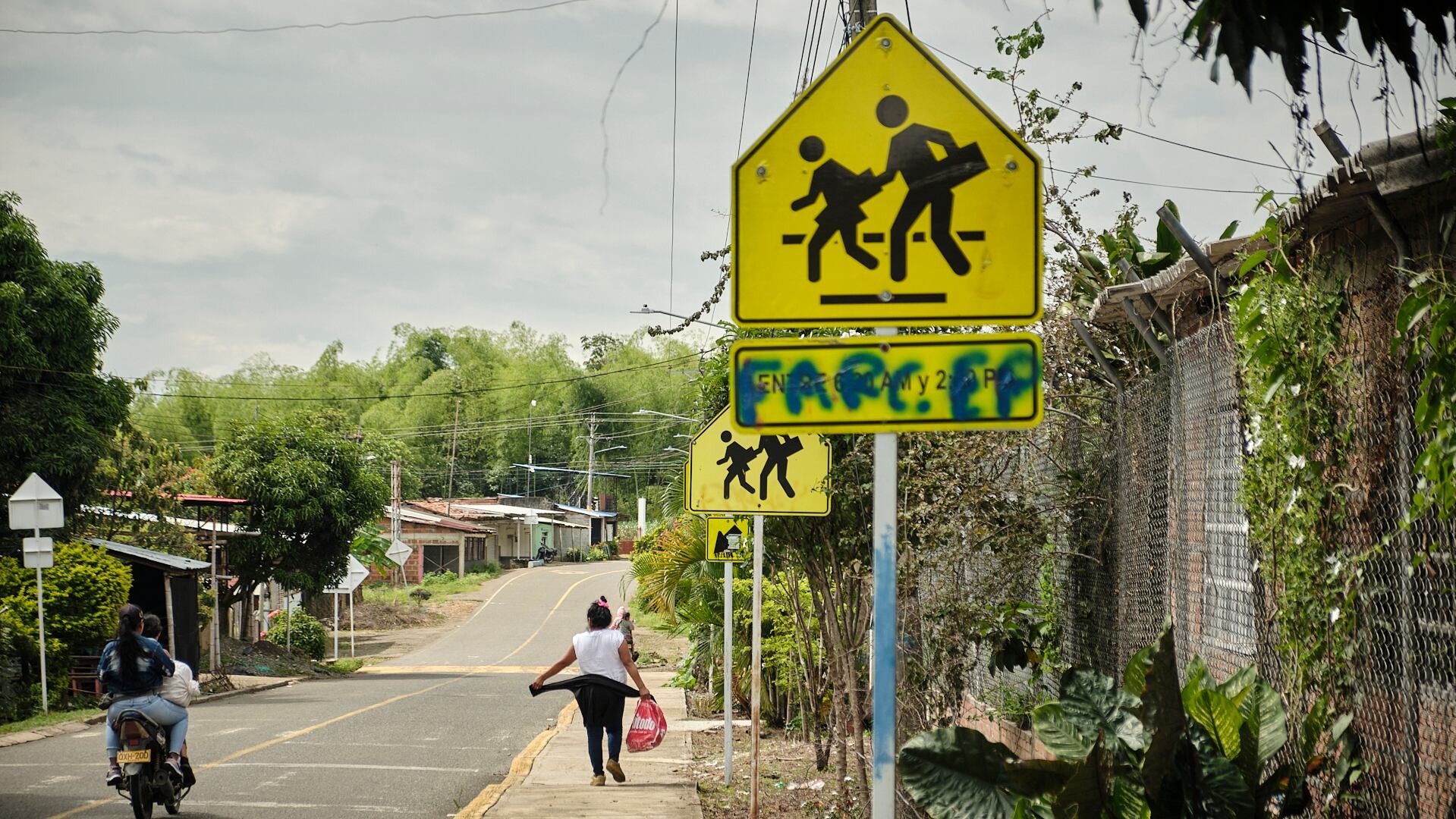
The most recent public recruitment report of minors who has the movement of mothers and women for peace is dated February 10. The victim was Miriam Lucía Pino Pesay, 14, and who disappeared in the municipality of Inzá, of the department of Cauca, a town nestled between the central mountain range. The last time they saw her was on his way to the indigenous shelter to which she belongs. It has not been the last case, but since then the consequences for the families that will report have intensified. “They warn them that if they speak or publish, there are consequences, such as the murder of their children,” warns Sofía López, human rights lawyer.
So far this year, the Ombudsman has identified 21 cases of recruitment of minors, the most conservative figure between organizations and institutions. Mothers and women for La Paz, an organization focused on the southwest of the country, arrive between four and five reports a week, only from cases that occurred in the Valle del Cauca, Cauca and Nariño. The Oenegé Peace Weavers of Norte de Santander has attended 45 cases this year only in that department. Other national organizations, such as the coalition against the linking of children and young people to the armed conflict in Colombia (Coalico), have a report of 60 cases, of which 12 are still in verification. And the JEP investigation and accusation unit, which recently analyzed and presented a report of that crime, has documented 140 cases between January and April of this year. “Every 48 hours, a child or adolescent is recruited by illegal armed groups in Colombia,” reads the document.
Recruitment, although it is a crime that has never ceased in the country, has increased considerably in five years, both during the presidency of Iván Duque and in the government of Gustavo Petro, given the failure of the government’s total peace policy. But recruitment has changed its dynamics in recent years, and institutions have not always followed the rhythm of that transformation. Hilda Molano, De la Coalico, explains that although conservative ways to recruit through abduction or threats are still present, access to social networks has opened a door that brings illegal groups with childhood and youth, especially on platforms like Tiktok. “Everything that has to do with easy money possibilities, weapons management, having high -end cell phones are life forms that are transmitted through networks with a language close to youth,” he explains.
In that social network abound the videos of anonymous accounts that promote salaries from the two million pesos per month ($ 470) to those who join the ranks of some armed group. In its report, the JEP revealed that, only in Tik Tok, identified 146 active accounts that promote the linking of minors to armed groups. “The most viral contents are those that use fashion audios and trend hashtags, camouflating normalizing messages of violence,” reads the document. According to them, the department of Cauca concentrates 54 % of active accounts in social networks that promote recruitment. The most recent Bulletin of the International Committee of the Red Cross (ICRC) agrees: of the 61 cases of recruitment that has documented throughout the country, so far from 2025, 53 % of cases have occurred in Cauca.
Another of the criminal patterns that have identified from the Coalico is that recruited children are often transferred to integrate armed groups in other areas of the country to prevent their relatives from finding them. They are also sent to combat almost at the same time of their link to the group. Molano explains that before there were periods of training by the illegal actor, but the reality is different. “The eagerness of the groups to fight is such that we have documented eight cases of minors in Cauca that we have found dead in combat, just a week later since they were taken from their homes,” he says. That scourge has been warning of local organizations since 2022, when the cases of dead boys and girls in clashes were fired.
One of the smallest victims of that tragedy was Valery Chillo, a girl recruited in 2022, at 12 years, by the Dagoberto Ramos Front, of the Disidences of the FARC. Months later, he managed to escape from the group in the midst of a fight that was injured, and the Colombian Family Welfare Institute (ICBF) took it to a passage home in the same department. From there, the minor sent WhatsApp audios to his family in which he told him that, even being under the protection of the state, other groups were looking for it. “They already look for us from the Marquetalia (Second Marquetalia, another dissent from the FARC), the ELENES (Eln), ”he said. The child escaped from the home of Paso and in March 2024, to Sonia Chilgo Buero, her mother, informed her that her daughter had died in a fight in limits with the department of Nariño. The family has been displaced since then.
“Your parents will be willing to do?”
In the Catatumbo subregion, where the confrontation between the ELN guerrillas and the 33 of the dissidents emerged last January, the panorama is not better. From the Archdiocese of Tibu, where they have accompanied the peace negotiations as guarantors of the process, they warn that the complaints for recruitment are thrown by handfuls. “This week they took six children, less than 14, from a path called surveillance,” explains the parish priest Jesús Gabriel Sánchez. In that area, far from resorting to social networks to fall in love and deceive children, they have chosen to take them to force or under threats. “Every day they reach the parishes between two and three cases of recruitment,” he warns.
Diana Vargas, coordinator of the Tejoras de Norte de Santander collective, says that, given the need for both armed groups to show solids to sustain the Catatumbo War, they have chosen to imitate the national army’s strategy to ask that young people present themselves to determine if they are suitable – or not – to go to war. The difference is that, while in the military forces young people must appear at their recently completed 18 years, with groups outside the law the age range is 13. “All minors with 13 years recently fulfilled, must be presented in one of the ELN farms in Catatumbo,” says Vargas. It is a property located between the municipalities of Puerto Santander and Sardinata.
To prevent them from recruiting them, families choose to move or negotiate with the illegal group. Several of the young people who have attended the “citation” formulate the decisive question. “What are your parents to do so that you do not integrate the ranks?” And, in the best cases, they are paid with farms, crops, cattle or high sums of money, in exchange for not taking their children; But in the case of women head of the family, the offer is another. “The moms are told that they do not take the boys, in exchange for them to have sex with someone or several of the group,” says Vargas. Sexual violence, since then, is also triggered, but that is perhaps the most silent crime in the Colombian armed conflict. Displacement because of recruitment attempts, too.
Another of the ways that have identified is the participation of young people in “challenges” that they see on social networks, and that promote illegal actors. “First, they are told that if they post a photo or a message (which can be a statement or pamphlet of the armed group) they give them 10,000 or 20,000 pesos; then they are uploading the level of the ‘game’, until they are challenged to transport drugs, or already join the ranks,” says Vargas. “They have to send the screenshot of how many people saw the message and the evidence that they fulfilled, and thus they are put in that.”
In the most recent security bulletin of the Government of Norte de Santander, they have documented that, until April, 27 minors had been voluntarily delivered that belonged to illegal armed groups in that border area. The army estimates that, in 2024, they recovered 447 boys and girls throughout Colombia who were delivered to the ICBF, which maintains their custody until the age of majority. This newspaper consulted the institute to know their figures and balance in recruitment, but did not answer the questions.
To deal with these complaints and advance the recovery of recruited children, mothers and women for peace have consolidated the intercultural and humanitarian guard. This is the first guard integrated only by women, that most are mothers and women seekers, who have added efforts to cross information and face armed groups to advance tasks of search and recovery of minors. Sofía López, who accompanies the process, explains that it is a community proposal, which for now only works in Cauca, with which indigenous, Afro -Colombian and mestizo women seek their missing and recruited sons and daughters. “The State does not accompany them, then they raised a community accompaniment by the hand of the indigenous, Afro -Colombian and peasant authorities.”
For more updates, visit our homepage: NewsTimesWire