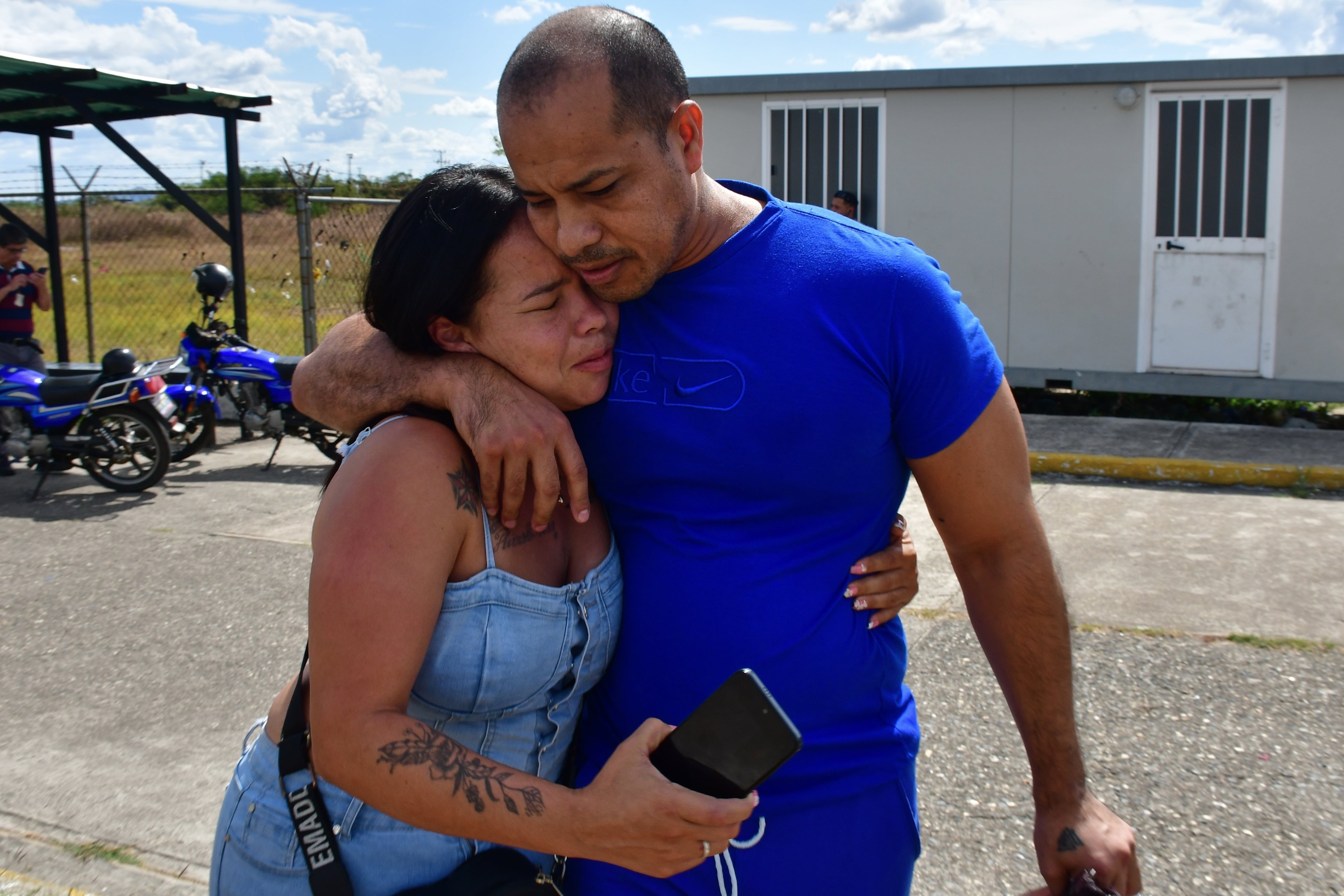
This Sunday there were 104 new releases in Venezuela, mainly in prisons in the interior of the country, and prisoner advocates continue to confirm new releases. Since January 8, 258 people have regained their freedom with precautionary measures, in a slow process of releases, according to the accounts of the NGOs that monitor the cases of those captured. The Chavista Government, under pressure from the United States after the capture of Nicolás Maduro and amid protests by relatives who maintain vigils in front of the prisons, raises the number to 626 released.
Among those released this Sunday is Kennedy Tejeda, lawyer for Foro Penal, an NGO that defends political prisoners with great prominence in recent weeks. Tejeda was arrested in August 2024 when he went to a police command to offer himself as a defender of a protester arrested during protests against the electoral results of the presidential elections in which Maduro proclaimed himself the winner. Two other prominent human rights defenders are still in prison: Javier Tarazona, from Fundaredes, and Eduardo Torres, from Provea.
The Unitary Platform, which brings together the opposition parties that support the leader María Corina Machado, has been reactivated this week to press for the cause of the political prisoners and join the protests and vigils held by the relatives of the detainees. The organization has counted 258 releases since January 8 and they assure that there are still 854 people to be released. “We demand massive, public and transparent liberation processes that guarantee the freedom of ALL political prisoners,” they wrote on the Unitary Platform’s X account.
Before the release of 104 people this Sunday, the Penal Forum still counted 777 detainees for political reasons. Justicia Encuentro y Perdón totals more than 900. The figures do not coincide between organizations and are even more disparate when compared with the official numbers.
The president in charge, Delcy Rodríguez, assured last week that 626 people had been released, in a tally that also includes releases granted at the end of December. Human rights defenders have denounced, based on other similar processes, that the Government usually gives numbers that are much higher than the releases that actually occur and that, in some cases, freedom measures have been given to people who are not classified by NGOs as political prisoners. At the same time, there have been new arrests of people whose families had not dared to report their cases for fear of reprisals.
The absence of official lists, beyond those created by family members and lawyers, makes the release process an opaque procedure. In addition to the lack of transparency, it has been reported that in no case has full freedom been granted. The majority have emerged with restrictions on publicly declaring to the media about their cases, orders to appear in court and a ban on leaving the country. The verification process by advocacy organizations also takes time, which slows down overall announcements and counts. Rodríguez said that he would ask the High Commissioner for Human Rights, Volker Türk, to review the lists during a call that he will have with the official this Monday.
For more updates, visit our homepage: NewsTimesWire