The UN Security Council restored at midnight this Friday six resolutions adopted between 2006 and 2010 against Iran to limit the nuclear and ballistic program of the Islamic Republic, after the United Kingdom, Germany and France activated the process of automatic sanctions on August 28 when considering that Tehran has breached its obligations to limit said program acquired in the 2015 nuclear agreement. Votation that resulted in nine votes against, four in favor and two abstentions, the maximum executive body of the UN rejected the last effort to delay the reimposition of the measures.
The US abandoned the nuclear pact and reimposed sanctions to Iran, who responded gradually accelerating his atomic program. Under the 2015 agreement, the UN had lifted the six resolutions, which order the suspension of the nuclear program, the freezing of assets of individuals and entities linked to the program, the financial isolation of the Ayatolás regime to prevent it from developing their plans, inspection of ships and aircraft, the prohibition of activities related to ballistic missiles capable of transport Foreigner of the Revolutionary Guard, the elite body of the theocratic regime.
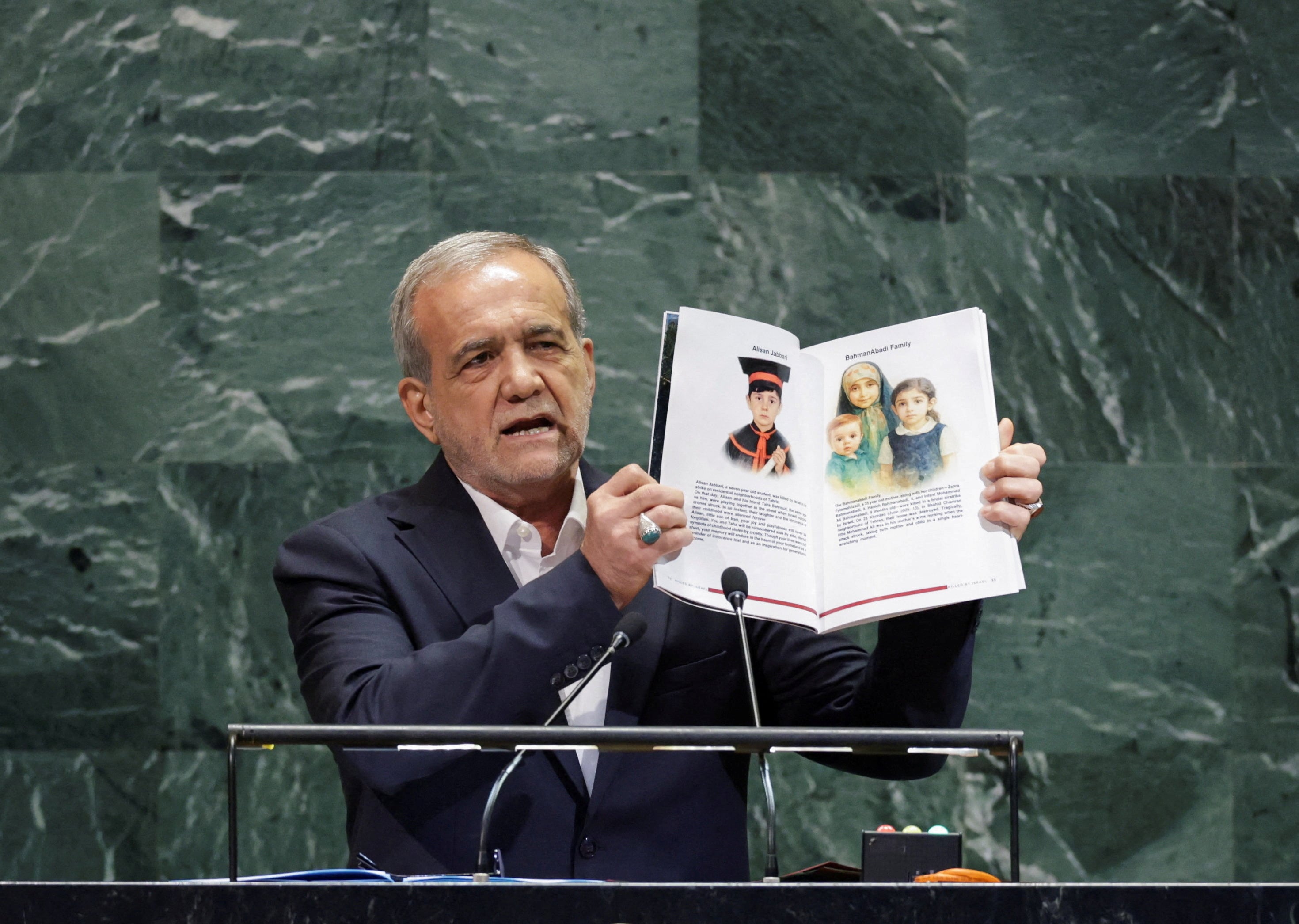
From New York, where he has participated in the UN General Assembly, Iranian President, Masud Peseshkian, has denounced this Saturday the “Irrazonable” demands of the United States on his nuclear program and stated that his country prefers the restoration of UN sanctions to the “irrational” demands of Washington. “With European counterparts we arrive at conclusions, but the vision of the United States is different, and it is natural that we have not reached an understanding about the rapid restart mechanism (of sanctions), since the US request is unacceptable,” Peieshkian told Iranian state television from New York, in statements collected by the EFE agency. According to fishshkian, Washington offered Tehran a three -month moratorium in exchange for delivering all enriched uranium, an “unacceptable” offer. “With the Europeans we had reached an agreement,” said the Iranian president to the press in New York, according to the official IRNA agency.
Thus, Iran has chosen the resumption of sanctions as less evil, and considering that these resolutions will not have a great effect by overlapping with the sanctions imposed by the US since 2018 in the framework of the so -called “maximum pressure” policy of President Donald Trump in his first mandate.
An Iran suffocated by years of a very hard regime of sanctions for its uranium enrichment program signed the nuclear agreement in 2015, knowing that it included a sword of Damocles, the automatic reinstatement mechanism of the sanctions against the Iranian economy that were suspended thanks to that pact, and that this Saturday has re -entered into force even if it will not be effective even if it will not be effective until it will be effective for a few weeks.
The promoters of the reinstatement of the sanctions have been the three European countries that signed ten years ago the agreement that allowed to freeze these measures, in exchange for Iran to accept not to enrich uranium above 3.75% and a severe inspection regime of its atomic program, to ensure that Tehran did not manufacture nuclear weapons, a purpose that the Islamic Republic has always denied having.
The reactivation of the sanctions has to do with the fact that on October 18, the nuclear pact will turn ten and cease to be in force. If the process has not initiated to restore them, the result would have been the definitive disappearance of all the previous resolutions of punishment against IR will approved by the UN that the treaty left frozen.
In practice, the pact began to agonize in 2018 with the withdrawal of the United States, although Iran were scrupulously fulfilled the clauses. It was then that then they will default what is stipulated until 60% purity enrich uranium, not far from the 90% required to produce nuclear weapons.
France, the United Kingdom and Germany consider that Iran has not met the three previous conditions that they demanded in August in exchange for an extension of six months of the suspension of these measures, the same that the Security Council has just rejected. The conditions were for Tehran to resume the negotiation with Washington about its nuclear program, canceled after the Israeli bombings and the USA in June, in the middle of dialogue; An unrestricted access to the inspectors of the International Atomic Energy Agency (OIEA), and that the UN Atomic Agency supervise and control the 400 kilos of highly enriched uranium of the country that is believed were not destroyed by those bombings, and that could serve to manufacture several atomic weapons
“Generate discomfort and internal protests”
The Iranian authorities, explains from Tehran an analyst close to the Superior National Security Council that spoke with this newspaper under condition of anonymity, perceives the reimposition of sanctions such as “as an abuse and distortion of international law.” Above all, because in these 30 days since the beginning of the activation of the rapid mechanism to reinstate the sanctions, the Uranium enrichment plant of Natanz was immediately opened to the IEA inspectors, according to the regional portal Amwaj. That underground installation had been forbidden since June, when Israel and Washington bombarded Natanz along with other key nuclear facilities.
On September 9, Iran and the OIEA also reached an agreement so that, within 30 days, the country prepared a report on the state of its uranium arsenal, which in principle included the 400 kilograms of that highly enriched mineral, one of the main concerns of the West. Tehran opened the door to start later negotiations to allow access to international inspectors.
None of this has served. Hence the Iranian authorities, the analyst emphasizes, consider that “the objective of these sanctions is to generate social discomfort and cause internal protests.” The punitive measures are seen by Tehran as “the previous step to a new Israeli attack.” In 2018, Trump’s decision to leave the nuclear pact was largely attributed to pressures by Israel, which has always been contrary to any type of understanding with the Islamic Republic.
Although these sanctions will have an undoubted impact on the already maltrecha Iranian economy, its reach will not cause “a total disorder” for an economy “that has been subjected to sanctions,” says Clément Therme, an expert researcher in Iran of the French Institute of International Relations (IFRI). In all that time, the country has learned to avoid these measures to survive economically, although now “the cost of doing so will be greater,” says therm.
China and Russia, opposites
China and Russia, allies of Iran who have voted against the mechanism of reinstatement of the sanctions – although they have not been able to exercise their right of veto as permanent members of the Council, since the 2015 agreement excluded that possibility – have also announced that they consider those sanctions illegal. Therefore, the Theme emphasizes, “they will not show a strict adhesion” to impositions such as embargoes to defense cooperation.
“The evolution of the situation will depend not only on the restoration of the sanctions but also on Iran’s response,” says the expert. Tehran has retired its ambassadors in France, the United Kingdom and Germany on Saturday and is plausible that “suspends its cooperation” with the United Nations Nuclear Agency.
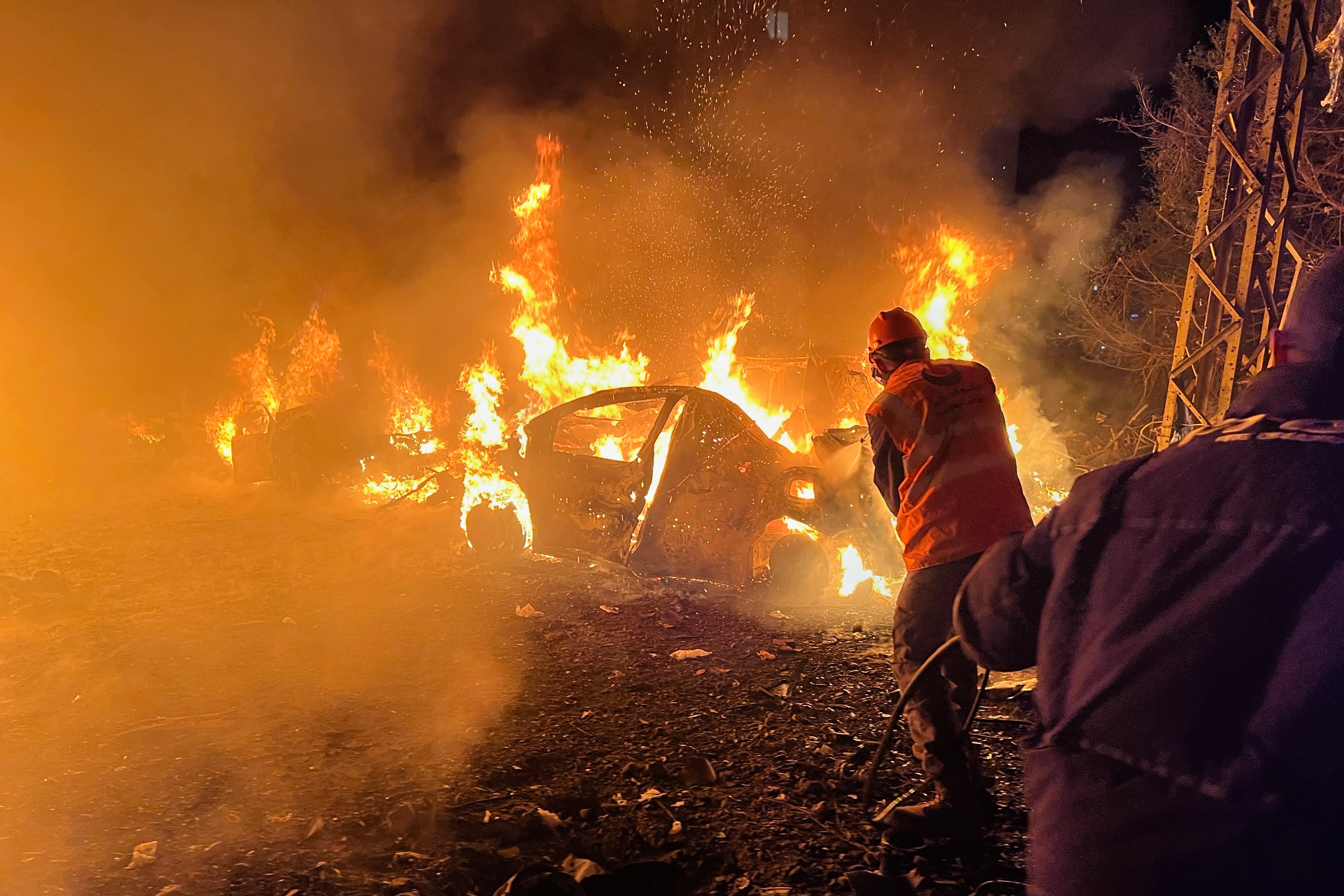
In any case, Therma emphasizes, the return of the sanctions “increases tensions in the region and the risk of a new Israeli military intervention in the coming weeks. This creates a political context favorable to military escalation.”
For more updates, visit our homepage: NewsTimesWire