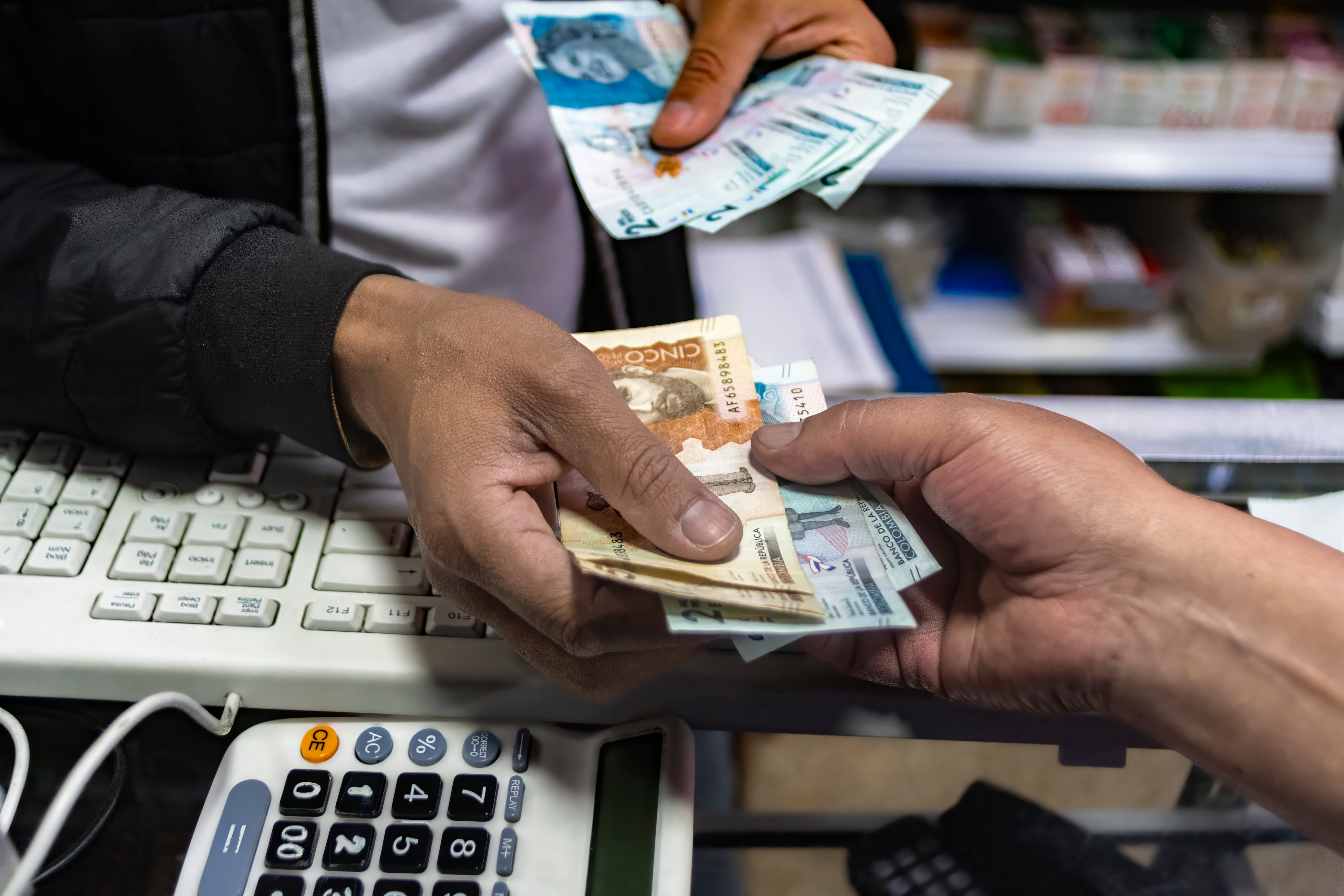
President Gustavo Petro has decreed a 23.8% increase in the minimum wage for 2026. The figure, which 2.4 million employees in the country receive, is 2 million pesos per month (about $533), including transportation assistance for 249,095 pesos. This is the highest increase in this century – the last time the minimum wage in Colombia rose more than 20% was in 1997 -, surpassing the increases seen in 2022, 2023 and 2024, when they were 13%, 9% and 5%, respectively. Petro made the announcement this Monday in a pre-recorded speech, where he explained that this year’s increase “has been made based on international standards of the minimum living wage.”
“The salary or family vital income is not individual, because workers in general do not live alone,” said the president in the speech, along with his Minister of Labor, Antonio Sanguino, and his youngest daughter, Antonella Petro. “A minimum wage that guarantees that the family can have the bare minimum,” he added, which implies “reproducing in dignity.” The president says he looked for a formula for a family of three to four people, with one or two workers on average. The increase is much higher than what the country’s labor unions were asking for, which was 16%.
From the business field, Andi published in Inflationary risk is, in fact, the most worrying backdrop in the short term. Bancolombia expects inflation to end 2026 at 5%, outside the target range for the sixth consecutive year, and warns that each extra point in the minimum wage on inflation and productivity adds 0.06 points to the increase in prices (CPI). But the adjustment has already been made and at the beginning of the year the indexation of the minimum prices in sectors such as services and rentals is expected.
Just seven months after leaving presidential power, this is the last increase that Petro will be able to decree with his signature, before the mid-year elections. The increase comes by decree after the failure of the tripartite dialogue that closed without agreement on December 15. The decision, presented as an act of social justice by the president, comes at a time when the economy moves between two opposing forces: the political need to protect purchasing power and the technical urgency of containing inflation and preserving fiscal stability. “This will increase employment because demand increases and thus there will be more business,” Petro concluded in the speech. In a message on his
The scene does not occur in a vacuum and occurs while the Bank of the Republic maintains a contractionary stance to curb inflation, which has been sticky at around 5%, two percentage points above the goal. Today the monetary policy rate is at 9.25%, and various analysts have warned that the restriction could rise to above 10% in 2026 if rising pressures intensify. A Bancolombia report shows that an increase in the minimum wage well above inflation and productivity would force the Issuer to maintain high rates for longer, delaying cuts and making credit more expensive for households and companies.
The tension between the Government and the central bank intensifies with the news of the new minimum wage. The attacks have been constant throughout the year and in the last meeting of 2025, the Minister of Finance, Germán Ávila (who sits on the Board that decides monetary policy), denied the reasoning of the Issuer’s manager, Leonardo Villar, to stick to the rate that has prevailed since April. At the press conference, in which Ávila also made a surprise announcement that they would declare an economic emergency, Villar looked very uncomfortable. But the Bank maintains its independence at a time when international markets are looking for signs of credibility amid high fiscal pressure.
The economic analysis center ANIF agrees and warns that excessive real increases in the minimum generate pressures in areas such as education, health, transportation or personal care, labor-intensive sectors. Recent experience confirms this: since 2015, the minimum wage has consistently grown above inflation and productivity, and that gap translates into higher prices and unanchored expectations. The effect is not immediate, but it accumulates and, in the long run, erodes the very purchasing power that it seeks to protect.
Added to this equation is the very compromised fiscal front. Bancolombia foresees a deficit of the Central National Government of 6.5% of GDP in 2026 and a public debt of 63.4%. The increase in the minimum adds pressure on public payrolls and on interest payments, in a year marked by budget delays and spending rigidities. ANDI estimates that the increase will imply 400,000 million in additional public spending. The State not only faces a higher labor cost, but must finance it in a market where the TES curve remains high, which makes emissions more expensive and prolongs the fragility of fiscal accounts. Everything happens while the debt management strategy of Javier Cuéllar, director of Public Credit, tries to contain the deterioration, but with a margin that narrows with each decision that expands structural spending.
The labor market, with unemployment rates at historic lows, is also not risk-free. Bancolombia predicts that the unemployed will continue to be a single-digit statistic, around 9%, but with informality that is around 55% of the labor market. ANIF warns that the gradual reduction of the working day—after the approval this year of the labor reform—already makes the hour worked more expensive; and that adding a strong increase in the minimum raises the entry threshold to formality, leading companies towards informality. Sectors such as commerce, accommodation and food, labor-intensive and dependent on demand, are the most exposed to this cost shock.
The decree is celebrated among the workers, but the market and the Bank of the Republic will read it with caution. Today’s high minimum wage can lead to more inflation tomorrow. The question is whether the country will be able to maintain the balance between immediate well-being and macroeconomic stability, in a scenario where each additional point of increase becomes a challenge for monetary policy, fiscal discipline and the economic credibility of the coffee-growing country.
For more updates, visit our homepage: NewsTimesWire