The immune system keeps us alive, but remains shrouded in mystery. It is estimated that there are 1.8 trillion cells distributed throughout the body dedicated to defending us from infections or destroying deranged cells to prevent cancer. The most abundant of all and the first to respond when a problem appears are neutrophils, which leave the bones like a rapid intervention troop and travel through the blood to where they are needed. They do their job, trap the microbes or swallow them, and die within a few hours. Although their existence has been known for more than a century, much is unknown about how they work, and it is not known why they can save us, but also condemn us. In infections like Covid, they are the cause of excessive immune responses that sometimes make the disease fatal.
Modulation of the immune system has made possible some of the most effective therapies against cancer and it is known that chronic inflammation, which occurs when the response to a threat does not turn off when it disappears, is behind many heart diseases or Alzheimer’s. However, the complexity of the immune response and its sometimes ambiguous relationship with damage and cure make it difficult to control for use in medicine.
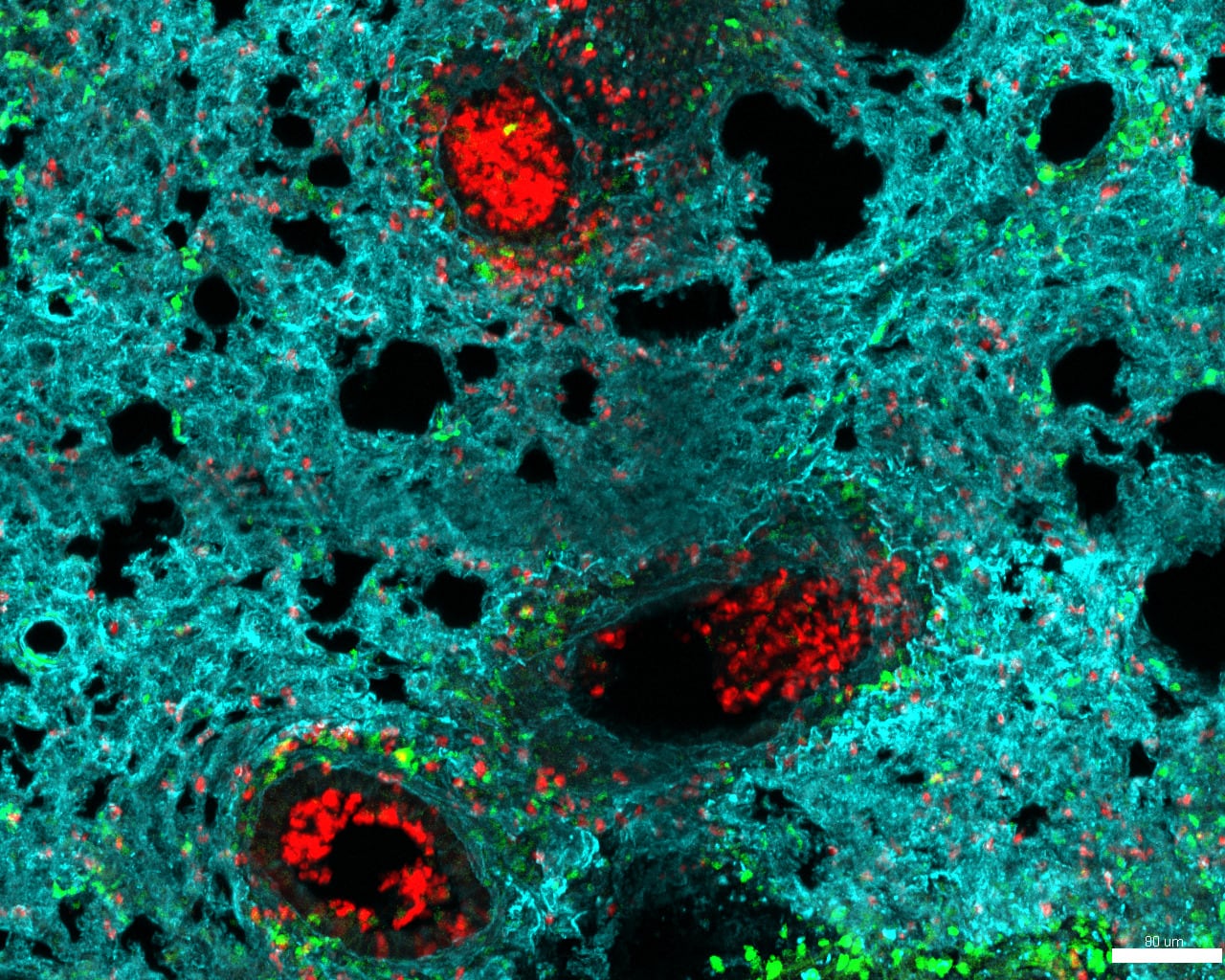
Today, an international team of scientists led by the National Center for Cardiovascular Research (CNIC), the Carlos III University of Madrid (UC3M), Yale University, in the United States, and Westlake University, in China, publishes in the journal Nature a map that tries to make the complexity of neutrophils understandable. After analyzing hundreds of thousands of mouse neutrophils, they have changed the way we understand these cells, and have developed NeuMap, the first map that describes how neutrophils are organized in different tissues, life stages and diseases.
“They are very basic cells, but they do very diverse things,” says Iván Ballesteros, professor at UC3M and lead author of the study. “When we started the project, we didn’t know what we were going to find and we studied neutrophils in different situations, in pregnancy, in cancer, in lung disease… when we put them together and generated this map, we saw that they are not that different, and they only have seven states.”
According to Ballesteros, although each neutrophil only lives a few hours, together they maintain a stable architecture throughout life. They have also seen that there are convergent behaviors, which in some circumstances favor life and in others endanger it. “The neutrophils of the placenta are similar to the protumoral neutrophils, because in both cases they promote the growth of blood vessels,” says the researcher.
In the seven states of neutrophils, there are phases in which this army of immune cells are trained, others in which they circulate through the blood, silent, waiting for an order to attack, and others in which they are activated against viruses or capture pieces of pathogens to present to T lymphocytes so that they destroy them. There are also some neutrophils that calm the immune response, preventing it from causing damage, but, in another state, the suppression of the immune response makes it easier for the cancer to progress and create new blood vessels that feed it.
The knowledge that neutrophils can adopt just seven states also facilitates the possibilities of acting on them. These cells do not always remain in one state, but rather change depending on the circumstances, something that raises the possibility of manipulating these changes for medical purposes, such as blocking the behavior that favors the growth of tumors.
Andrés Hidalgo, researcher at Yale and the CNIC and co-author of the study, points to two applications of the knowledge they are obtaining with NeuMap. “As neutrophils are so plastic, and if you have an infection you have one type and if you have a tumor, another, we can know well what is happening to an individual, what type of cancer they have and in what phase of development, or what type of infection and if they are at risk of suffering sepsis, so we think it could be useful to obtain accurate diagnoses,” he indicates.
Secondly, they want to use knowledge about neutrophils to direct their activity towards what is appropriate at all times. “You cannot eliminate neutrophils, because they are doing necessary tasks, such as eliminating viruses or bacteria, but you can try to reprogram that army with very specific genetic programs. Thus, we could direct the cells to do what we want: promote revascularization if we need some tissues to be repaired, as happens in people with diabetes, who have problems healing, or to go to the brain if it is inflamed and have immunosuppressive activity,” explains Hidalgo.
To achieve this goal, the researcher points out, they are going to use knowledge they have acquired in their study of neutrophils. “They are organized like an insect colony. The structure has the mother cell, which is like the queen, which then produces offspring that specialize,” says the researcher. “An individual neutrophil would be like a little ant, it is not very useful to reprogram it, it is better to go to the queen bee, to that stem cell that has the potential to produce the rest of the cells in the bone marrow, and that is where to introduce those genetic programs so that the army of neutrophils does what we are looking for,” he concludes.
In diseases such as cancer, it is known that, when there is a response to chemotherapy in a mouse model, neutrophils acquire a specific shape, which activates the response against cancer cells, and when the tumor grows, another, which forms blood vessels that facilitate the proliferation of cancer. “What we are trying to do is prevent neutrophils from acquiring the phenotype that builds vessels and going towards the state that destroys the tumor,” says Ballesteros. “We believe it is possible because the system is very plastic,” he adds.
Neutrophils became known more than a century ago, but technological progress such as massive sequencing of individual cells has begun to reveal their true identity. The new map of these cells is not only a resource to better understand the immune system, but a tool that can transform medicine.
For more updates, visit our homepage: NewsTimesWire