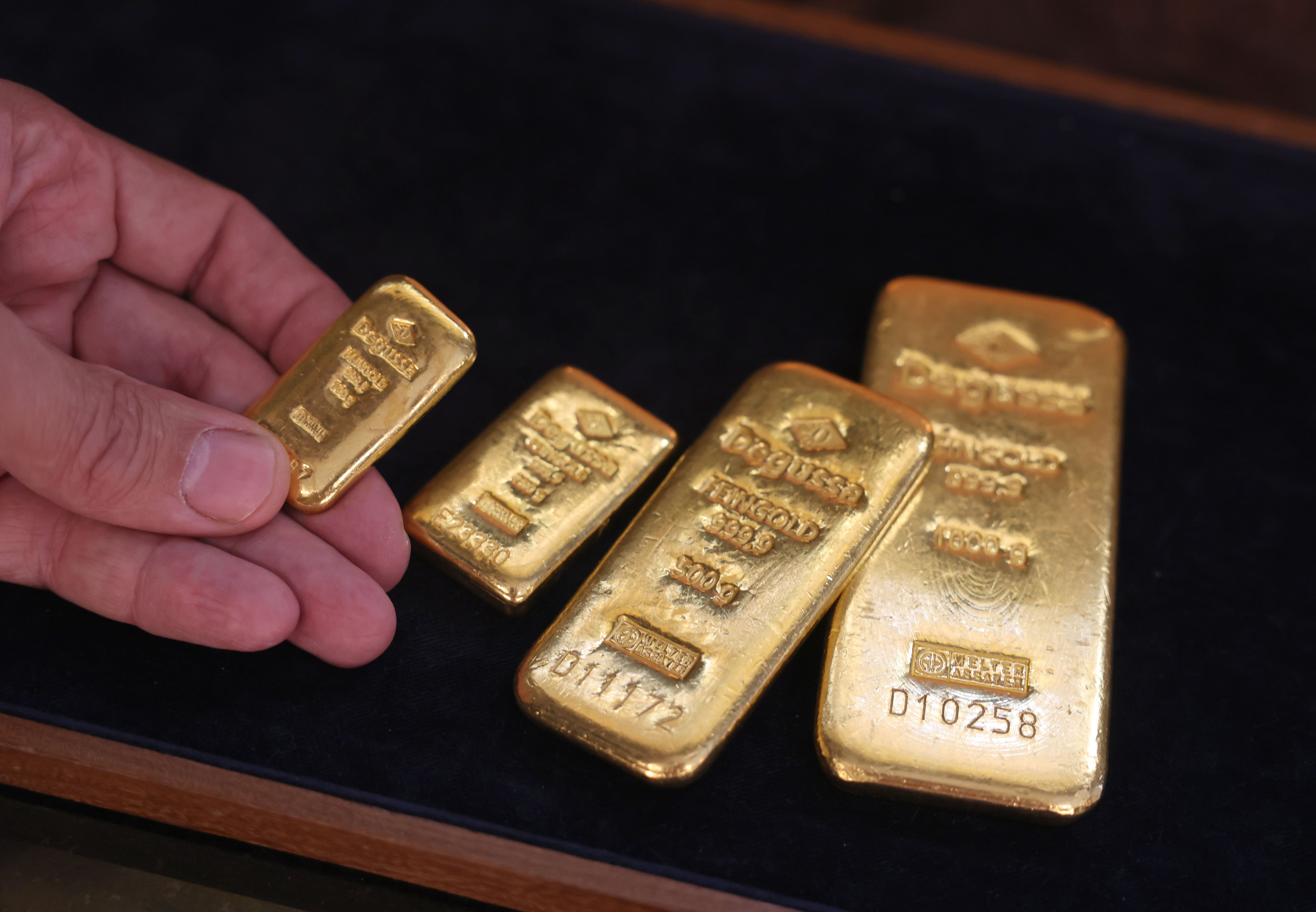
Gold continues its correction, falling below $3,990 an ounce. This new fall accentuates the losses of the precious metal, which registered a decrease of 3.2% during the day this Monday, motivated mainly by the progress in the negotiations between the United States and China towards a trade agreement that would reduce the economic risks and geopolitical tensions that have marked the world agenda since the arrival of Donald Trump to the White House.
The dizzying rally that took gold to an all-time high of just over $4,380 an ounce last Monday has begun to reverse. The weakness of the dollar and forecasts of an interest rate cut by the Federal Reserve had been the recent drivers of the precious metal’s gains, attracting retail speculators who fueled its rally.
In this way, the price of gold has accumulated a decline of more than 9% since reaching its historical maximum. Even so, it has accumulated an increase of more than 50% so far this year, supported by strong purchases by global central banks.
“Gold is undergoing a long-awaited correction, driven today by optimism generated by trade talks,” says Ole Hansen, head of commodity strategy at Saxo Bank. On the other hand, he points out that we could have seen “the maximum of the year, since a deeper correction could take longer to recover,” Hansen reiterates.
The moderation of its price coincides these days with the celebration of a conference organized by the London Bullion Market Association, which has brought together almost 1,000 professional gold traders, brokers and refiners in Kyoto, Japan. Attendance at the event — which began Sunday — is the highest in history. Among the participants, John Reade, market strategist at the World Gold Council, comments that demand from central banks is not as strong as before, and a deeper correction could be welcomed by professional traders. Other experts estimate that $3,500 per ounce would be a “healthy level for the gold market, because it would still be a very high price.”
The continuation of the cuts in gold coincides with an intense week in the markets in which the Federal Reserve, the European Central Bank and the Bank of Japan will meet. At the same time, the talks between Washington and Beijing will act as catalysts for markets that accumulate maximum after maximum.
For more updates, visit our homepage: NewsTimesWire