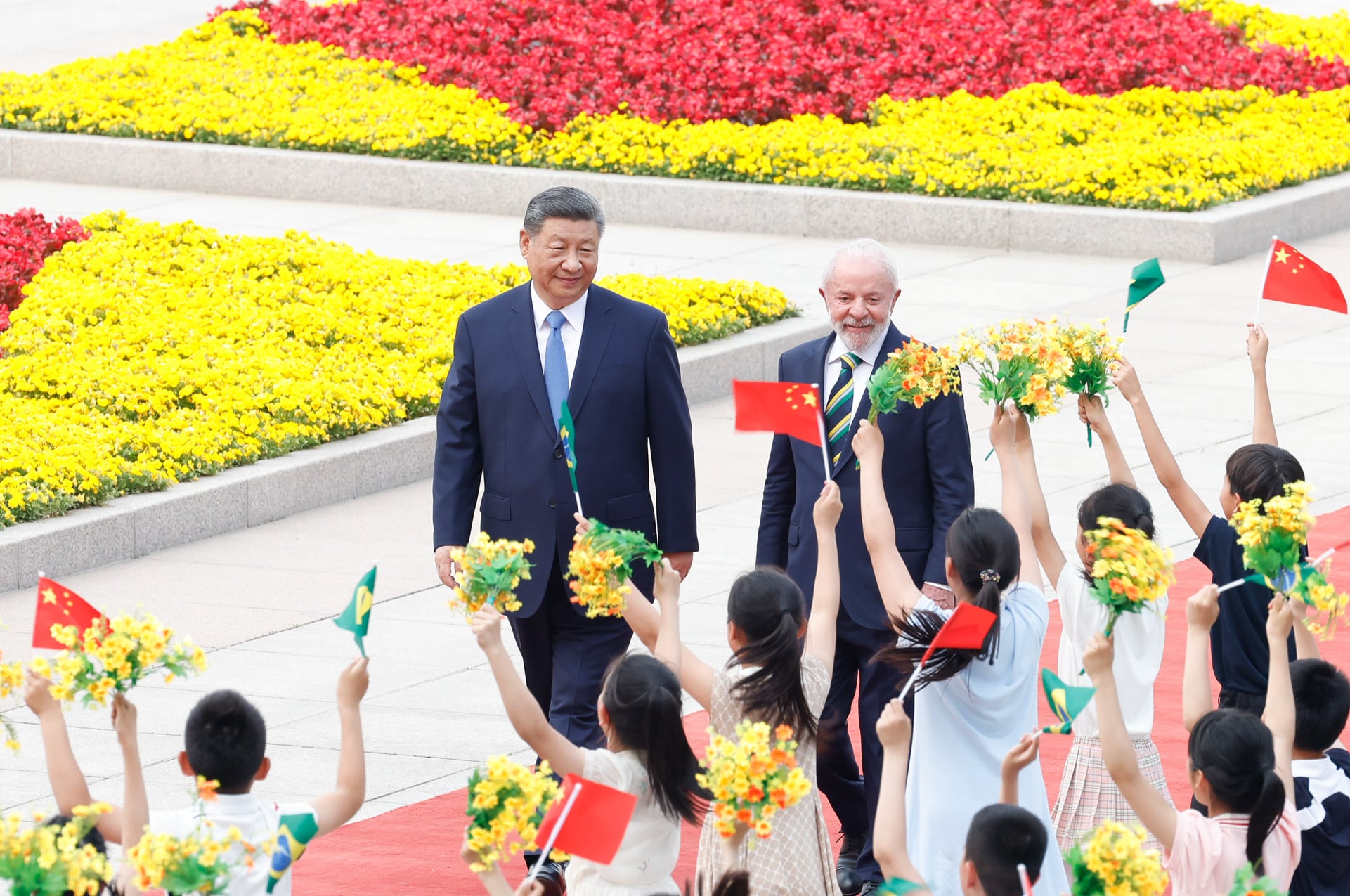
Without losing a minute, the president of Brazil, Luiz Inacio Lula da Silva, took advantage of diplomacy – and of his agenda – as soon as he entered into force, last Thursday, the 50% tariff that the United States has imposed on his commercial war that, in the Brazilian case, includes a frontal attack on the courts. The Brazilian president spoke on Monday night with Chinese Xi Jinping, after doing so with the Russian Vladimir Putin and with the Indian Narendra Modi, also founding partners of the BRICS, the block of the Global South. Lula is looking for new markets for its exports and allies in front of Donald Trump without neglecting efforts to open negotiation routes with Washington.
The Chinese president told his Brazilian counterpart that “China is ready to work with Brazil and erect in example of unity and self -sufficiency between the countries of the Global South,” according to the story of the presidential conversation released by the official press of his country. The call lasted an hour and occurred at the instances of Latin American.
In the case of Brazil, the tariff punishment has explicit political motifs. It is the way Trump presses the Brazilian justice so that former president Jair Bolsonaro does not give accounts for the attempted coup against Lula. The president, Judge Alexandre de Moraes and the Supreme Court completely resist the huge pressure.
The note that the presidency of Brazil issued on the call with XI does not mention tariffs or the US. He states that “both presidents expressed their willingness to continue identifying new commercial opportunities between both economies” in addition to strengthening ties in the areas that already collaborate, such as health, oil or digital economy.
Brazil considers that diversifying its commercial relations is the most effective way to defend against Rate Trump. But, as the main advisor of Lula in international affairs stressed, Ambassador Celso Amorim, this Monday the Brazilian sights go far beyond the BRICS partners. Amorim explained in Roda Vivaone of the most emblematic interview programs in the country, which aim to increase trade with the European Union, Asian countries, in addition to strengthening economic ties with Mexico and Colombia.
The shortest call of the three was that of Putin, on Saturday. It lasted about 40 minutes. The Lula Telefónica round started on Thursday, with Modi. They talked for an hour. India and Brazil are the countries to which Trump has punished the most hard in their tariff war, with that 50%.
Brazil sees with some helplessness the absolute closure of the Trump administration to resume the dialogue, which was suddenly canceled when the president decided to attack Brazil to neutralize what he considers a witch hunt against Bolsonaro. With the rest of the affected countries, the American has agreed to negotiate and every so often announces a reduction or an extension.
Lula took advantage of these contacts to deal with other issues that Brazil intends to increase its prominence in the international scene. With Putin he talked about “the recent peace efforts between Russia and Ukraine.” Brazil offered himself as a mediator in that conflict from the beginning, but without success at the moment.
Another relevant issue for Brazil and addressed in their exchanges with the leaders of other powers is the UN climate summit, COP 30, which will be held in Belém, in the Amazon, in November. Before a complicated panorama because the US has abandoned Paris’s agreement to stop the climatic crisis, Lula desperately tries to persuade its allies that they are involved in depth so that the appointment obtains results.
For more updates, visit our homepage: NewsTimesWire