The country offers in the open America section for its daily and global informative contribution to sustainable development. If you want to support our journalism, subscribe here.
“The railroad went from being the avant -garde to becoming nostalgia.” This was how Javier Ortiz Cassiani, historian and writer of Valledupar, the tragic destination of the trains synthesized. In Colombia, his arrival in Cali in 1915 brought with him the pre -recorded music of the Antilles that gave rise so that, later, the city became the world capital of salsa. The majority of the life and work of Gabriel García Márquez – also recalled Orlando Oliveros, a writer and cultural journalist – was crossed by this means of transport: from the writer’s return to Aracataca, to sell the house of his grandparents, until the arrival of a railroad to Macondo that transformed each respite from the fictional people.
In Latin America and the Caribbean the sensation is that: that trains were a power of the past. However, and as stated during the first day of the International Forum for the Railway Reactivation, developed by CAF- Development Bank of Latin America and the Caribbean, and the Ministry of Transportation of Colombia, trains must again emerge as protagonists of intermodal transport. Above all, in times of climate crisis and in the face of the need to unite the region.
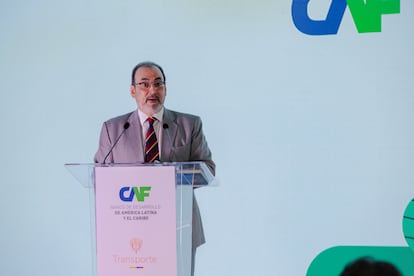
“Railway systems are not a passing fad, but a strategy to have a more integrated and sustainable region,” said Sergio Díaz Granados, executive president of CAF during the opening of the event. Thus he invited the more than 200 attendees in several countries to have a discussion about climate financing, institutional governance, technical exchange and the development of the necessary talent to re -promotes this sector.
In the region, according to data given by Ángel Cárdenas, infrastructure manager for the development of CAF, only 1.4% of GDP is invested in infrastructure. And if zoom is made in the transport sector exclusively, the figure drops around 0.9%. For several reasons, he explained, the train ended up losing the race in front of cars, trucks and roads. But taking into account that the railway systems driven by electrical energy emit up to 80% less carbon dioxide, one of the gases responsible for climate change is the right time to resurrect them. “It implies very high investments and traditional financing methods are not enough,” he accepted, ensuring that we must start by updating the regulatory framework among countries to achieve it.
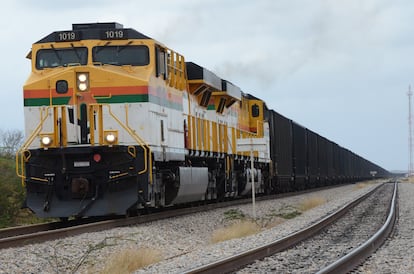
The examples exist and were presented one after another during the forum. In Colombia, although the idea of having long distance trains has been an elusive, there are advanced projects. María Fernanda Rojas, Minister of Transportation, shared the news that, in just one year, the La Dorada-Chiriguaná corridor, which had an investment of 4.6 billion Colombian pesos, doubled its load, reaching the 468,000 tons by June 2025. It also referred to the aspiration that President Gustavo Petro has to carry out the interoceanic train, a iron route that would connect the Pacific and Pacific Way Atlantic, and to give priority to a train that “connects to the Catatumbo to give that region a chance.”
Other countries gave more hopeful lessons. In Chile, explained Erik Martin, president of the Board of Directors of the Railroad Company (EFE), although there was also a deterioration of the railway system between 50 and 80, even reaching the State stopping investing in the 90s, the sector has managed to revive. Currently, EFE covers 1,200 kilometers from Chile, just where 80% of the population lives, and moves 61 million passengers with a fleet in which 94% of trains are electric.
Through CAF, in fact, EFE agreed to a loan of 1.2 billion dollars. “It was the first sovereign guarantee financing and, in addition, awarded to a public company of the State,” said Nicolás Estupiñán, director of CAF Infrastructure Projects, highlighting, once again, the need to risk experimenting with new financing strategies. In Uruguay, he added, the bank also contributed $ 85 million to the country’s central railroad, which allowed to catalyze other funds for 250 million dollars. “If the financing model does not exist,” he said, “we are going to invent it.”
And although it is true that trains, if they feed on clean electricity, are an option that seduces in the middle of a planet that is heated, Mike de Silva, an expert in sustainability of Crossrail United Kingdom, the company behind the Elizabeth line of the London Metro and has had commissions in 34 countries around the world, invited to reflect beyond. You have to think about how to reduce greenhouse emissions that are generated during the construction of trains, stations and ferrovías. Its main materials are cement and steel, which represent about 7% of global emissions each.
“Of course, electrification is important, but at the time of construction there is a carbon gap,” he insisted. “The majority of railway projects have financing from governments behind,” he added. Therefore, it is your responsibility to sue the market, to those who generate these materials, that take it into account. “If we do well and develop methodologies that show that we are building with high environmental standards,” other types of the long -awaited investments for trains and railways can be unlock: green financing with lower interest rates.
For more updates, visit our homepage: NewsTimesWire
https://elpais.com/america-futura/2025-07-30/el-reto-economico-y-verde-de-resucitar-el-sistema-de-trenes-de-america-latina.html