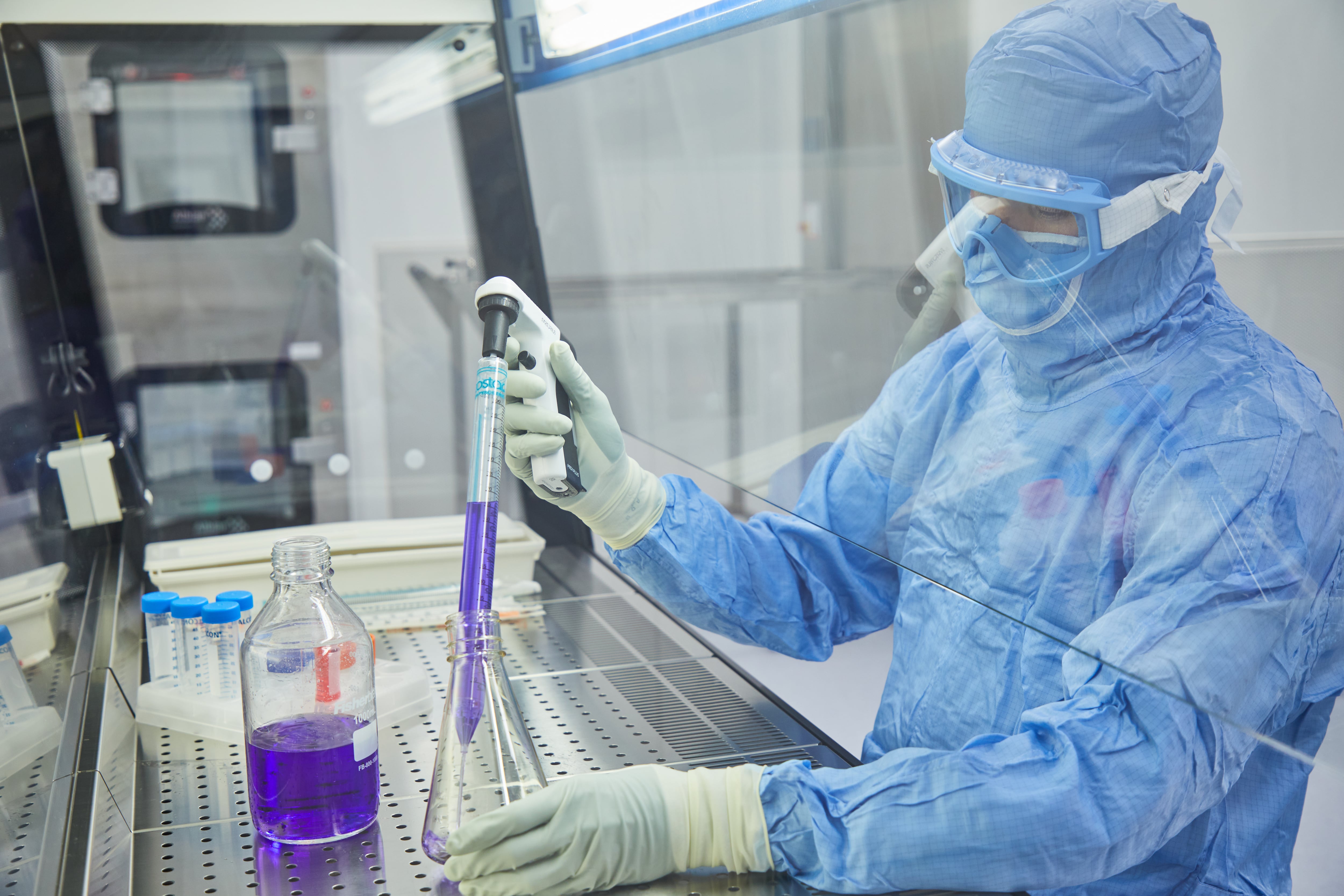
Spain is a few steps to market a new and more effective vaccine against tuberculosis, the most lethal infectious disease on the planet that kills more than one million people every year. The investigation, which Carlos Martín, microbiologist and professor at the University of Zaragoza began 25 years ago, will culminate in 2028 with the results that will be yielded by clinical trials in babies and adults. If these last studies ratify the effectiveness of the MTBVAC vaccine, the door will open to all administrative and legal procedures to negotiate and authorize license agreements so that other laboratories in countries with high load of tuberculosis can produce and distribute it. Esteban Rodríguez, CEO of Biofabri, the Spanish biopharmaceuticals that has advanced industrial and clinical development in the last 17 years, trusts that the commercialization of the vaccine be possible in 2029. It will not be free sale, but, through financing support, will occur in laboratories of Spain, India and Brazil and will be distributed in countries of low income and average at affordable prices. To reach this milestone in science in Spain, extra financing of 20 million euros is still missing to develop the baby vaccine.
Martín and Rodríguez are optimistic about the effectiveness of the new vaccine against the BCG, the only authorized injection to prevent tuberculosis, used in the last 100 years, but based on a strain that causes the disease in cattle and not on humans. Thus they have let it know this week national, autonomous authorities, cooperation agencies and other guests by the Ministry of Health to the meeting of the multisectoral governance group of the tuberculosis plan. They have also shared the advances and challenges in a meeting with three media, including the country.
The goal is that the MTBVAC is at least 50% more effective than the BCG when preventing immunized people from developing the disease and, in turn, become transmitters of the bacteria. It will consist of a single dose and can be transported to normal refrigeration, which facilitates logistics in difficult access territories.
However, both have also recognized a financial hole that exceeds 20 million euros to develop the baby vaccine. “Organizations concentrate on financing where there is greater social impact (when cutting the route of infection and because 90% of cases happens in adults). That is why there have been no problems in financing (the development of the vaccine) in adolescents and adults, but in babies,” explains the Biofarm CEO, “although the vaccine can be very effective, the results in them will not be seen within about 20 years.”
Although the project already receives funds from the European Union, the Gates Foundation, Open Philantropy, the NIH (the National Institute of Health of the United States), the German Development Bank KFW, the NGO IAVI, among others, there are still resources for the last push. “In the project of babies, the European Union finances 50%. The other 50%is missing,” says the researcher at the University of Zaragoza. “Developing a pharmacological product is so expensive that you need a private company that wants to make benefit or, if you do not want to make benefit, you need altruistic foundations or community funds,” he adds.
Martín and Rodríguez, precisely, work to complete that financing. One of the objectives of meetings such as the Ministry of Health are to keep the process informed of the process to possible in investing in this pharmaceutical development. “It is not a free sale vaccine, so there is no extra speculation or benefit. That is why organizations contribute to their development,” says Rodríguez.
Tuberculosis has historically been the most lethal infectious disease in the world. This position was only taken by COVID-19 for three years. However, a year ago, WHO warned that tuberculosis was again the first cause of death caused by infectious pathogens. In 2023, 10.8 million people contracted tuberculosis; Of these, 1.25 million died. This is as if in 2023, 10 A350 aircraft had fallen every day, without survivors.
The most serious thing is that it affects, mainly, vulnerable population. The World HIV, malaria and tuberculosis background has come to call it “the Pandemics of the poor.” In 2023, for example, two thirds of the new cases concentrated in countries such as Bangladés, China, Philippines, India, Indonesia, Nigeria, Pakistan and the Democratic Republic of Congo.
It is expected that the panorama worsens, now that the United States, by order of President Donald Trump, has retired from the World Health Organization (WHO), has suspended the financing of funds for development and has dissolved the USAID cooperation agency. According to a study by the Global Health Institute of Barcelona (ISGlobal), the suspension of US financing has already caused 25% of the entities to fight tuberculosis in 31 countries to paralyze their work.
In fact, the cuts also hit the Spanish vaccine project. “The essay in people with HIV in South Africa was financed by the NIH of the United States and did not end with a number of individuals because there is no more financing,” says the microbiologist of the University of Zaragoza. Of course, he clarifies, the follow -up phase to vaccinated patients may be completed. The Biofabri CEO, however, sees here an opportunity: “This shows that Europe has power and can also do things.”
The urgency of updating the vaccine
The BCG (Calmette and Guérin bacillus) has been used since 1920 and was created from the strain Mycobacterium bovis, that produces tuberculosis in cows. It offers effective protection to babies and children in the most serious forms of the disease, but its performance decreases in adolescents and adults, especially in cases of pulmonary tuberculosis, the most common and infectious way of the disease.
The Spanish vaccine, on the other hand, was developed from the Mycobacterium tuberculosisthe bacteria that affects humans, and through genetic engineering the gene that makes it contagious was removed. Also, the gene that creates the lipid layer that protects it and “invisible” before the immune system was removed. The MTBVAC does not prevent infection – at the end, a quarter of the world population has the bacteria, according to WHO -, but to develop lung disease. Therefore, it is able to cut the transmission chain.
The MTBVAC is in the final phase of clinical trial efficiency studies. In the case of babies, phase 3 trials began in 2022 and had 7,500 newborns in two African countries: half of the babies will receive the MTBVAC and the other half, the BCG. To date, it has already been applied to more than 4,000 and it is expected that, in 2026, the doses will be completed. When they finish, they will wait two years to verify if the new vaccine is at least 50% more effective than the old formula to prevent minors from developing the disease. “It is known that the BCG is not 100% effective and that there are between 4% and 15% chances of developing the disease,” says Rodríguez, “therefore, a two -year period is left in which the first 50 cases are expected to appear.” Once they appear, it is verified which patients received the new vaccine and which, the old woman. The Biopharmaceutical Laboratory believes that efficacy can even be 50% proposed by the first data.
In the case of adults, there are several studies underway. A security test in an HIV positive patient, another of efficiency in 4,300 adolescents and adults in South Africa, Kenya and Tanzania, and one more in India with about 20,000 people. The clinical trial consists of applying to some patients the MTBVAC and others, a placebo. “They would be data that would be considered enough to grant an authorization,” the developers highlight.
For more updates, visit our homepage: NewsTimesWire