Donald Trump’s administration has begun to impose travel restrictions and other sanctions on leading Mexican politicians who, according to their criteria, are linked to corruption derived from drug trafficking. The measure, confirmed by US government officials, can represent a significant escalation of United States pressure on Mexico.
Until now, two Mexican political figures have publicly recognized that they have been forbidden to travel to the United States. However, US officials anticipate that more Mexicans will be subject to these restrictions to the extent that the administration works with a list of several dozens of political figures identified by intelligence and security agencies as linked to drug trafficking.
The list includes leaders of the National Regeneration Movement (MORENA), the ruling party of President Claudia Sheinbaum, several state governors already political close to their predecessor, former president Andrés Manuel López Obrador, stated under the condition of anonymity US officials.
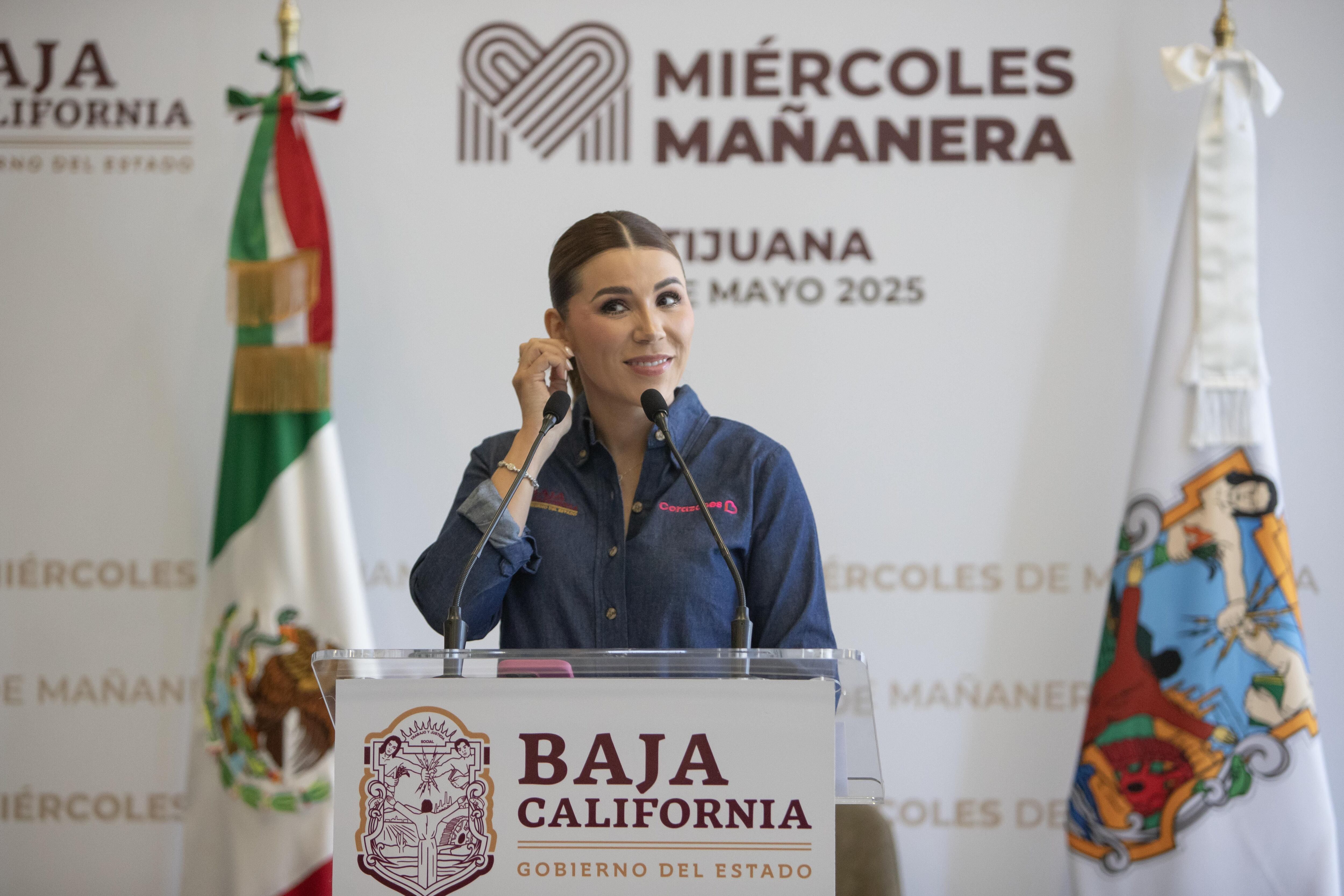
The governor of the Mexican State of Baja California, Marina del Pilar Ávila, has already confirmed that her husband, a former deputy, were revoked the US visas due to “a situation” related to her spouse. “The fact that the State Department has canceled my visa does not mean that I have committed something wrong,” he said at a press conference on Monday. Sheinbaum said that his government asked US authorities for an explanation about the revocation of the Ávila visa, but that they replied that they are private issues and did not offer more information.
These actions are a new political challenge for the Mexican president and her leftist party. Despite Mexico’s historic sensitivity to any indication of American interference, Sheinbaum has so far strengthened his internal support in reaffirming Mexican sovereignty in his conversations with President Donald Trump and, at the same time, has accessed his demands to act against the main drug traffickers.
Mexican Media reported that the United States immigration authorities also revoke the visa of the governor of Tamaulipas, Américo Villarreal, an affirmation that its spokesman described as “not confirmed”. (Villarreal has been repeatedly accused of having links with drug trafficking, something he has denied). Last month, the mayor of Matamoros, the second largest city in that border state, was prevented from crossing the border to Brownsville, Texas, although he also denied that his visa officially removed him.
A state department spokesman refused to comment on these decisions, noting that visa records are confidential, according to US law.
Three administration officials pointed out, however, that these visas revocations could be accompanied, in some cases, of sanctions of the Department of Treasury that prevent those affected from doing business with US companies and freezing their financial assets in the country. A treasure spokesman declined to comment on the sanctions plan. At the moment, the governor of Baja California has indicated that he has no bank accounts in the neighboring country and that he does not face any sanction.
When Trump imposed tariffs on Mexico in early March, he said that the Mexican government had granted “safe shelters to cartels to manufacture and transport dangerous narcotics, which has caused death due to overdose of hundreds of thousands of Americans”.
As part of what he described as a total struggle against fentanyl and other illegal drugs, the administration of the Republican President has designated some of the main Mexican cartels as terrorist organizations and has explored the possibility of unilateral military actions against them, according to the officials consulted.
The review of corruption linked to drug trafficking in Mexico was initiated by a small White House team that requested information from security and intelligence agencies about politicians, Mexican government and military officials with criminal links.
The officials indicated that the group has been preparing the security policy with Mexico under the direction of the National Security Advisor, Anthony Salisbury. At the same time, the group is supervised by the Cabinet Subrizage, Stephen Miller.
A White House spokesman did not want to comment on the role of the group in the imposition of travel sanctions. An official familiar with the team list indicated, however, that it coincides in part with a archive of some 35 Mexican officials compiled by DEA researchers in 2019, after López Obrador began to restrict the cooperation of Mexico with the United States in anti -drug programs.
This work sought to identify Mexican government officials who could be criminally prosecuted for helping drug traffickers, which led to the accusation in 2019 of the former Secretary of Public Security, Genaro García Luna, and his conviction for drug trafficking charges five years later in a federal court in New York.
The two former DEA officials in Mexico City who supervised the creation of that list, Terrance Cole and Matthew Donahue, also proposed that the State Department cancel the visas of some of the mentioned politicians. The highest -level American diplomats, however, then rejected that proposal. Currently, Cole expects the confirmation of the Senate as the new director of the DEA under the Trump administration.
Some current and previous officials expressed concern about the new plan headed by the White House. They pointed out that the evidence required to cancel visas and apply treasure sanctions is much less than that of a criminal trial, which could lead to acting with information that is not completely solid.
The officials affirmed that these measures are being taken under section 212 of the Immigration and Nationality Law, which stipulates that a foreigner can be considered inadmissible if the Government “knows or has reasons to believe” that he has intentionally collaborated in the illicit drug trafficking. The law also allows to cancel the visas of relatives of the sanctioned who have benefited from illicit profits.
An American official said that, although visa revocations could send a powerful signal on the new disposition of the United States to fight corruption in Mexico, they could also generate new conflicts with the Sheinbaum government. “We should use all government resources to go after these people,” he said, referring to corrupt officials. “But the big question is: does this work with President Sheinbaum? Will a Mexican government who has been very collaborator in the issue of drug trafficking be lost?”
The former Mexican ambassador to Washington, Arturo Sarukhán, commented that new visa actions against prominent figures of the Sheinbaum party would make it difficult for her to continue to claim to have a “good” relationship with the United States, despite the openly hostile tone that Trump has frequently used.
“But at the same time,” added Sarukhan, “gives her (a nationalist president with a very chauvinist party behind) a perfect excuse to say that everything bad in Mexico with the economy and others is the fault of American imperialism.”
López Obrador, who came to power in 2018, had promised to combat corruption as never before. However, he directed an administration that denied having corruption problems in his own ranks, despite journalistic investigations about officials close to the president and even about his own children, who claimed that they were involved in enrichment and influence peddling.
Sheinbaum has adopted a different tone. In a message to the Morena Congress on May 4, he warned his followers about the dangers of friend, nepotism and corruption. “All Morena militants must be conducted with honesty, humility and simplicity,” he said. “There can be no collusion with crime, or organized, or white collar.”
This report was originally published by PROPUBLIC and translated into Spanish by the country. PROPUBLIC It is a non -profit independent medium that investigates the abuses of power.
For more updates, visit our homepage: NewsTimesWire