In an increasingly ephemeral world, where achievements are often marked by a fleeting digital notification and history is scrolled past on a screen, there is a profound human desire for the tangible. We crave objects that hold weight, both literally and metaphorically. Objects that say: “This happened. We were here. We achieved this together.”
This desire for permanence is why, centuries after their inception, commemorative medals and challenge coins remain powerful symbols of identity, history, and belonging. Far from being outdated relics, these miniature works of art are experiencing a renaissance across corporate sectors, uniformed services, sports clubs, and historical societies in Ireland and beyond.
They are the physical embodiment of a memory, designed to outlast the moment they celebrate. But what is the difference between the two, and why do they continue to hold such sway over our collective imaginations?
The Weight of History: Commemorative Medals
A commemorative medal is an object of gravitas. Historically rooted in military honours or royal jubilees, today its application is much broader, though it retains that sense of formal occasion.
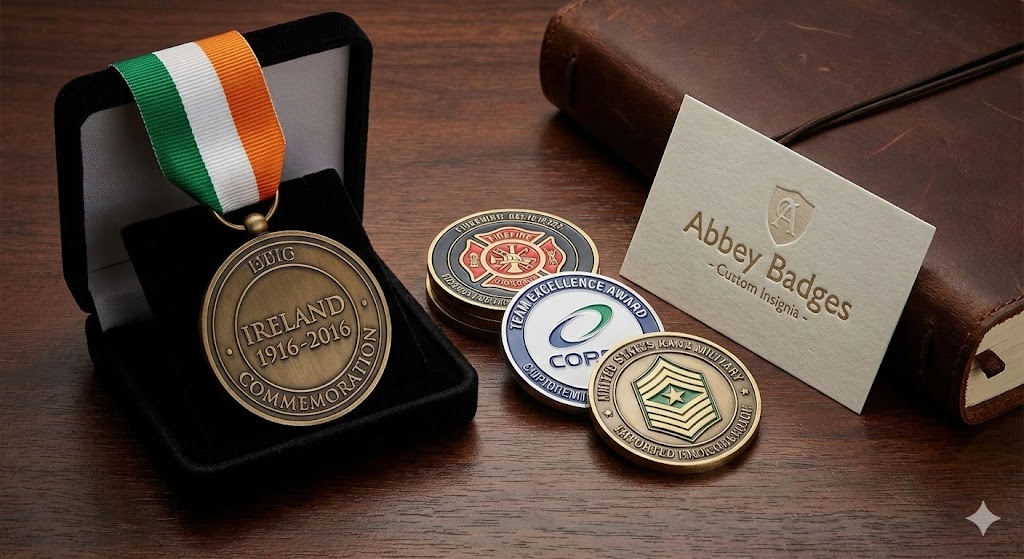
A medal is designed to mark a significant milestone in time. In Ireland, with our deep appreciation for history and anniversaries, the commemorative medal plays a vital role. They are commissioned to mark the centenary of a pivotal historical event, the 50th anniversary of a local GAA club, or the completion of a major municipal project.
Unlike a trophy which sits on a shelf, a medal is personal. When issued to participants of a marathon, members of a winning team, or attendees at a prestigious conference, it becomes a personal connection to that shared experience.
The power of a commemorative medal lies in its details. A well-designed medal tells a story through relief sculpture, dates, and mottos. Whether it is die-struck in polished gold or finished with antique bronze to give it a sense of age, the medal is a frozen moment in an organization’s timeline, intended to be kept, displayed, and eventually, passed down.
The Currency of Belonging: The Rise of the Challenge Coin
If the commemorative medal is about history and occasion, the challenge coin is about camaraderie and belonging.
Originally a military tradition—where carrying the unit’s coin proved membership and could save you from buying the next round of drinks at the bar—the challenge coin has exploded into the civilian world. Today, they are used by first responders, corporate teams, gaming communities, and exclusive clubs.
A challenge coin is less formal than a medal, often designed to be carried in a pocket rather than displayed in a case. It is a tactile handshake, a secret signifier that says, “You are one of us.”
In the corporate world, they have become dynamic tools for morale and team building. Instead of a generic paper certificate, high-performing teams are awarded custom challenge coins. They become coveted items within the company, representing excellence and exclusive membership in a top-tier group. The physical act of a CEO or leader “coining” a member of staff via a handshake remains a powerful gesture of personal recognition.
Crafting a Legacy, Not Just a Trinket
Whether you are looking at commemorative medals or challenge coins, the key to their effectiveness lies in their execution. These are not disposable items; they are meant to last a lifetime. Therefore, the design and manufacturing process are crucial.
There is a distinct difference between a cheap, mass-produced item and a custom-cast piece of insignia. A true commemorative piece should have weight. The details should be crisp. The enamel painting should be precise, and the plating—whether shiny nickel, black metal, or antique gold—should be flawless.
The design needs to capture the essence of the organization or event. This involves careful consideration of heraldry, logos, dates, and mottos. Are you looking for the vibrant pop of soft enamel, the smooth jewelry-like finish of hard enamel, or the classical, understated look of die-struck 3D metal without colour? Each choice communicates a different message about your brand or organization.
Partnering with Irish Expertise
When commissioning items meant to represent your history or your team’s identity, trusting the process to generic online sellers can be a risk. Issues with quality control, weight, and detailing can turn a celebratory gesture into a disappointment.
For Irish organizations seeking to create something truly lasting, partnering with local experts is essential. This is where the Dublin-based team at Abbey Badges excels. With years of experience in crafting bespoke insignia, they understand that you aren’t just buying metal; you are investing in morale and heritage.
Their approach acknowledges that most clients aren’t graphic designers. They help guide clubs, companies, and regiments through the creative process, translating rough ideas or sketches into professional production proofs. They understand the nuance required for a respectful historical commemoration medal versus the vibrant design needed for a modern corporate challenge coin.
By ensuring quality materials and expert craftsmanship, they guarantee that the final product is worthy of the occasion it marks.
Conclusion
In a world of temporary digital interactions, commemorative medals and challenge coins offer permanence. They are tangible proof of achievement and connection.
Whether you are preparing for a significant organizational anniversary, looking to honour a sporting achievement, or seeking a unique way to build unbreakable team spirit, these small metal objects carry a heavy emotional weight. They are the artifacts of our shared experiences, destined to be treasured long after the speeches are finished and the celebratory dinners are over. When you are ready to mark your moment in metal, ensure you do it with the quality that history deserves.