Buying a used car can feel like discovering a treasure or stepping into a trap. Unlike new cars, second-hand vehicles carry unknown histories, hidden mechanical wear, and sometimes cleverly masked defects. For most buyers, a short test drive and a visual check are the only tools used before paying a large sum of money—unfortunately, this approach is risky.
A mobile pre-purchase car inspection flips the equation. Instead of you going to the mechanic, the mechanic travels to the car. This modern, flexible service gives buyers a detailed vehicle health report, protects them from financial loss, and ensures they invest only in safe and reliable cars.
Let’s explore how mobile inspections uncover what sellers don’t tell you, and why smart buyers rely on them.
The Harsh Reality Most Used-Car Listings Hide
Why “Runs Fine” Isn’t Enough
Sellers on digital platforms use confident phrases like “excellent condition”, “no issues”, or “well maintained”. The truth? Many problems don’t show up on the dashboard or while driving for five minutes. Professional mechanics often find thousands worth of mechanical issues in cars that looked and sounded perfectly normal.
Some sellers—especially individual or unregulated dealers—use tactics such as:
-
Clearing error codes to remove check-engine warnings temporarily
-
Repainting parts to hide rust or collision repairs
-
Applying thick oil additives to reduce engine noise during selling
-
Coating the underbody to conceal corrosion
-
Tampering with the odometer to show lower mileage
As a buyer, you won’t spot these tricks without technical tools and training. But a mechanic equipped with diagnostic devices easily can.
That’s the core value of a mobile inspection—seeing beyond appearances to deliver the real mechanical story.
What Does a Mobile Car Inspection Cover?
A reputable mobile car inspection in Melbourne follows a multi-point checklist, often covering 120–200+ critical checkpoints across mechanical, electrical, and structural categories. Here are the major systems inspected:
1. Engine and Related Components
Mechanics listen for signs of internal wear, check for oil leaks, evaluate engine mounts for vibration issues, assess belts and hoses, and analyze exhaust quality. They also examine oil condition, which can reveal overheating, contamination, or poor maintenance.
2. Transmission and Clutch
Gear response is tested for delays, jerks, or slippage. In automatic cars, shifting behavior is a key indicator of gearbox health. In manual cars, the clutch plate condition, bite point, and smoothness are verified.
3. Braking System
Pads, discs, fluid quality, ABS functionality, and braking alignment are inspected. A weak or uneven braking system is more than a defect—it’s a safety threat.
4. Suspension and Steering
Shock absorbers, ball joints, bushes, link rods, suspension noise, and steering rack performance are checked. These issues often surface weeks after purchase if ignored.
5. Chassis and Body Integrity
A car’s structural health is vital. Experts look for frame bends, uneven panel gaps, misaligned doors, rusted sections, collision indicators, and signs of welding or replacement parts.
6. Electrical and Battery Performance
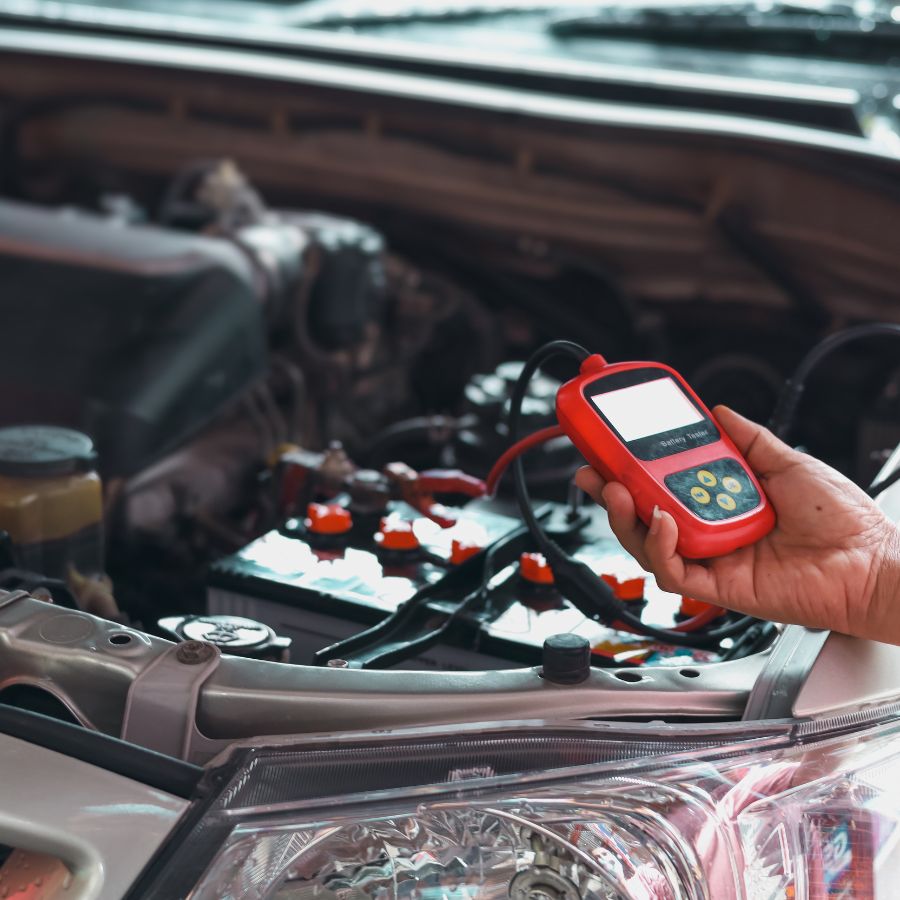
Sensors, fuses, dashboard electronics, headlights, indicators, power windows, central locking, and battery voltage are reviewed using tools like multimeters.
7. Tires, Rims, and Wheel Alignment
Tire tread depth, manufacturing year, uneven wear patterns, rim bends, balancing issues, and alignment indicators are evaluated.
8. OBD Diagnostic Scanner Test
This is the most important part of a modern inspection. The OBD system stores both active and stored error codes that might not illuminate the dashboard light. It exposes sensor malfunctions, emissions issues, internal component warnings, and sometimes accident data in newer cars.
9. Fluids Review
Coolant, brake fluid, engine oil, and transmission fluid are tested for consistency, color, and smell—all reliable markers of internal condition.
10. Road Test by the Mechanic
Unlike a workshop inspection, a mobile inspection allows mechanics to conduct a real road test in the same environment where the car is regularly driven. They analyze pickup behavior, vibrations above certain speeds, turning stability, braking at motion, and noise under acceleration.
Tools Used in a Professional Mobile Inspection
Experts may arrive with:
-
OBD2 scanner
-
Paint thickness gauge
-
Digital multimeter
-
LED inspection torch
-
Tyre pressure & tread depth meter
These tools diagnose issues not detectable by visual inspection or casual driving.
Benefits That Save You from Regret
Convenience is Just the Start
While convenience attracts buyers, the real benefits protect their investment:
✅ Massive Repair Cost Savings
Minor inspection charges protect you from expensive repairs—engine fixes, gearbox replacements, or accident restoration can cost 50–100× more than an inspection.
✅ Better Price Negotiation Power
When you carry a mechanic-approved report including defect severity and repair estimates, sellers lose leverage—and buyers gain it. Many buyers reduce asking prices using inspection evidence.
✅ Elimination of Safety Risks
A mechanic identifies worn brakes, damaged chassis, or unstable steering—issues that make a car unsafe even if the test drive seemed smooth.
✅ Unbiased Decision-Making
Mobile mechanics work for buyers, not sellers. There’s no forced pressure to finalize a deal because the mechanic has no tie to the seller.
✅ No Need to Transport the Car
A car with serious defects or legal concerns should never be driven until checked. A mobile inspection avoids that risk entirely.
✅ Faster Reports = Faster Decisions
Most inspection reports are digital, verified, and sent within hours—keeping your purchase process quick while staying safe.
✅ Confidence for Online Buyers
If you’re buying from Cars24, Facebook Marketplace, OLX, or similar platforms, a mobile inspection acts as insurance against hidden deception.
Mobile Inspection vs. Service History vs. Test Drive
| Evaluation Method | Accuracy Level | Limitations |
|---|---|---|
| Service History | Moderate | Can be forged or incomplete |
| Test Drive by Buyer | Low | Won’t detect internal or stored issues |
| Mobile Inspection by Expert | Very High | Provides mechanical + structural evidence |
A mobile inspection doesn’t replace service history—it verifies it.
7 Red Flags Only a Mechanic Will Notice
Even great-looking cars can have silent deal-breaker defects. Mechanics often detect:
-
Engine vibration from worn mounts
-
Transmission fluid burnt smell
-
Overspray on bolts or hinges
-
Hidden DTC error codes
-
Fresh underbody coat covering rust
-
Coolant residue near radiator
-
Re-welded frame sections
These are warning signs that should push you to negotiate aggressively or walk away.
Perfect Moments to Book a Mobile Inspection
Schedule a mobile inspection when:
-
You’ve short-listed a car but haven’t paid
-
The seller says inspections aren’t needed
-
The car price is surprisingly low
-
You’re applying for a bank loan or insurance on the vehicle
-
You found the car online and don’t know its real condition
Never sign, never transfer money, and never transport the car until the mechanic approves it.
Cost vs Risk—A Buyer’s Perspective
The average pre-purchase inspection cost is minimal compared to typical major repairs:
-
Engine overhaul: Can be extremely expensive
-
Automatic gearbox replacement: High cost
-
Accident chassis restoration: Very high cost
A mobile inspection ensures you don’t inherit someone else’s problem bill.
Conclusion
A mobile car inspection isn’t a luxury—it’s a smart financial and safety move. It protects buyers from fraud, identifies invisible defects, and prevents impulsive purchases influenced by persuasive sellers. Most importantly, it gives you power: to buy confidently, negotiate fairly, or reject wisely.
If you want peace of mind before your next used-car investment, remember this golden rule:
“The car shouldn’t move until the mechanic does.”
Frequently Asked Questions (FAQs)
1. What is a mobile pre-purchase car inspection?
A service where a certified mechanic visits the car’s location and performs a full mechanical and safety evaluation before purchase.
2. Can a mobile inspection detect past accidents?
Yes. Professionals use paint-thickness analysis, panel alignment, and frame check to identify collision or repair signs.
3. Should I pay for a used car before inspection?
Never. Always inspect first and pay only after receiving a mechanic-approved report.
4. Does the inspection include an OBD diagnostic scan?
Yes, most modern mobile inspections include OBD2 scans to detect stored error codes hidden from the dashboard.
5. Is a mobile inspection better than a workshop inspection?
Mobile inspection is more convenient and unbiased, and allows real road testing in the car’s regular environment.
6. Can sellers refuse mobile inspections?
They may try—but it’s a red flag. Genuine sellers allow inspection without hesitation.
7. Will the inspection guarantee a perfect car?
It won’t certify perfection, but it guarantees full transparency and risk elimination against major defects or fraud.