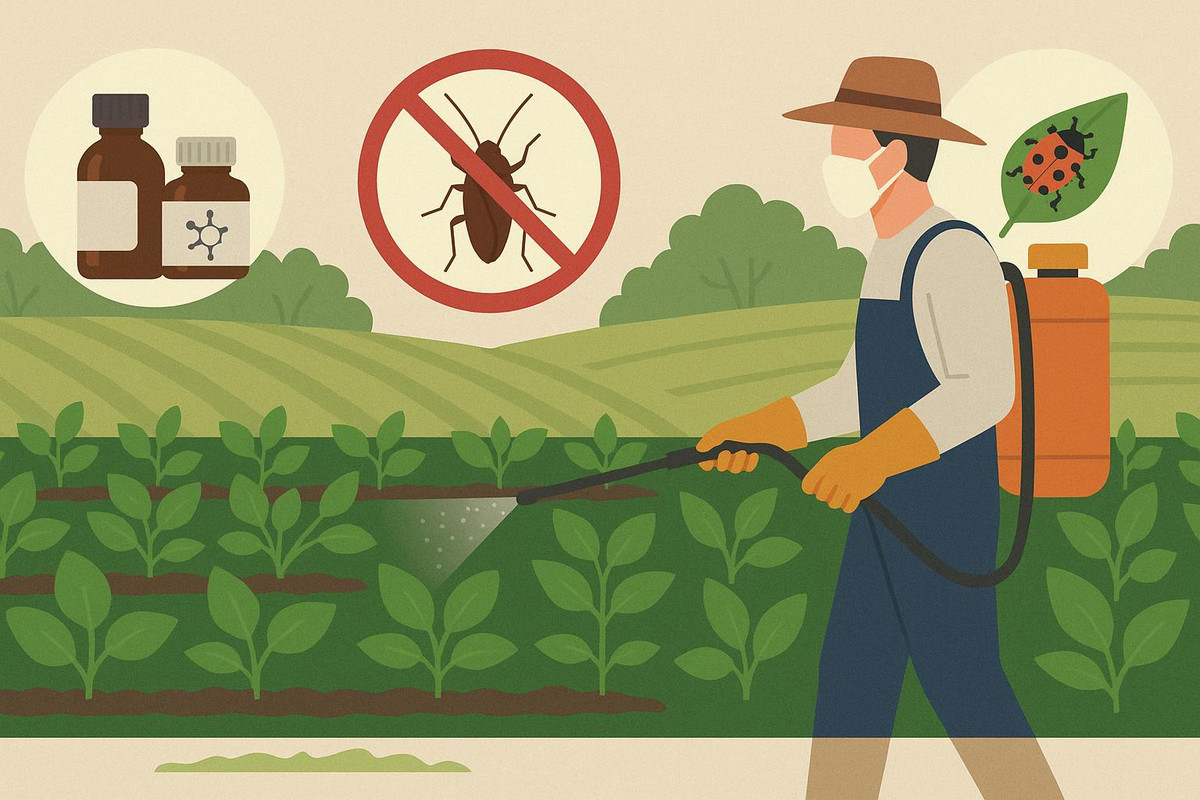
Pest resistance has become one of the most critical challenges in modern agriculture. Farmers are experiencing diminished returns on conventional insecticides as insect populations adapt, survive, and continue to damage valuable crops. This gradual loss of efficacy is costing time, effort, and productivity. But where single-action chemicals have failed, a more strategic solution is emerging—dual-mode action.
This approach uses two active ingredients with different mechanisms to overwhelm pests’ defenses and delay the onset of resistance. Dual-mode insecticides are proving to be a turning point in integrated pest management (IPM) systems, particularly in high-value and resistance-prone crops like cotton, brinjal, chili, and okra. This blog examines how formulation science works, its role in preventing resistance, and why it is becoming a necessity for the Indian farming landscape.
The Science Behind Pest Resistance
Insects reproduce quickly and have brief life cycles. This enables them to quickly adjust to environmental stresses, even those caused by chemicals designed to eradicate them. Repeated use of a single-mode pesticide inadvertently favours the few individuals with innate resistance. As these survivors procreate and grow, it gets more challenging to manage the total pest population.
In many regions of India, common pests including fruit borers, aphids, and whiteflies are now resistant to more than three chemical classes. More than 40% of cotton fields in central India that were surveyed had pests with moderate to high resistance against at least one widely used active component, according to studies from the Indian Agricultural Research Institute.
Dual-Mode Action: What It Means
Dual-mode insecticides include two active ingredients with distinct mechanisms of action. One could impair feeding or moulting, and the other could interfere with the pest’s neurological system. Because of this duality, a pest is unlikely to be resistant to both modes of attack simultaneously, even if it is resistant to one.
One well-known example is the insecticide X-Pert Plus Novaluron 5.25% + Emamectin Benzoate 0.9% SC, which paralyses pests’ muscles while also interfering with their growth. Due to its complementary function, this formulation not only kills more pests faster but also significantly slows the evolution of resistance.
- Two unique actions reduce the survival rate
- Better control of both early- and late-stage pest life cycles
The dual impact creates what scientists call a “resistance management buffer,” reducing selection pressure and buying time for future seasons.
How Dual-Mode Products Improve Field Efficacy
Practically speaking, dual-mode activity benefits farmers in several ways. A wider range of target pests, longer residual control, and quicker knockdown are frequently the results of the two active components working in concert.
This formulation lessens the need for repeated spraying at short intervals, which is beneficial for crops like chilli and brinjal, where overlapping insect generations are common. Comparing dual-mode solutions to traditional single-mode sprays in field tests in Karnataka revealed a 37% increase in yield protection.
More significantly, SC (suspension concentrate) dual-mode formulations assist farmers reach even the obscure areas of the crop canopy by improving plant coverage and spreadability. When uniform contact is crucial during early infestations, this has a noticeable impact.
Building Long-Term Resistance Management Strategies
Dual-mode insecticides are a component of a more comprehensive, progressive approach rather than only a temporary solution. To optimise its efficacy, experts advise alternating their application with other pest management techniques.
According to guidelines from IRAC, the best approach is:
- Use dual-mode products at the start of the season to reduce pest pressure early
- Rotate chemical groups to avoid repeated use of the same mode of action
- Combine with biological methods and crop rotation practices
By doing so, farmers can preserve the effectiveness of all available tools and avoid resistance spirals that limit future options.
“Pest control isn’t about stronger chemicals—it’s about smarter combinations that outthink the enemy before they adapt.”
Regional Trends and Adoption in India
Dual-mode pesticides are becoming increasingly common among Indian farmers, especially those who grow cash crops such as cotton and chilli. The demand for dual-formulation SC products has undergone significant changes over the past three years, according to agro-dealers and state extension services.
Dual-mode action insecticides have emerged as a suggested line of defence during the flowering and fruit-setting periods of chilli cultivation in Andhra Pradesh, when thrips and mites severely reduce yields. In a similar vein, Gujarati cotton farmers who switched to combination sprays have reported fewer incidences of pink bollworm.
According to data from a field survey conducted in 2022, farmers who used dual-action formulations observed:

These numbers demonstrate not only better efficacy but also economic value—something every farmer considers before changing their pest control habits.
Safety, Crop Compatibility, and Environmental Role
Many of the dual-mode formulations being introduced now are SC-based, which means they’re water-based, stable, and easier on crops. Unlike older EC (Emulsifiable Concentrate) formulations, SC versions:
- Minimize risk of phytotoxicity
- Reduce residue levels
- Are safer for applicators and non-target organisms
Products with dual action are also being tested for pollinator safety, primarily during non-flowering stages. According to research supported by CABI, better product design and timing can reduce unintended harm to bees and beneficial insects.
Additionally, the built-in resistance control helps lower total pesticide use over time—a positive step for sustainable farming and soil health.
Frequently Asked Questions
- Can dual-mode insecticides be used for all pests?
No. Each formulation targets specific pest groups. Always read the product label to match it with the pest affecting your crop. - Will pests develop resistance to both modes over time?
It’s possible, but much slower. That’s why rotation and proper application intervals are essential. - Can I tank-mix two single-mode insecticides instead?
Technically yes, but not always safe or stable. Ready-made dual-mode products are tested for compatibility and effectiveness. - Do I need to spray more often with dual-mode products?
No. In most cases, their residual control lasts longer, reducing the total number of sprays needed. - Are they more expensive?
The upfront cost may be slightly higher, but better efficacy often reduces repeat applications and crop loss, making them cost-effective.
Challenges and Considerations for the Future
While dual-mode products offer many advantages, they are not without risks. Overuse, incorrect mixing, or repeated use of the same chemical combination can still lead to resistance in the long run. Farmers need proper guidance on:
- Timing and sequencing with other sprays
- Correct dose and application method
- Environmental precautions for pollinator safety
Agro-input retailers, agronomists, and government advisors must play a more active role in educating users. Training programs, digital advisory platforms, and demo plots can all contribute to responsible usage.
A Smarter Path Forward
Layered defence, not larger dosages, is the way of the future for pest management. Dual-mode pesticides offer a more intelligent and flexible approach to combating changing pests. These formulations have the potential to become the mainstay of economical, efficient, and sustainable crop protection in India and elsewhere as they continue to gain traction.
They also signify a change in perspective, moving away from reactive farming and towards proactive tactics. Dual-mode action is one of the strategies that will enable resilient farmers to stay ahead of the curve season after season as agricultural challenges become increasingly complex.
Check out more on newstimeswire.com